

Enjoy our modern designs
Design & Living
For years, the formal dining room has existed as a kind of architectural obligation—beautifully arranged, carefully lit, and largely underused. The luxury dining pool table changes that equation entirely.
This is not about forcing a game into a formal room. It is about rethinking what a formal room can be when design, craftsmanship, and spatial performance are taken seriously.
Spatial Relevance
Rethinking the
Single-Purpose Room
Contemporary homes prioritize flexibility. Open-concept layouts blur the boundaries between kitchen, living, and entertaining spaces. Families gather around islands, not china cabinets. Hosting has become more fluid and less ceremonial.
In that context, a single-purpose dining room starts to feel outdated. Allocating prime square footage to a room used only a handful of times each year is increasingly hard to justify, especially in homes where every square foot carries measurable value.
The appeal of the dining pool table is not novelty. It is efficiency with dignity—a way to make a formal room earn its place without diminishing its beauty.— On why the category has become a serious design consideration
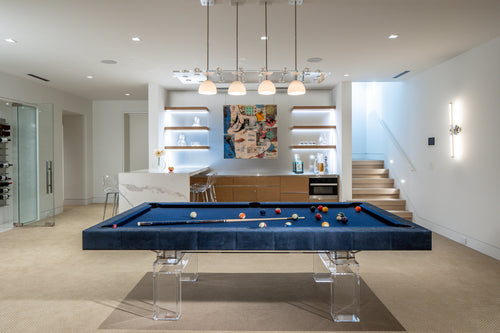
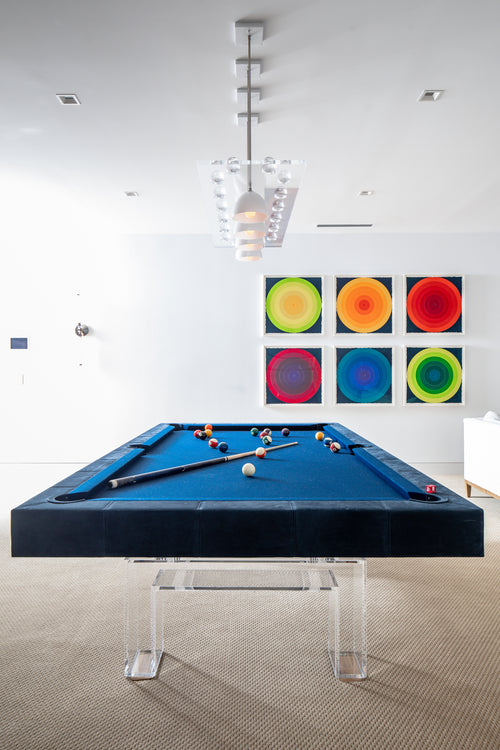
A luxury dining pool table resolves that tension cleanly. It preserves the visual authority of a formal dining table while introducing a second, equally compelling function. The room no longer waits passively for holidays. It becomes active, adaptable, and present in daily life.
Disciplined Craft
Design That Doesn’t
Apologize
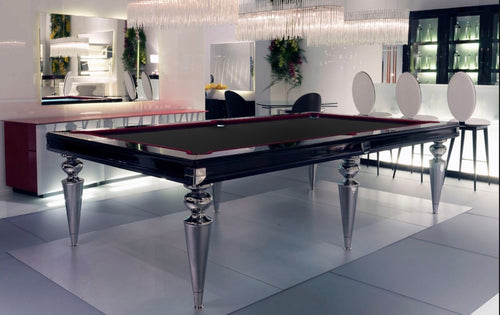
Early convertible tables often looked like compromises. Bulky proportions, obvious pocket cutouts, shiny finishes, and awkward detailing made it clear the piece was hiding something. The result felt gimmicky rather than resolved.
Design Shift 01
Clean Architectural Lines
PriorityProportion
EffectIntentional Presence
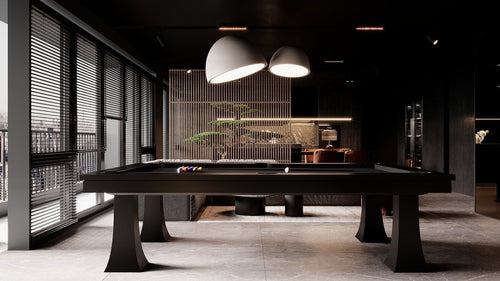
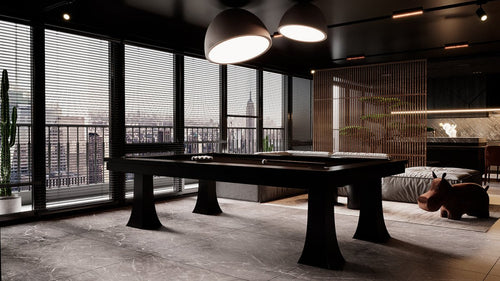
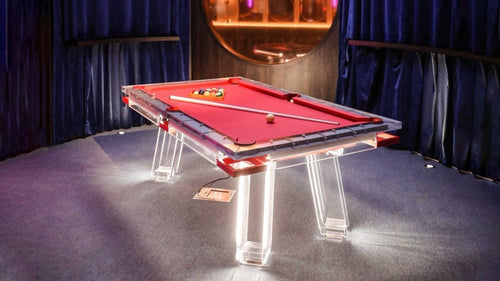
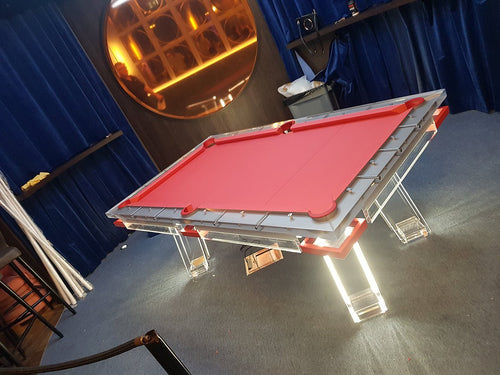
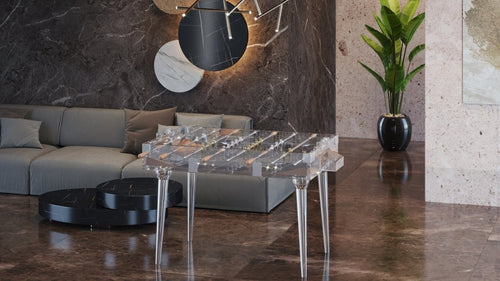
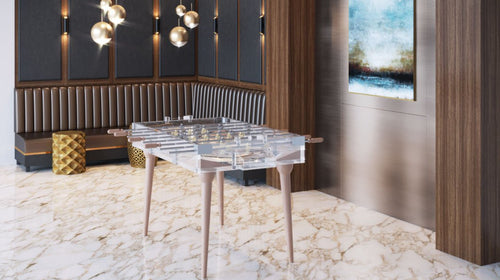
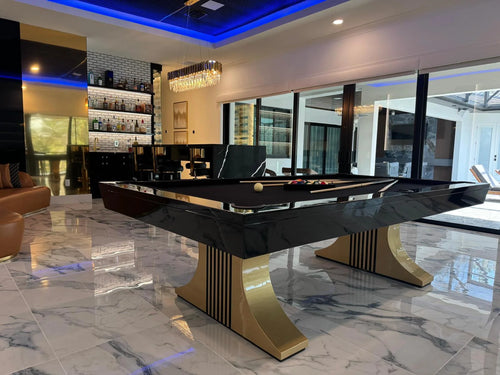
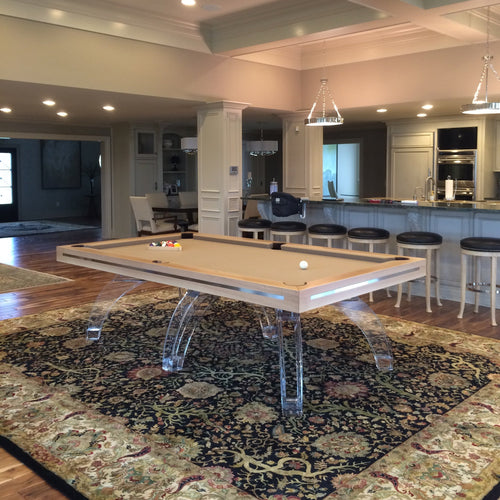
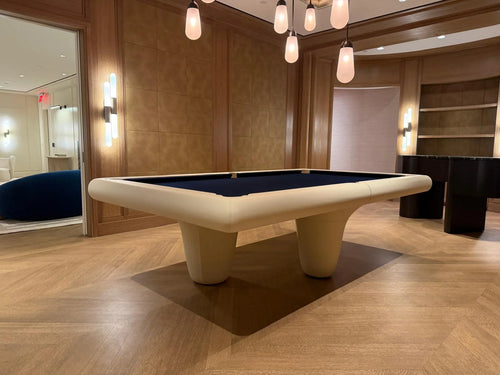
Modern versions are designed to read first as refined furniture, not as novelty pieces trying to conceal a second identity.
Design Shift 02
Concealed Systems
DetailsHidden Pockets / Flush Tops
EffectSeamless Transformation
Flush-mounted dining tops and concealed pocket systems make the change from dining surface to game surface feel deliberate rather than theatrical.
Material 03
Premium Hardwoods
Typical ChoicesWhite Oak / Walnut
EffectFormal Authority
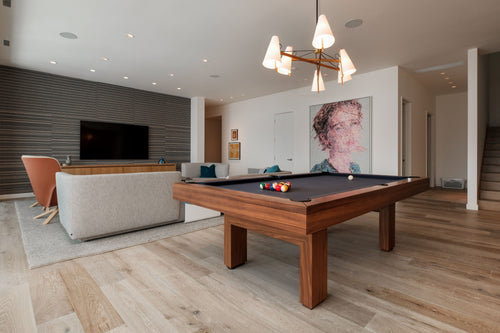
Solid hardwood construction gives the table the visual weight expected in a serious dining setting, even before its second function is revealed.
Material 04
Matte Finishes & Neutral Cloth
GoalInterior Harmony
ResultNo Visual Compromise
When handled correctly, the table stands on its own as a design object rather than as a disguised recreation piece waiting to be explained.
Social Use
Entertaining Has
Evolved
Today’s hosting culture is less rigid and more experiential. Guests no longer remain seated for hours in a fixed arrangement. They move between spaces, form conversation clusters, and respond to energy rather than ceremony.
A dining pool table supports that shift naturally. Dinner can move into a shared activity without forcing everyone into another room. The evening keeps its momentum instead of tapering off once the plates are cleared.
Why It Works
The value is not just entertainment. It is continuity. One table supports the meal, the conversation, the transition, and the activity that follows.
For families, that same room can also support homework, casual meals, celebrations, and play within a single footprint that would otherwise sit dormant most of the week.
Spatial Economics
The Performance of
Space
In luxury homes, square footage is not abstract. It is capital. Rooms that fail to adapt are not merely old-fashioned—they are underperforming assets.
Value 01
One Room, More Utility
BenefitDual Function
EffectHigher Spatial Return
A well-designed dining pool table allows a formal room to work harder without demanding any additional real estate.
Value 02
No Separate Game Room Needed
AvoidsExtra Square Footage
EffectElegant Efficiency
Instead of adding more rooms to support more activities, the smarter move is often to make an existing focal room more capable.
Value 03
Architectural Clarity
ApproachOne Focal Point
ResultLess Clutter, More Purpose
The beauty of the category is that it concentrates utility into one object rather than scattering it across multiple specialized rooms.
Value 04
Luxury Without Waste
StandardCraft + Function
OutcomeLong-Term Relevance
The strongest luxury objects are not indulgent because they are excessive. They are luxurious because they solve problems beautifully.
// The Bottom Line
The rise of the luxury dining pool table is not a novelty trend. It reflects a broader shift in how people think about flexibility, return on space, and experiential living. When executed with disciplined design and serious materials, it turns one of the home’s most underused rooms into one of its smartest.