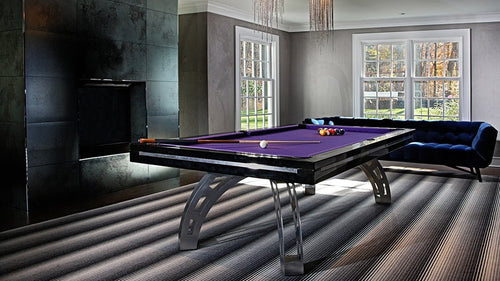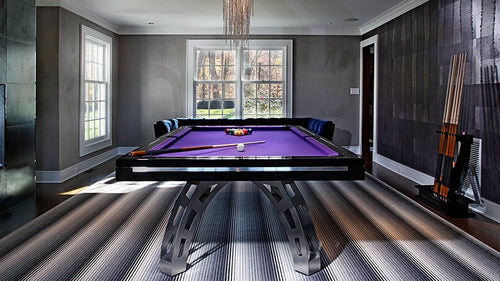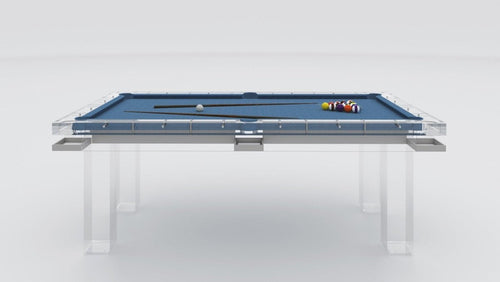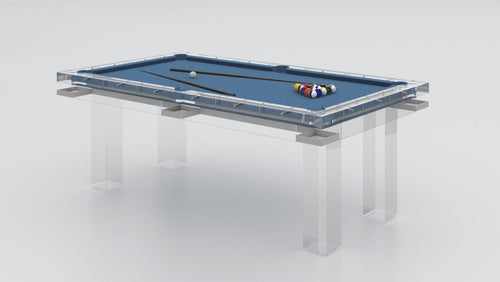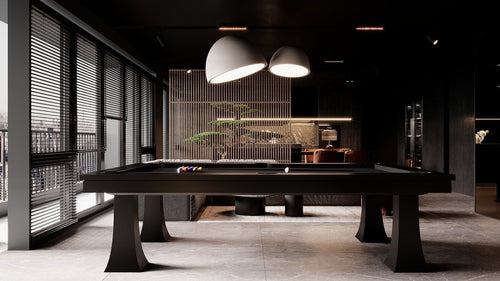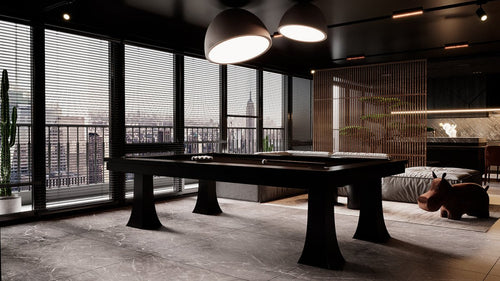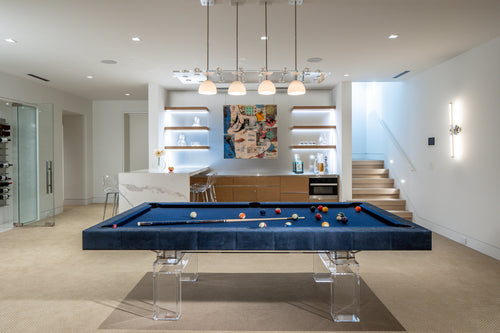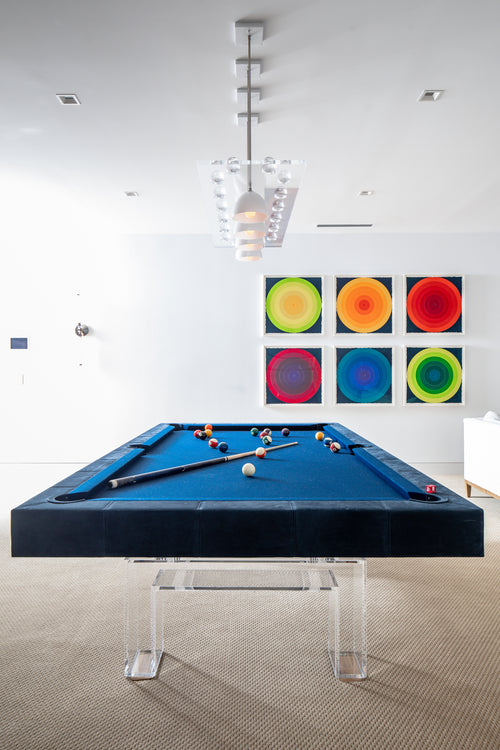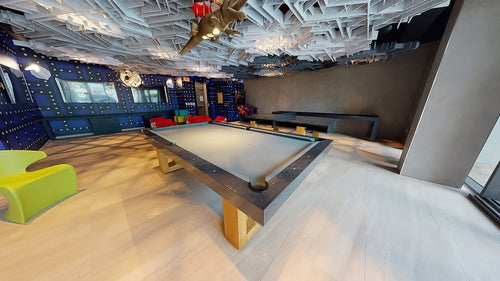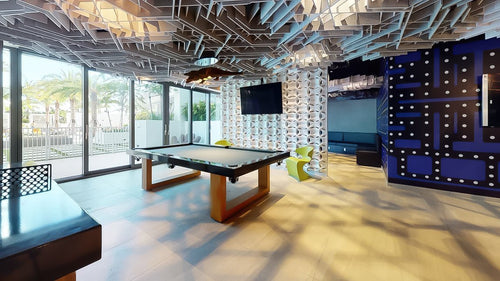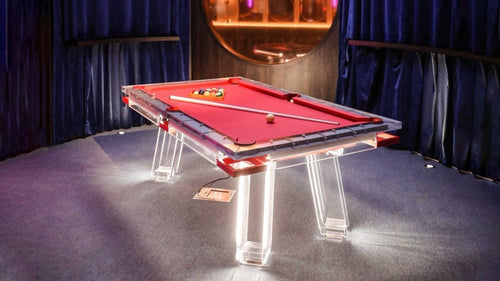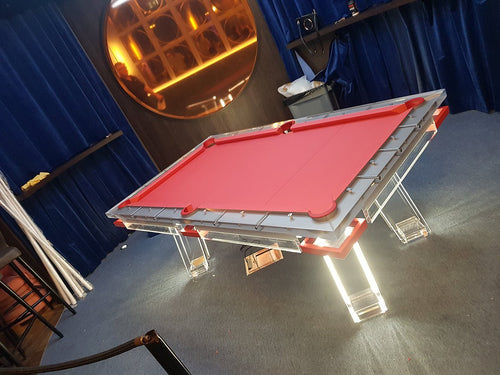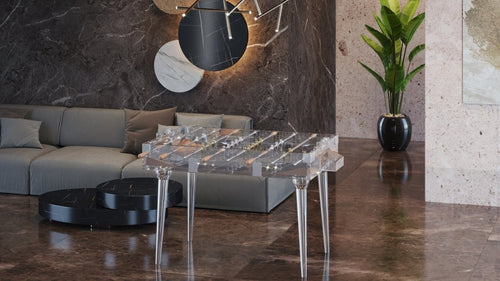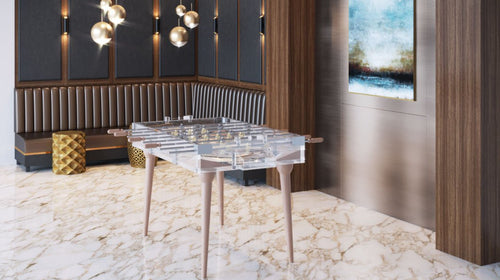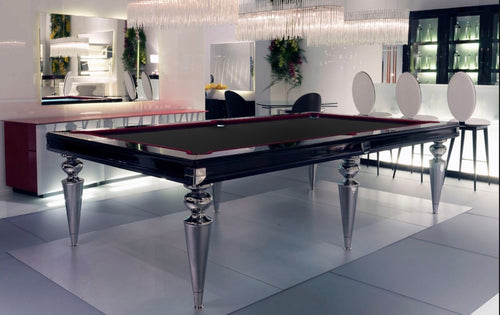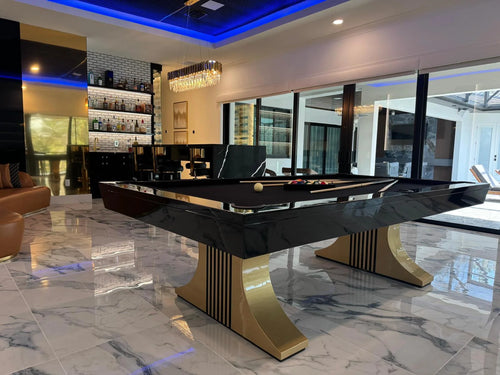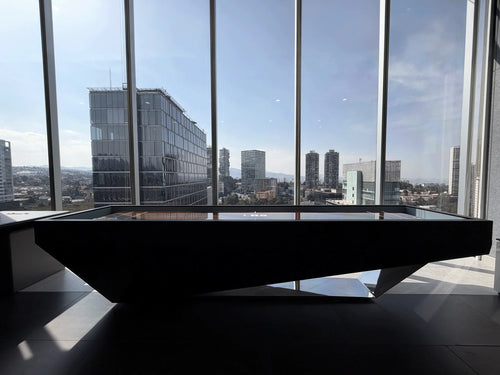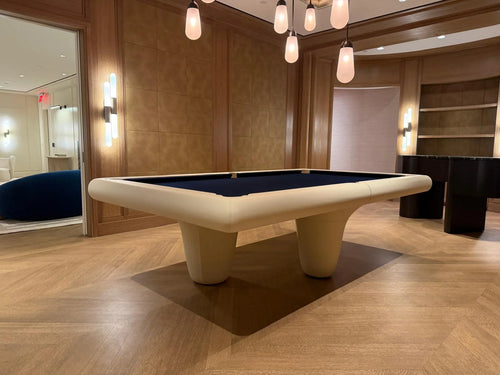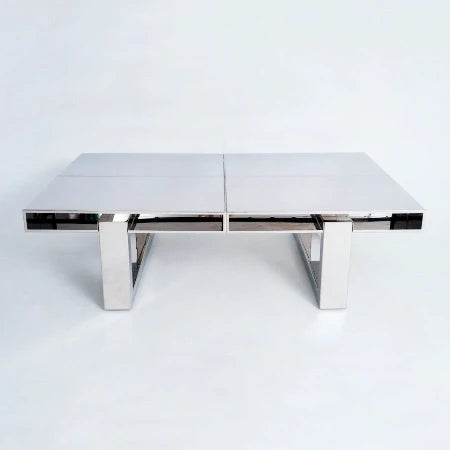


Enjoy our modern designs
A pool table is not just another piece of furniture.
It is too large, too heavy, and too functionally demanding to be treated like an accessory. Once it enters a room, it changes everything around it. It affects circulation, lighting, seating, symmetry, sightlines, and the way people gather. It becomes the room’s anchor whether the design acknowledges that or not.
This is why pool table rooms often fail. The table is chosen as an object, then forced into a space that was not planned around it. The result may technically fit, but it never feels fully resolved.
A better approach is to treat the pool table as an architectural element. Not just something placed inside the room, but something that organizes the room.
Table of Contents
- 1. The Table Controls Circulation
- 2. The Table Establishes the Room’s Center of Gravity
- 3. Lighting Should Confirm the Anchor
- 4. Seating Has to Respect the Playing Zone
- 5. The Table Shapes Sightlines
- 6. Rugs, Flooring, and Walls Need to Support the Weight
- 7. Designing Around the Table Makes the Room Feel Inevitable
The Table Controls Circulation
The most obvious issue is movement.
A pool table requires space on all sides for play. That clearance zone is not optional. But beyond basic cue clearance, the table also shapes how people move through the room. It can create a natural loop, divide a larger space into zones, or accidentally block the path between important areas.
This matters especially in open-plan homes, basements, lounges, and entertainment spaces where the billiard area connects to a bar, media room, terrace, or kitchen. If the table interrupts the natural flow, the room will always feel awkward. People will cut through playing space, hover in bad spots, or avoid the area altogether.
A well-placed table creates circulation that feels obvious. Players can move around it easily. Spectators can stand or sit without being in the way. People can pass through the room without disturbing the game. The table feels central, but not obstructive.
That balance is one of the first signs of a well-designed billiard space.
The Table Establishes the Room’s Center of Gravity
Every room has a visual center of gravity. In a living room, it may be the fireplace, sofa grouping, or view. In a dining room, it is usually the table and light fixture. In a billiard room, it is almost always the pool table.
The question is whether the rest of the room agrees.
When the table is centered properly, aligned with lighting, balanced with surrounding furniture, and given the right amount of space, the room feels calm. When the table is slightly off, poorly lit, or unrelated to the architecture, the entire space can feel unsettled.
This is not always about perfect symmetry. Some rooms need an asymmetrical plan. But even asymmetry needs intention. The table should relate to something: a ceiling feature, a window line, a wall panel, a rug, a bar, a seating group, or the main entry view.
A pool table floating without alignment often feels temporary, even if it is expensive.
Lighting Should Confirm the Anchor
The light above a pool table does more than help people see the game. It confirms the table’s importance.
A properly scaled fixture makes the table feel grounded. It creates a zone. It tells the eye that this is the center of the room. But when the light is too small, too high, too decorative, or poorly aligned, the whole composition weakens.
The relationship between the table and the lighting should feel deliberate. A long linear fixture can emphasize the table’s horizontal form. A pair or trio of pendants can add rhythm. A more architectural light can make the table feel integrated into a modern space.
The mistake is treating the light as an afterthought. In a room anchored by a pool table, the fixture is part of the composition. It should relate to the table’s scale, the ceiling height, the room’s mood, and the surrounding furniture.
Bad lighting makes even a beautiful table feel unsupported.
Seating Has to Respect the Playing Zone
A pool table needs space, but a room also needs comfort. This creates one of the main design tensions in a billiard room.
Put seating too close, and it interferes with play. Place it too far away, and the room loses intimacy. Use furniture that is too low or too deep, and spectators may feel disconnected. Use only bar stools, and the room may feel temporary. Use a full sofa in the wrong place, and the circulation may collapse.
The solution is to design seating as part of the table’s orbit.
Some rooms need lounge seating beyond the cue clearance zone. Others work better with bar-height seating along one wall. A narrow drink ledge can be useful in tighter rooms. Larger spaces may support multiple layers: the table at the center, spectator seating nearby, and a softer lounge zone beyond.
The important point is that seating should not feel like leftover furniture placed around the edges. It should support the way the table is used.
The Table Shapes Sightlines
A pool table is often seen from outside the room before it is used. It may be visible from a hallway, stair landing, bar, lounge, or open-plan living space. That first sightline matters.
A well-designed billiard space considers how the table is approached. What do people see first? The long side of the table? The end? The lighting above it? The wall behind it? The view beyond it?
These sightlines affect the table’s visual power. A table seen lengthwise can feel elegant and architectural. A table seen from an awkward corner may feel cramped. A table aligned with a window or feature wall can become a strong composition. A table surrounded by visual clutter can lose its authority.
Designing around a pool table means thinking beyond the playing surface. It means considering how the object is perceived from every major angle.
Rugs, Flooring, and Walls Need to Support the Weight
Because a pool table is visually heavy, the surfaces around it matter.
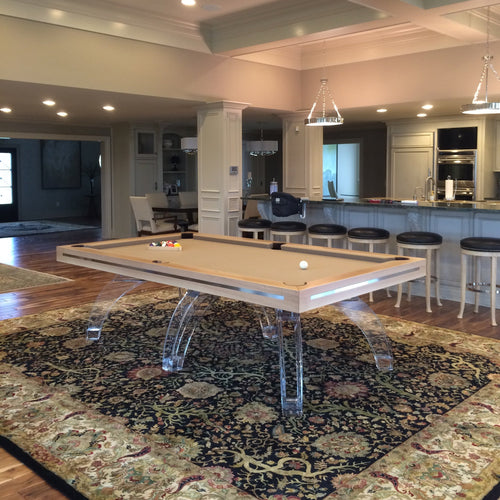
Flooring should be strong enough visually to support the table. A very delicate floor pattern may fight with it. A rug can help define the zone, but the rug needs proper scale. Too small, and it looks like a mat. Too busy, and it competes with the table. Too thick or unstable, and it may become impractical.
Walls also play a role. A blank wall can make the room feel unfinished. A heavily decorated wall can compete with the table. Paneling, art, shelving, or a bar feature can all work, but they need to support the room’s hierarchy.
The table is the anchor. The surrounding surfaces should give it context, not challenge it for control.
Designing Around the Table Makes the Room Feel Inevitable
The best billiard rooms feel inevitable. The table looks like it belongs exactly where it is. The light is centered. The seating makes sense. The circulation feels natural. The materials relate. The room has a clear purpose without feeling forced.
That does not happen by accident.
It happens when the pool table is treated as the anchor from the beginning. Not as a late addition. Not as a decorative upgrade. Not as an object squeezed into unused square footage.
A pool table has too much presence to be an afterthought. It deserves to be planned around.
When that happens, the room gains more than a game surface. It gains structure, rhythm, and social gravity.
The table becomes the reason the room works.