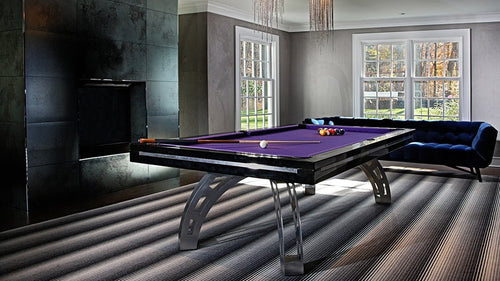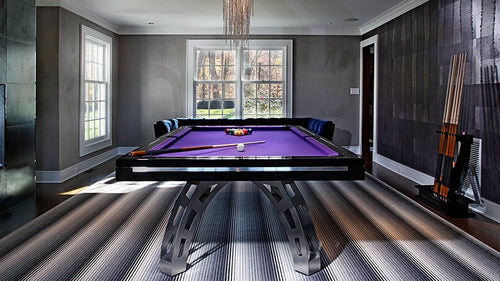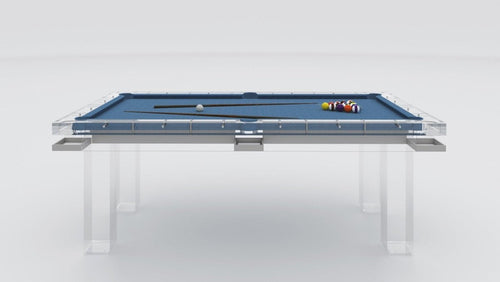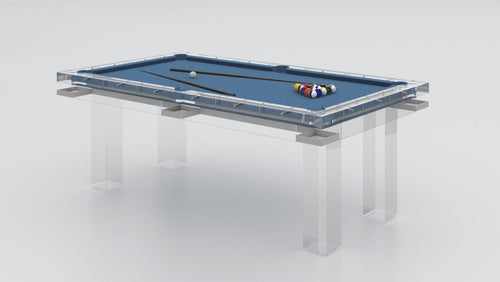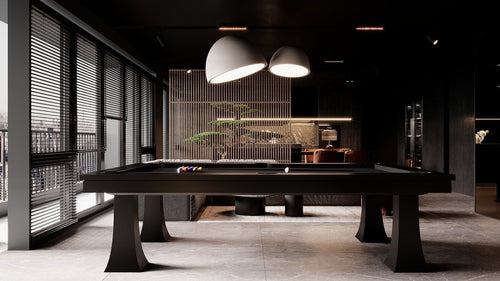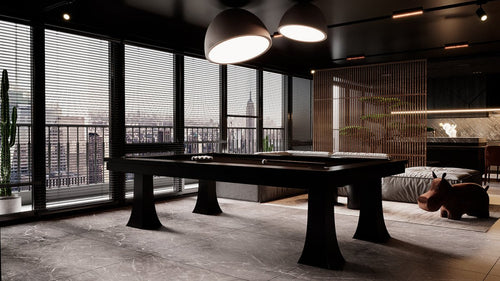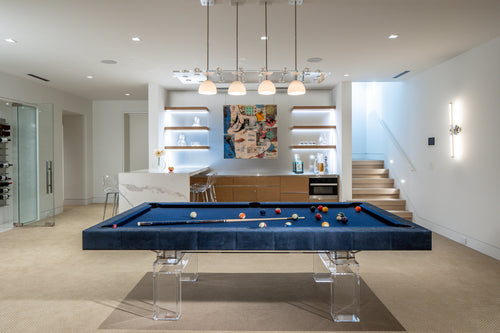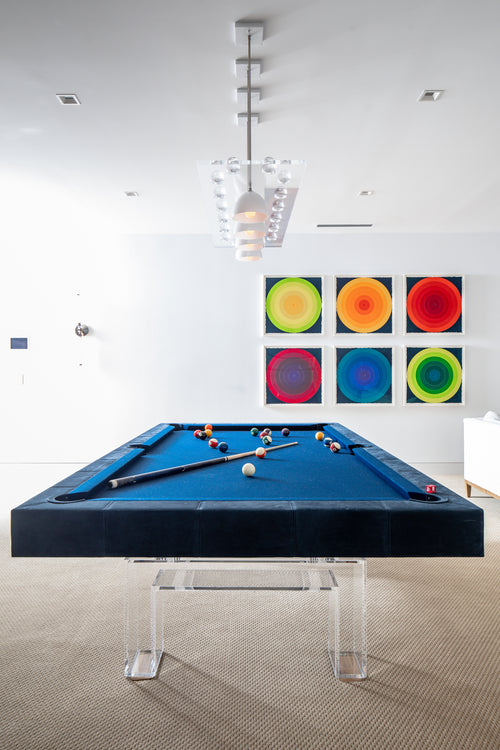


Enjoy our modern designs
Care & Maintenance
It always starts with the same bad idea: four friends, one slate table, and the assumption that it can be handled like any other piece of furniture. It cannot.
You are getting new carpet installed. Or moving the game room from the den to the basement. You look at the table and think, “I do not need to hire a professional for this. I will just call three buddies, grab a corner each, and shift it over.” That logic destroys more good tables than people realize.
The Bad Assumption
Why This Goes Wrong
The mistake is treating a slate pool table like a sofa, dining table, or cabinet. It looks like furniture, but structurally it behaves more like a precision-installed machine. Its weight is concentrated in stone. Its surface depends on exact leveling. And the cabinet, slate, seams, fasteners, and legs all assume the table remains evenly supported.
Once you try to lift or drag it as a fully assembled unit, you stop working with the way it was built and start fighting the physics that keep it playable.
A slate pool table is not “heavy furniture.” It is a calibrated structure carrying brittle stone under tension. That is why amateur moves go wrong so fast.— The real difference people miss
Failure Point One
The “Pop” of the
Seam
Most regulation tables use three-piece slate. During installation, each slab is leveled individually, then the seams are filled and smoothed so the playing field behaves like one continuous plane.
The cabinet underneath can flex a little. The slate cannot. That mismatch is the whole problem. The moment one corner is lifted, the frame twists slightly. The stone resists. The seam gives first.
What That Pop Means
If you hear a sudden pop or crack when lifting an assembled table, there is a very real chance the slate seam has broken loose. At that point, the table is no longer one properly leveled surface.
Once the seal is compromised, the slate pieces can shift out of alignment. Even if the cloth still looks fine, the playing surface underneath may now contain a ridge or height difference that makes balls hop, wobble, or drift off line.
Failure Point Two
The Legs Are Not Designed for
Dragging
Some people decide not to lift the table and instead try to slide it. That is usually worse. Pool table legs are meant to hold a massive load in vertical compression. They are not meant to absorb strong lateral force while hundreds of pounds resist movement across carpet or flooring.
That distinction matters because a slate table can weigh 800 to 1,000 pounds or more. Once you drag that much mass sideways, the legs, bolts, and cabinet joints are no longer handling the kind of load they were built for.
Mistake 01
“We’ll Just Scoot It a Little”
Even a short drag can put enormous sideways stress into the legs and cabinet frame.
The Reality
A tiny move under full load can still create major structural failure.
Mistake 02
Assuming Weight Means Stability
Heavy does not mean safe to drag. It often means the consequences of dragging are worse.
The Reality
The more mass involved, the more punishing the side-load becomes.
Mistake 03
Trusting the Legs Like Furniture Legs
Pool table legs do not function like simple household furniture supports under lateral movement.
The Reality
They are built to hold weight downward, not survive being torqued sideways.
Failure Point Three
The Risk of Cracking the
Slate
Slate is stone, but that does not make it forgiving. It is rigid and brittle. While assembled, it depends on even support from the frame beneath it. Once the cabinet twists or the load distribution changes, stress can concentrate around the screw holes or unsupported sections.
Lifting by the rails or forcing the table to move while the slate remains tightly fastened can transfer load into areas that were never meant to handle it. That is where cracks happen.
And this is where the mistake gets expensive. A cracked slate section is not a cosmetic issue. It usually means replacement. Because slate sections are commonly cut and matched as sets, one broken piece can turn into a much larger materials bill than people expect.
The Only Correct Method
The Only Safe Way to
Move
-
Disassemble the Table
Remove the rails, remove or carefully preserve the cloth if it will be reused, and take out the slate fasteners so the table is no longer carrying stone as one assembled unit.
-
Move the Slate Separately
The slate pieces need to be transported on their own, supported correctly, rather than stressed through the cabinet.
This is the part most amateur moves try to skip. It is also the part that matters most. -
Rebuild and Re-Level
Once relocated, the table has to be reassembled, leveled again, and re-seamed so the surface is truly flat and playable.
Yes, it is a hassle. But it is the only process that respects the way the table was engineered in the first place.
The Practical Answer
The
Verdict
If you would not move a grand piano by improvising with three friends and optimism, you should not do it with a slate pool table either. The risk-reward ratio is terrible. The money saved by avoiding a pro disappears instantly the moment a seam pops, a leg tears loose, or a slate piece cracks.
The sane move is simple: save your back, save the table, and hire a billiard mechanic who will disassemble, transport, and rebuild it correctly.
// Closing Thoughts
More tables get ruined by casual moving than by serious play. That is because play wears a table down slowly. Bad moving can destroy it in one afternoon. If the table has slate, do not lift it assembled. Do not drag it. Break it down and move it properly.