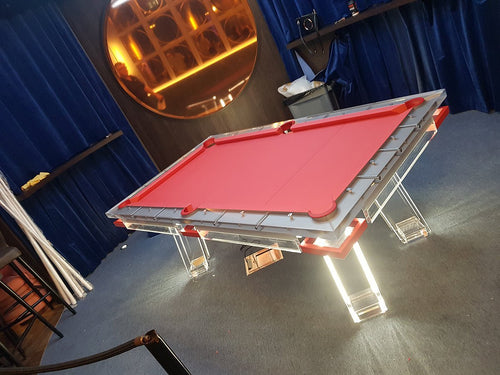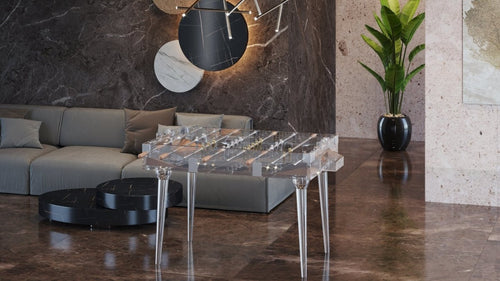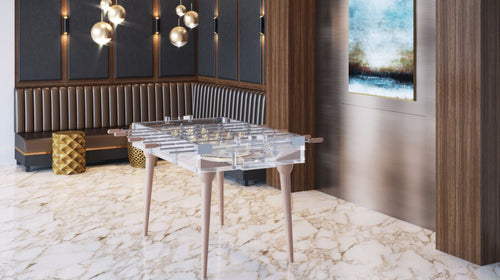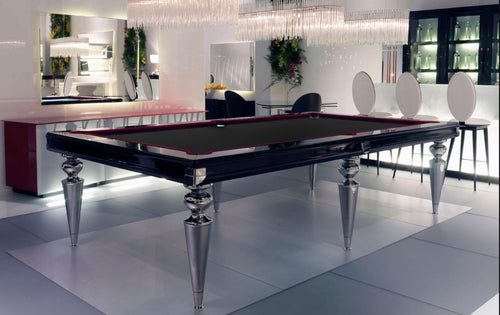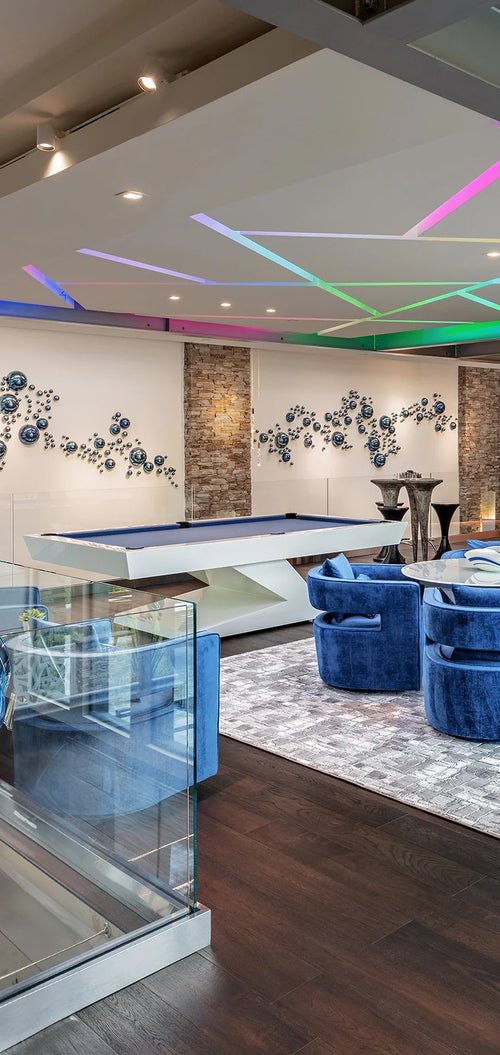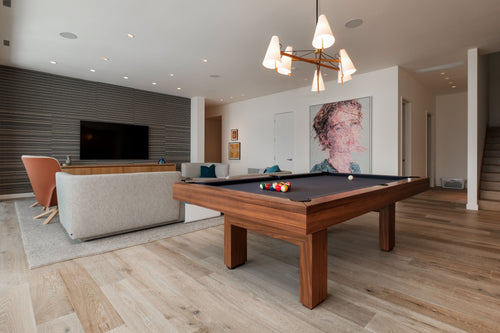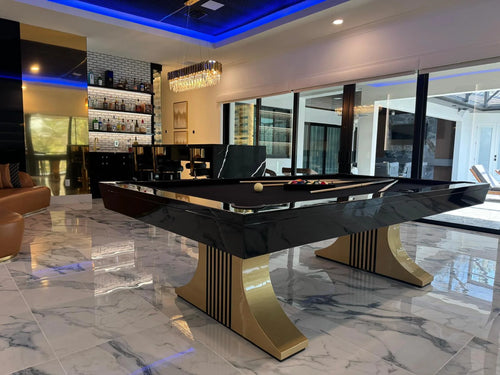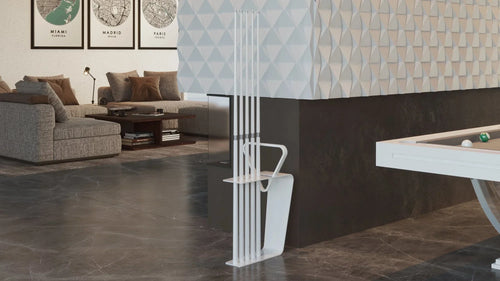


Enjoy our modern designs
Fact-checked and updated October 19, 2026.
14.1 Continuous, usually called straight pool, lets an inning continue through successive racks. The challenge is to score while preserving a route into the next rack. Choosing a useful break ball and controlling the cue ball for it matter as much as completing the current group of shots.
Equipment & Setup
Use fifteen numbered object balls and a cue ball. Start with a full triangle whose apex is on the foot spot. After fourteen balls have been pocketed, rack those fourteen with the apex position empty; ordinarily, leave the remaining object ball and cue ball where they lie. If either interferes with the rack, use the special placement rules in WPA Rules of Play, Section 7.8.
Core Rules & Flow
Any object ball may be played. Under the call-shot rule, identify the ball and pocket when the intended shot is not obvious. Each ball pocketed on a legal called shot scores one point, including additional balls pocketed on that shot. Continue until a miss, declared safety, foul or the agreed winning score. The WPA rulebook, Sections 1.7 and 7 is the reference for this guide.
Continuous Play & Racking
The fifteenth ball is often used to break into the next rack, so planning for it starts before the final shot of the current rack. Do not automatically move that ball to the foot spot or reset the cue ball. Their ordinary positions are the result of your position play, and a difficult leave is part of the challenge.
Look for a break ball with a usable pocket and a cue-ball route toward the new cluster. Then identify a key ball that can help you arrive at the required angle. This is a planning framework, not a demand to force one specific pattern: if the layout changes, reassess the route before clearing the balls that give you options.
Scoring & Penalties
A standard foul costs one point. A deficient opening break costs two. Three consecutive standard fouls bring the usual one-point deduction plus an additional fifteen-point penalty, a full re-rack and an opening break by the offender; the required warning procedure applies. A scratch normally gives the opponent cue-ball-in-hand behind the head string. See WPA Sections 3.13 and 7.9–7.11.
Keep the score and foul count visible. Distinguish a missed shot from a foul, and do not treat every turn ending as a penalty. An accurate score sheet makes a safety exchange easier to follow and prevents disagreement when a long inning crosses several racks.
Practicing the Transition Between Racks
Start a practice with a small group of open balls and one plausible break ball. Before shooting, describe the last three shots you intend to play. If your cue ball finishes on the wrong side of the next ball, stop and consider an alternative instead of continuing the original plan automatically.
On the break shot into the newly racked balls, observe both the cue ball’s escape route and the availability of a follow-up shot. Simply spreading many balls is not the same as maintaining an inning. Repeat a manageable break-ball position and compare the outcomes of controlled speed changes.
Why 14.1 Rewards Careful Decisions
Straight pool combines shotmaking, cue-ball placement, safety play and concentration. Its continuous structure makes small decisions accumulate: an easy ball removed too early may have been the best route to the break shot. Review the decision that created a difficult position, not only the final miss. That is where the game becomes a practical teacher of pattern play.