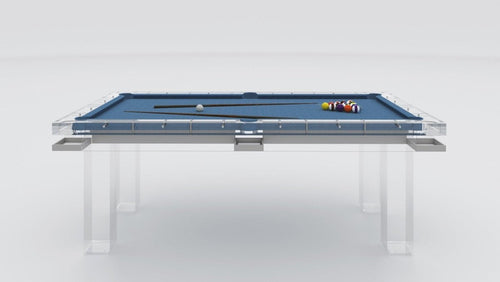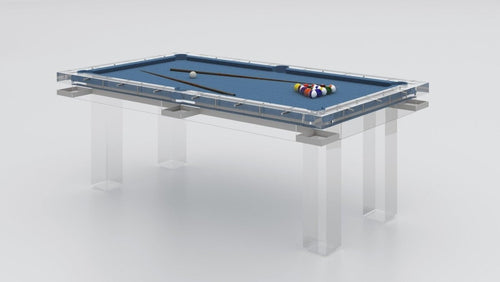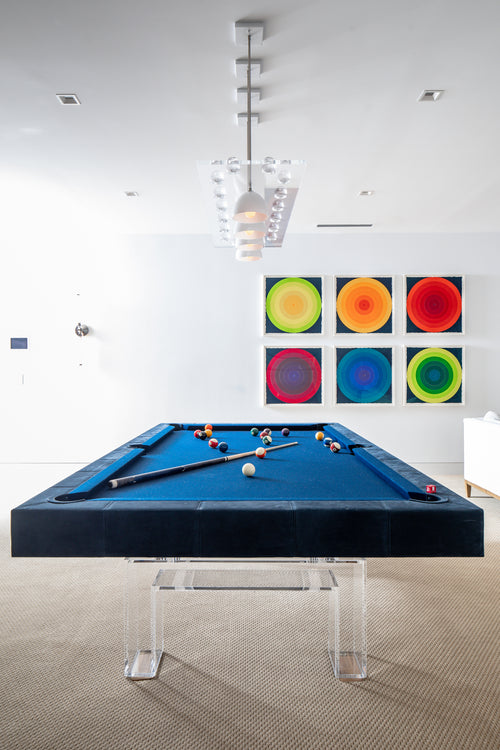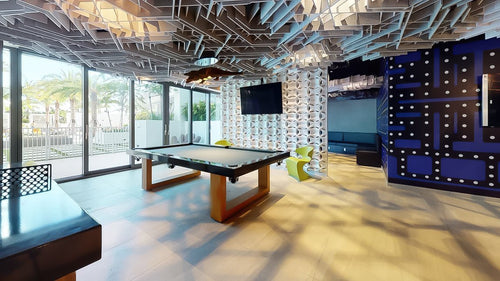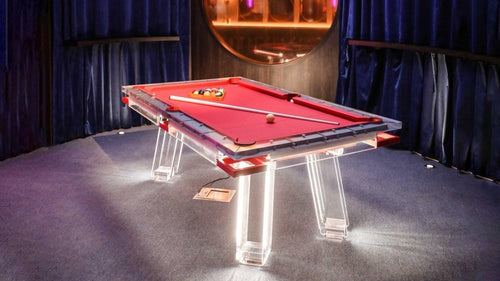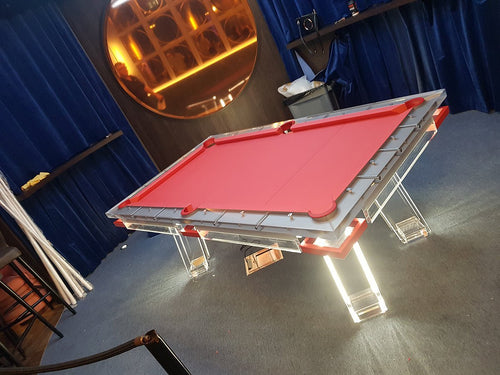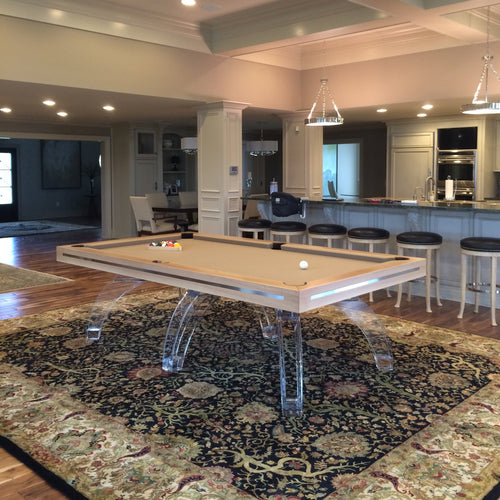


Enjoy our modern designs
Estimated Read Time: 4 mins |
Skittle Pool combines billiard balls with scoring and penalty pins. This guide follows Edwin Kentfield’s 1850 fifth edition of The Game of Billiards, pages 50*–51*. Other pin games use different equipment and rules, so agree the version before play.
Equipment & Setup
- A standard pocket billiard table with three balls (two whites, one red)
- Twelve skittles: ten white scoring pins and two black penalty pins. Values belong to the positions in Kentfield’s diagram and are not all different
- A “pool” of stakes: each player buys a “life” by contributing the agreed ante
Use the setup diagram on page 51* of the linked book, including the two white balls in baulk and the red’s specified position. White-pin values repeat: for example, C/E are worth 1 and F/H worth 2. A marks the pyramid spot, not another pin. Restore displaced pins before the next stroke; the rules explain how to move balls obstructing their spots.
How to Play
- Take one stroke each in the drawn rotation. The opener uses either white from baulk; the second normally uses the remaining white. Later players may play with any of the three balls under rule 4.
- Only the opening stroke must hit the red before a scoring pin. On later strokes the played ball must contact another ball before displacing a scoring pin; red-first is not universal.
- A legally displaced white pin scores the value of its position in the setup diagram.
- Displacing a black pin costs a life. Re-entry is optional: pay the original stake again and declare the purchase before the next player strikes, restarting at zero.
- The game is 31 up. Reaching the winning score ends it; there is no additional last-survivor contest.
Scoring & Penalties
- White skittles: score the value assigned to each legally displaced pin’s position, including repeated values.
- Black skittles: displacing either black pin costs a life; rule 6 also covers knocking one down with the cue, sleeve or otherwise after the stroke.
- Lives: a player who loses a life may leave; repeated re-entry is permitted under the immediate-declaration rule, but discards the previous score.
Why Play Skittle Pool?
- Easy fun, low stakes: ideal for casual gatherings or when time is short.
- Different challenge: pin positions test angle and pace in a different way from ordinary potting.
- Social atmosphere: a fixed rotation keeps everyone involved; non-cash counters can replace the historical stakes by agreement.
- Customizable: Label changed values, targets or re-entry terms as house adaptations, not Kentfield’s rules.
Conclusion
Skittle Pool is proof that innovation can spark from tradition. By marrying billiard balls with skittles, it creates a breezy, accessible pastime that still rewards precision and nerves of steel—especially when either black skittle stands in your way. Gather your friends, set up the pins, and let the merry-round fun begin.
Sources
References checked October 19, 2026: Edwin Kentfield, The Game of Billiards fifth edition 1850, pp 50*–51*: skittle rules and diagram.