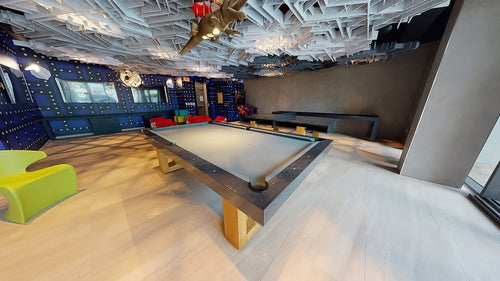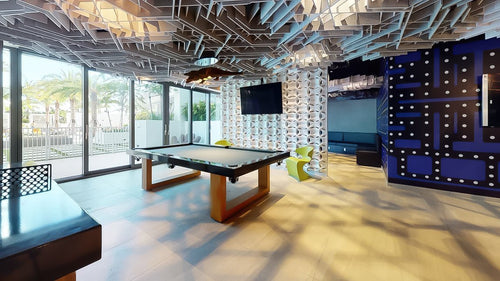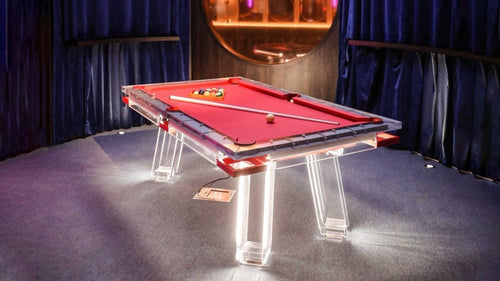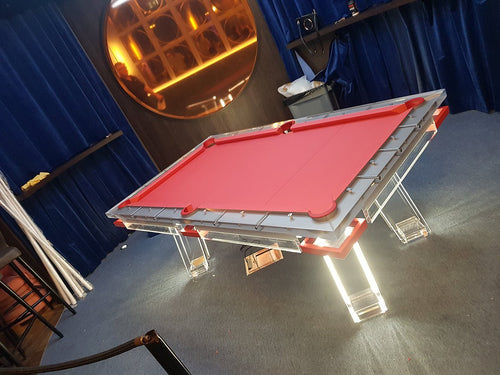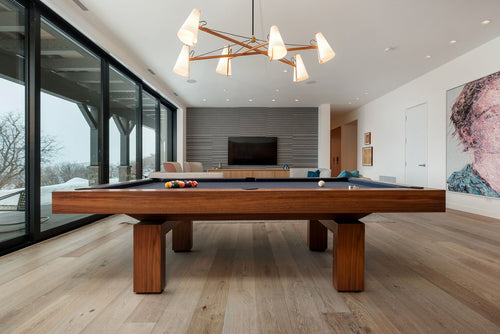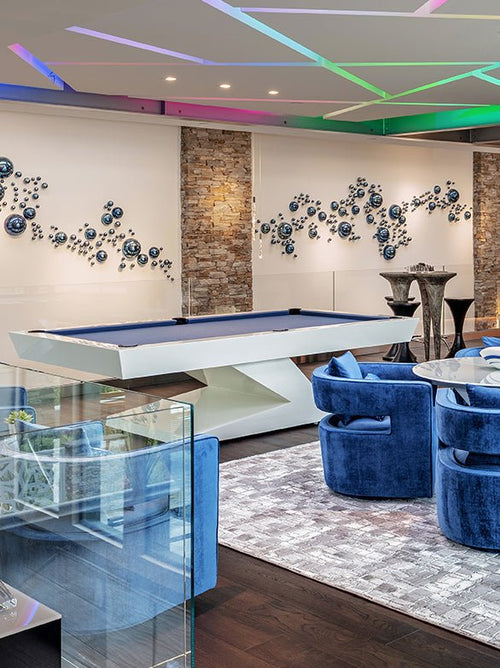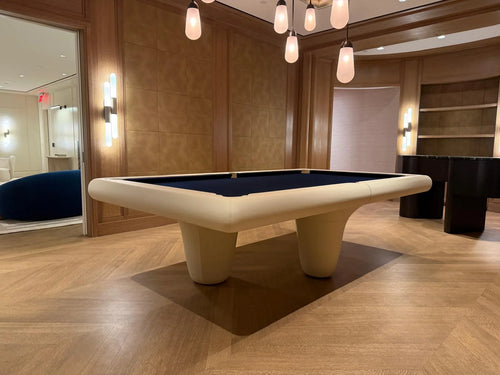


Enjoy our modern designs
History & Culture
Shuffleboard on the High Seas —
Deck Shuffleboard
For nearly two centuries, deck shuffleboard has turned spare hours at sea into ritualized leisure—part game, part cruise icon, and part floating social theater.
Deck shuffleboard is the maritime version of the game: long, low-friction lanes painted on ship decks where players slide pucks toward scoring zones with cues or by hand. It endures because it fits shipboard life almost perfectly—compact, social, low-effort, and visually tied to the romance of ocean travel.
The Premise
Introduction
Deck shuffleboard is one of those activities that feels inseparable from its setting. On land, it can read as quaint. At sea, it makes immediate sense. A ship already provides the ingredients: open deck space, idle time, and a captive social environment.
That is why the game lasted. It asks very little of players, takes up little room, and turns an otherwise empty stretch of deck into an easy, repeatable form of recreation. Cruise culture did not just adopt deck shuffleboard. It practically selected for it.
Deck shuffleboard survives because it solves a very specific leisure problem extremely well: how to make long hours at sea feel social, structured, and pleasantly idle.— On why the game belongs on ships
Early Development
Origins at
Sea
Passengers improvised sliding games on ship decks as early as the 1800s. Long voyages created stretches of downtime, and shipboard entertainment options were limited. Games that required little equipment and little physical strain had a built-in advantage.
By the late 19th and early 20th centuries, cruise and ocean liner culture became more organized, and so did the game. What began as informal sliding contests gradually turned into painted courts with recognizable markings, cues, and pucks. Deck shuffleboard became one of the signature amenities of passenger travel because it was simple to install and easy to understand.
Why It Took Hold
Shipboard life rewarded activities that were compact, repeatable, and social without being exhausting. Deck shuffleboard checked every box.
Practical Logic
Why Deck Shuffleboard Fits
Cruising
The game works because it matches the constraints of a ship. It does not need a dedicated room, intense athleticism, or much setup. It occupies that sweet spot between complete passivity and organized sport.
Reason 01
Minimal Footprint
What It NeedsA Strip of Deck
AdvantageLow Space Demand
Courts require only a long painted lane and a few basic pieces of equipment, which makes them easy to integrate into passenger decks.
Reason 02
Low Physical Demand
Player TypeAlmost Anyone
AdvantageHigh Accessibility
The game does not require speed, strength, or endurance, which makes it ideal for mixed-age passenger groups.
Reason 03
Social Play
AtmosphereConversational
AdvantageSpectator-Friendly
It is easy to talk, watch, and casually participate, which makes it perfect for slow afternoons and informal group routines.
Reason 04
Aesthetic Appeal
Visual HookSea + Teak + Motion
AdvantageCruise Nostalgia
A puck sliding across a ship’s deck with open water behind it is the kind of image cruise lines have always loved to sell.
Travel Lore
Cultural Image and
Rituals
Deck shuffleboard eventually became more than a game. It became a symbol of leisurely cruising itself: sunlit decks, retirees in visors, midday tournaments, and a pace of life deliberately slower than normal land routines. It fit neatly into the mythology of ocean travel.
That image stuck because the game was visible. It happened outdoors, in public, and in spaces passengers moved through repeatedly. On many ships, the court became a daily social node—somewhere between pastime, ritual, and informal club life.
Daily matches, tournament sign-ups, and casual repeat players helped create a predictable rhythm. That matters more than it sounds. On a ship, routine helps strangers become temporary communities, and deck shuffleboard was one of the easier ways to create that routine.
Current Use
Modern Deck Shuffleboard: Nostalgia Meets
Programming
Modern cruise operators keep deck shuffleboard for two reasons at once. First, it signals continuity with classic cruising. Second, it still works as practical onboard programming. That combination is rare. A lot of old shipboard traditions survive only as decoration. This one still functions.
Some lines use it as a formal activity, with hosted tournaments, teams, and prizes meant to pull in mixed-age groups. Others keep courts available as quiet retro amenities for passengers who want low-intensity social recreation away from louder entertainment zones.
The game also adapts well to current media habits. It photographs well, it reads well in short video clips, and it carries a built-in sense of old-school charm. That makes it easy for cruise brands and passengers alike to turn it into shareable content.
Practical Differences
Surface, Equipment, and Play
Differences
Deck courts differ from indoor shuffleboard tables in obvious ways. The playing surface is typically painted wood or composite rather than a polished indoor lane, and the equipment reflects that environment. Outdoor pucks are often larger or differently finished, and cues are designed for the shipboard version of play.
Conditions matter more at sea. Wind, moisture, and minor deck variation all affect control, so matches tend to reward measured placement more than raw pace. In practice, the shipboard version of the game usually leans more toward entertainment than strict technical competition.
Difference 01
Surface Conditions Change the Game
Outdoor deck courts do not behave like indoor shuffleboard tables. The environment adds friction and unpredictability.
What Matters
Shipboard play rewards touch, moderation, and adjustment more than perfect repeatability.
Difference 02
Entertainment Usually Beats Strict Formality
Cruise-ship rules are often relaxed because passenger enjoyment matters more than technical standardization.
What Matters
The point is not purity. The point is accessible, social play that works on board.
Difference 03
Atmosphere Is Part of the Appeal
Deck shuffleboard is inseparable from the setting. Remove the ship, and a lot of the charm disappears with it.
What Matters
The game’s identity comes partly from the court and partly from the horizon around it.
// Conclusion
Deck shuffleboard endures because it turns idle ocean hours into low-effort, high-sociability recreation. It is part nostalgia, part routine, and part practical entertainment. Few shipboard games capture the mood of classic cruising as cleanly as this one.