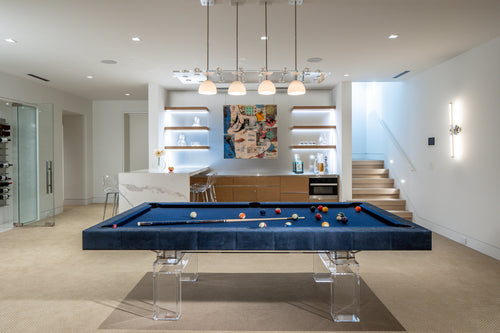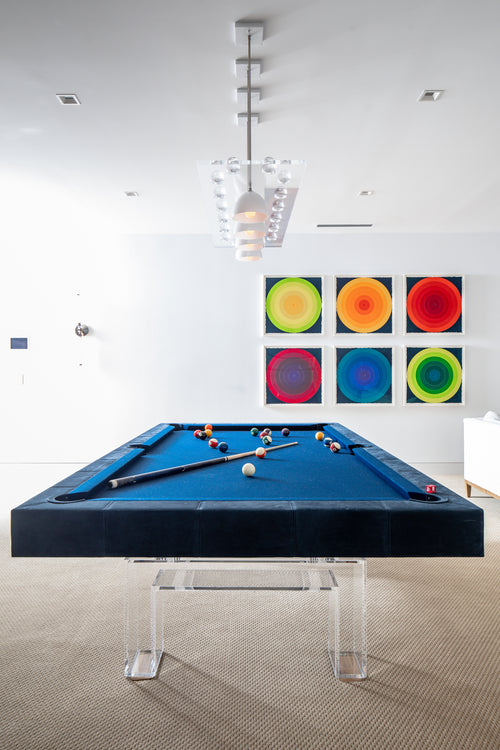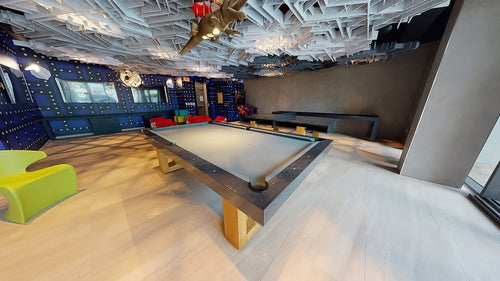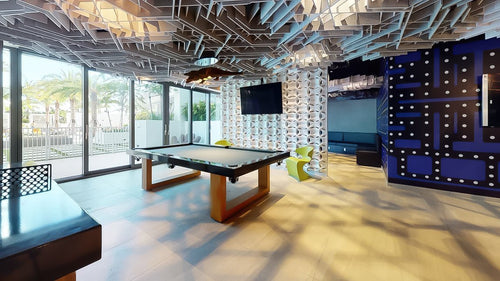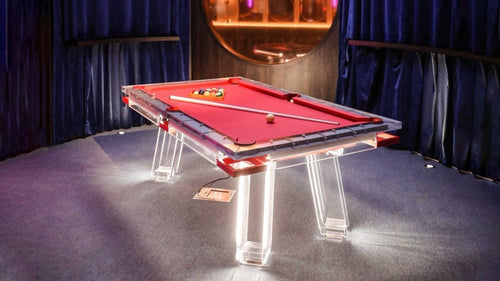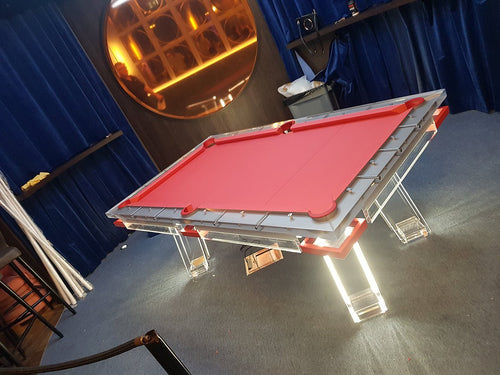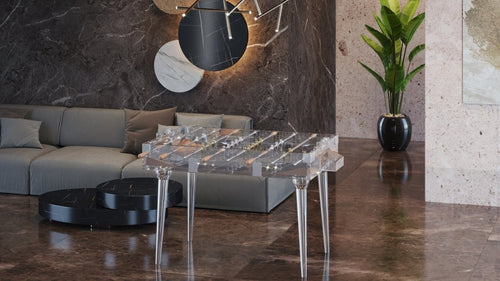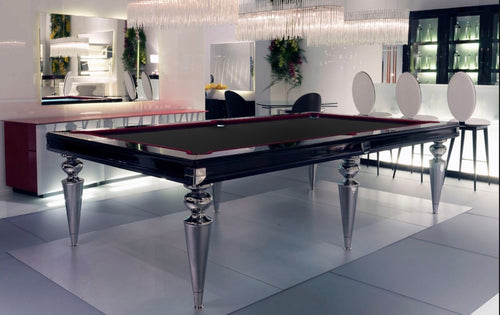


Enjoy our modern designs
History & Culture
Billiards Idioms and
Cultural Impact
From phrases people use in meetings to cinematic pool sharks and viral trick shots, billiards has quietly shaped everyday language far beyond the table itself.
Pool offers vivid images for everyday speech: a blocked shot, a lucky result, a carefully judged angle. Those associations help explain the game’s cultural appeal, but an expression that fits billiards did not necessarily originate there.
The Premise
Introduction
Billiards became more than a game because it supplied people with ready-made metaphors. The table offered visible stakes, clear mistakes, sharp geometry, and immediate consequences. That made it ideal raw material for language.
A good idiom compresses a situation into a few words. Pool provides a useful way to picture several familiar expressions, even where their precise origins are uncertain.
The cultural power of billiards is not just that people played it. It is that the game produced situations vivid enough to become language.— On why billiards entered everyday speech
Language at the Table
Common Expressions Through a Billiards Lens
The following examples explain the imagery and modern meaning. They should not all be read as established claims about where the expressions originated.
Idiom 01
Behind the Eight Ball
Modern MeaningTrapped Position
Pool LogicBlocked Options
In eight-ball, being stuck behind the 8-ball can leave you without a legal path. The phrase now means being cornered or at a disadvantage.
Idiom 02
Call the Shots
Modern MeaningBe in Charge
Pool LogicDeclared Intent
In call-shot games, players identify the intended ball and pocket when required. That offers a useful comparison with “calling the shots” in the sense of directing events; the comparison alone does not prove the idiom’s origin.
Idiom 03
Know the Angles
Modern MeaningBe Savvy
Pool LogicRead Geometry
A strong player understands bank and kick angles. In general use, the phrase means grasping the subtleties of a situation.
Idiom 04
Dirty Pool
Modern MeaningUnderhanded Tactic
Pool LogicUnsporting Play
“Dirty pool” describes underhanded behavior. The language of fair and unfair play makes the expression readily understandable beyond the game.
Idiom 05
Fluke
Modern MeaningLucky Accident
Pool LogicUnintended Pocket
A ball drops, but not the way the player meant. The word now broadly describes improbable luck.
Idiom 06
Scratch
Modern MeaningCostly Error
Pool LogicCue Ball Foul
Pocketing the cue ball is a scratch. The penalty depends on the rules being played; it does not invariably erase all progress. Avoid using this association as proof of the origin of every everyday sense of “scratch.”
“Right on cue” refers to a signal, not a billiard stick. Merriam-Webster distinguishes the performance-signal word, probably from an abbreviation used in actors’ scripts, from the billiard noun derived from French queue, meaning tail. “Cue it up” likewise need not have a pool origin.
Myth and Image
Film and Literature: The Image of the
Pool Shark
Movies and novels gave pool a strong symbolic role. It became shorthand for cool competence, moral ambiguity, risk, and hustle. That image was not invented from nothing, but cinema sharpened it and made it portable.
The Hustler and The Color of Money did a lot of the heavy lifting here. Characters like Fast Eddie Felson turned the pool shark into a modern archetype: talented, dangerous, charismatic, and always half-inside some moral gray zone. In noir and crime fiction, the pool hall became a liminal room where reputations were built and deals were tested.
Why This Image Worked
Pool was visually legible on screen. Every stance, stare, and shot looked loaded with meaning. That made the game ideal for stories about control, risk, and status.
Mass Appeal
Music, Advertising, and
Mass Culture
Pool also entered mass culture through commercials, songs, and graphic motifs. Trick-shot players such as Steve Mizerak appeared in advertising, where the game’s associations with swagger and effortless expertise translated cleanly to brand messaging.
The black 8-ball became one of the most recognizable visual symbols to escape the game. It worked as a design icon, a toy concept, and a general shorthand for mystery, luck, or streetwise cool. Musicians and songwriters used pool references for similar reasons: the language carried ideas of control, chance, and working-class glamour without needing much explanation.
Reputation Shift
The Double Life: Stigma and
Mainstreaming
Pool spent a long time living two cultural lives at once. On one side, poolrooms were often stigmatized as places of gambling, vice, idleness, or petty criminality. That image fed satire, moral panic, and local regulation.
On the other side, the game slowly became domestic and mainstream. Television, recreation centers, bars, and home game rooms softened the image. Over time, pool shifted from danger-signaling space to nostalgic leisure object. The table started to suggest community, retro cool, and even a certain kind of classic interior style.
Old View
Pool as Vice
Poolrooms were once treated as suspect environments linked to gambling, hustling, and wasted time.
Later Shift
The game became normalized through family recreation, bars, youth spaces, and pop culture nostalgia.
Old View
Pool as Marginal
The game was often framed as a niche pastime with a rough social edge rather than a respectable public hobby.
Later Shift
Film, TV, and home use made pool look stylish, familiar, and culturally durable.
Old View
Pool as Small-Time
Despite its reach, the game was easy to underestimate because its venues often felt local and informal.
Later Shift
Its language and imagery spread much farther than the halls themselves ever did.
Visual Culture
Trick Shots, Spectacle, and
Social Media
Trick shots helped pool survive every media shift because they are immediately watchable. Long before social platforms, exhibitions and televised demonstrations already proved that unusual shots could attract people who barely knew the rules.
Social media just intensified that dynamic. Extreme jump shots, massés, and elaborate setups turned cue sports into short-form visual spectacle. That gave younger audiences an entry point into the game and helped refresh billiards as something shareable rather than merely old-fashioned.
Language Logic
Why the Language
Stuck
Billiards makes many expressions easy to picture. A pool table creates scenarios people recognize: you are blocked, you are in control, you got lucky, you made an avoidable error, or you saw an angle someone else missed.
That efficiency matters. “Behind the eight ball” is memorable because it contains an entire story of restricted options and pressure. The game’s geometry, risk, and visible consequences made its vocabulary unusually transferable to work, politics, media, and ordinary life.
// Conclusion
From idioms in business meetings to cinematic hustlers and viral trick-shot clips, billiards has left a durable mark on culture because its language travels well. The table offers clean metaphors for risk, timing, control, and error. That is why the game keeps speaking long after people stop playing it.
Sources
References checked October 19, 2026: Merriam-Webster: distinct histories of the signal and billiard senses of cue.