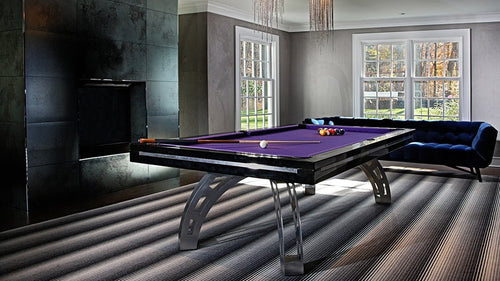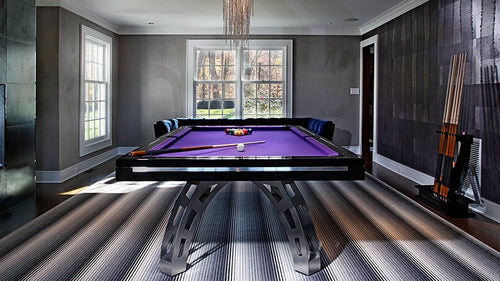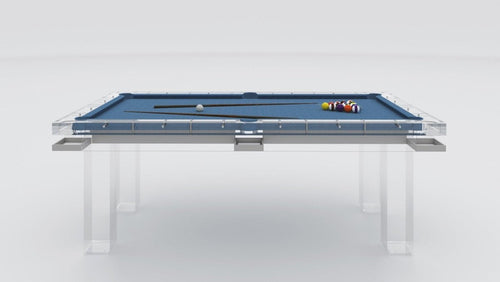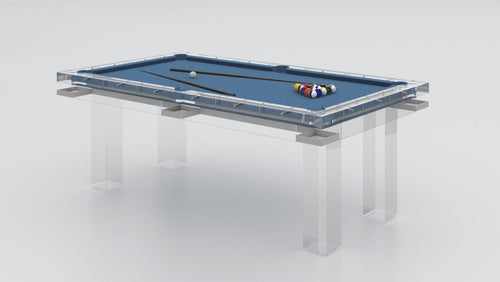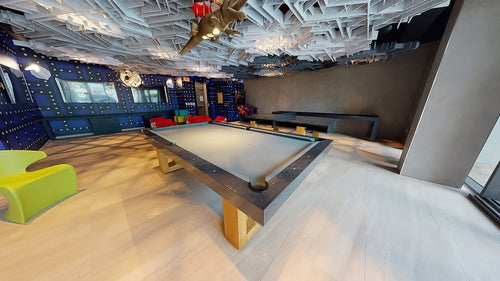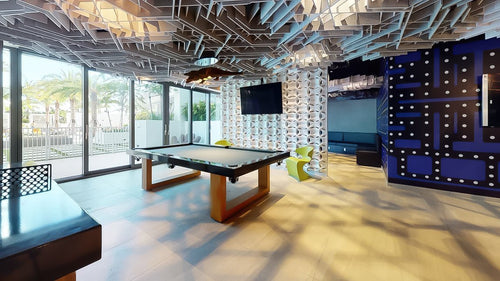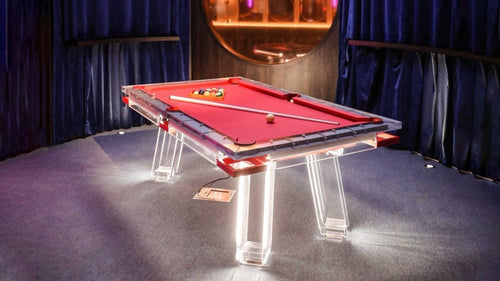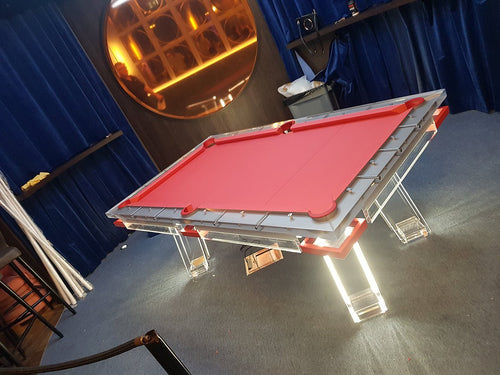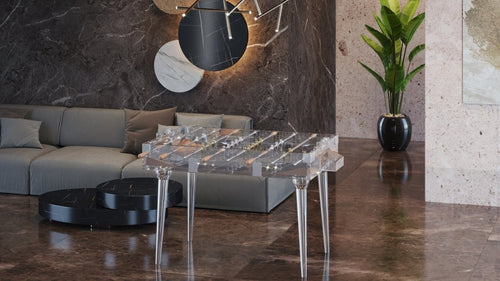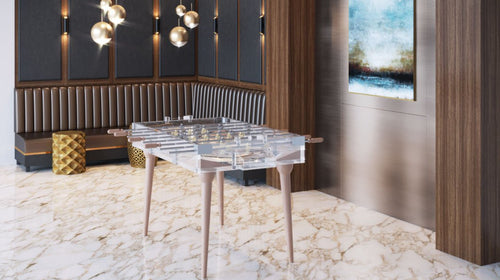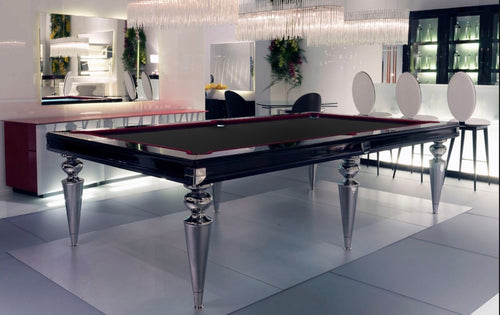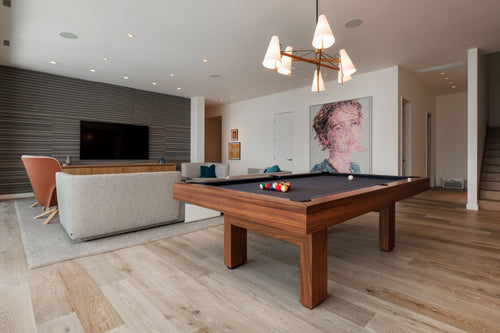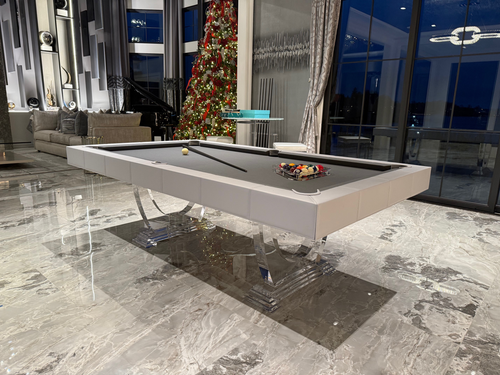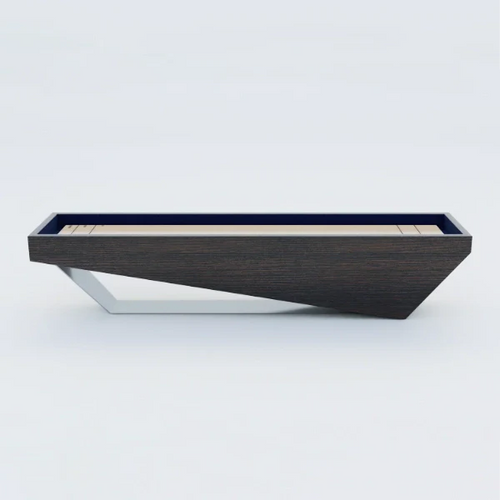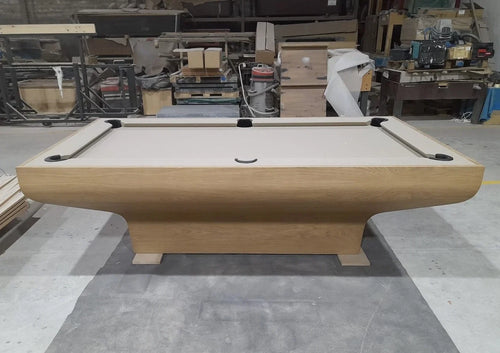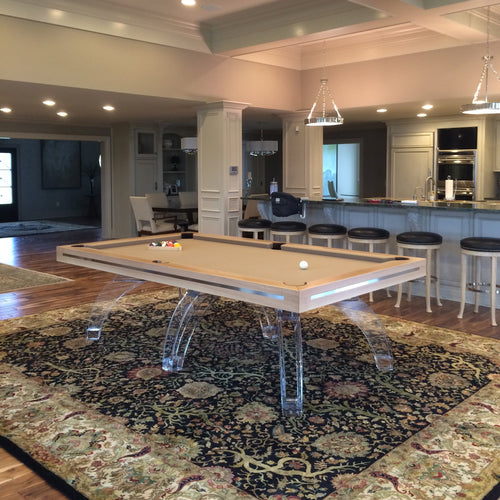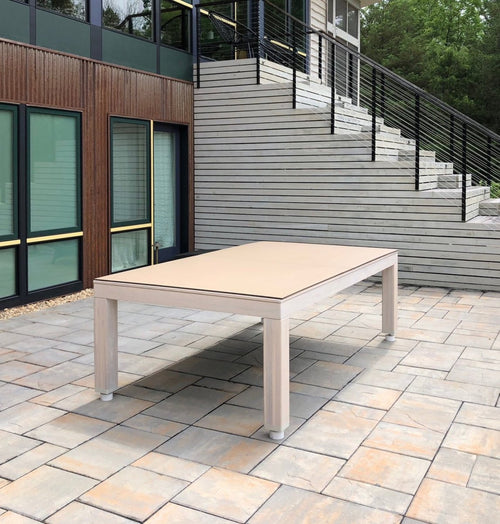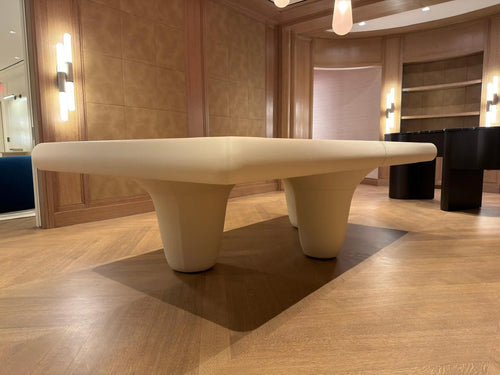


Enjoy our modern designs
When "less is more" meets the game room. Ditch the chunky oak for clean lines.
For decades, the "billiard room" aesthetic was frozen in time: dark green felt, heavy mahogany furniture, and ornate, carved wood everywhere.
But the modern home is different. It features open concepts, neutral tones, concrete floors, and sharp geometric lines. In this environment, a traditional, bulky wooden cue rack sticks out like a sore thumb. It feels dated and heavy.
If you have designed a sleek, contemporary game room, your equipment storage needs to match. The goal of minimalist design isn't just to hide the cues; it’s to turn them into a curated display.
Here are the design concepts that define the modern era of cue storage.
Table of Contents
1. The "Floating" Rack: The Invisible Touch
The ultimate minimalist statement is a rack that looks like it isn't there at all.
- The Design: These racks abandon the traditional "backing board." Instead, they consist of two separate horizontal bars—one for the floor or lower wall to hold the butts, and one for the upper wall to clip the shafts.
- The Effect: Because there is no wood connecting the top and bottom, the wall color shows through. The cues appear to be suspended in mid-air.
- Why It Works: It reduces visual weight. The focus remains entirely on the craftsmanship of your cues, turning your gear into a piece of vertical art.
2. Acrylic and Glass: The "Ghost" Look
If you have a smaller room or want to maximize light, transparency is key.
- The Design: High-density, crystal-clear acrylic or tempered glass frames.
- The Effect: These racks take up physical space but almost zero visual space. They reflect light rather than absorbing it.
- Why It Works: In a modern apartment or a room with large windows, an acrylic rack preserves the "airiness" of the space. It feels premium, high-tech, and museum-quality.
3. Industrial Metal: The Loft Aesthetic
For rooms with exposed brick, concrete floors, or a "warehouse conversion" vibe, wood is often the wrong choice.
- The Design: Brushed stainless steel, matte black powder-coated aluminum, or industrial piping.
- The Effect: These racks are cold, rigid, and engineered. They offer a sharp contrast to the warm wood of the cues.
- Why It Works: It creates a texture contrast. The precision of a CNC-machined aluminum rack complements the precision of a high-end table. It says "serious equipment," not "parlor game."
4. The Architectural Floor Stand
Not all minimalists want to drill into the walls. Modern floor racks have moved away from the "turned legs" and "claw feet" of the past.
- The Design: Think monoliths. Weighted bases made of concrete, stone, or heavy steel with simple vertical rods.
- The Effect: A sculptural element. These racks look like modern art statues when empty, and functional storage when full.
- Why It Works: It anchors the room without cluttering it. A concrete block cue holder is a statement piece that defies the expectation of what a pool rack "should" look like.
Key Features of Minimalist Racks
When shopping for a modern rack, ignore the wood stain. Look for these three engineering features:
- Hidden Hardware: The hallmark of modern design is concealment. A good modern rack will have no visible screws or mounting brackets. It should look seamless.
- Symmetry and Spacing: Traditional racks often cram cues together. Modern racks prioritize negative space, giving each cue room to "breathe" visually.
- Matte Finishes: High-gloss varnish is out. Matte black, satin nickel, or natural oiled wood finishes absorb light and look more sophisticated.
The Bottom Line
You didn't put a lace doily on your modern dining table, so don't put a Victorian-era rack in your modern game room.
The rack is the frame; the cues are the picture. Choose a design that steps back and lets the equipment shine.