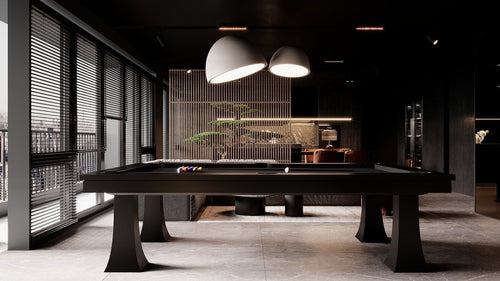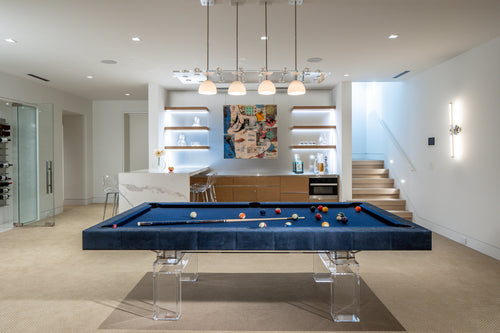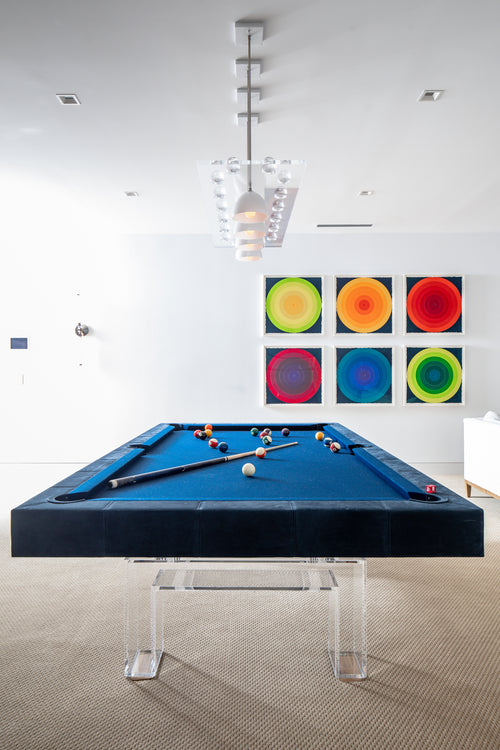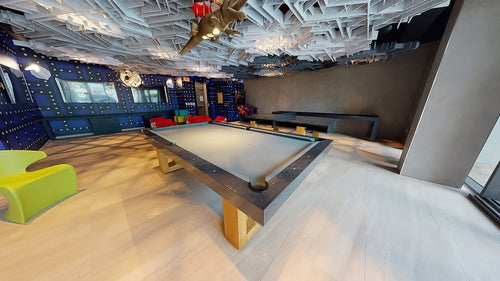


Enjoy our modern designs
What started as a plaster scrape became one of the quietest revolutions in cue sports
Chalk turned slip-prone taps into repeatable spin and rewired how players think about control. In billiards’ earliest days, cues were simple wooden sticks and balls were carved from ivory or hardwood. Those materials offered almost no grip: when a player tried to apply side-spin or hit the cue ball thin, the cue tip would sometimes slide off — a miscue. The practical fix was low-tech and accidental: players rubbed the cue on rough plaster, walls, or ceilings to pick up a powdery residue that increased friction. That crude hack reduced miscues and let shots that looked like tricks become repeatable techniques.
Table of Contents
From plaster scrapes to “Twisting Powder”
Before formal chalk existed, players improved grip by scraping cue tips on plaster or masonry to collect residue. By the early 1800s this behavior went commercial. Billiard-hall attendants and entrepreneurs began packaging prepared powders and selling them as performance aids. One famous example involved a Bath attendant who demonstrated dramatic side-spin shots and marketed a “twisting” powder in small boxes — part showmanship, part utility. The stunt worked: ordinary chalk in a nice box became a standard part of a player’s kit almost overnight.
Chalk enabled new skill — not just prevented miscues
Chalk didn’t merely stop slips — it enabled entirely new cueing techniques. Sidespin (often called “English”), draw, and follow shifted from risky gambles to practical, repeatable tools. Players who learned to apply consistent spin could control cue-ball paths, use rails strategically, and execute positional play with far greater precision. The vocabulary of the game expanded; phrases like “put some English on it” grew out of an era when sidespin techniques and chalking habits spread between players and clubs.
Technical evolution: from calcium to engineered compounds
Early chalks were basic calcium carbonate. By the late 19th century manufacturers began developing harder, more wear-resistant compounds that included abrasives and binders. These formulas were designed to bite into leather tips without crumbling, resist glazing, and last longer between applications. Chalk shifted from a novelty into an engineered product — with patents and optimized recipes — because the performance difference mattered to serious players.
What chalk does for modern play
- Prevent miscues: Chalk increases micro-friction so the tip won’t slip on thin or high-spin contacts.
- Enable consistent spin: A well-chalked tip delivers predictable contact for English, draw, and follow.
- Protect the tip: Good chalk helps prevent glazing and keeps leather receptive.
Different chalk types affect feel. Softer chalks smear and fill faster; harder chalks give a cleaner bite and longer life. Players choose by feel, which is why brand loyalty and chalk rituals are common in cue sports.
Practical tips for players and venues
- Tap, don’t grind: A light, even tap or rotation is better than aggressive rubbing that wears the tip.
- Maintain the tip: Keep leather tips shaped and scuffed correctly — tip condition + correct chalking beats neglect.
- For venues: Provide visible, branded chalk — it’s cheap and noticeably improves guest experience.
Why this small innovation matters historically
Chalk is proof that tiny, practical fixes can pivot an entire sport. Without reliable friction between cue and ball, many advanced techniques would have been harder to discover, teach, or standardize. Chalk turned isolated exhibition tricks into everyday technique, accelerating the tactical and technical development of billiards.
Conclusion
Cue chalk isn’t a cosmetic accessory — it’s the silent partner of precision in billiards. A humble cube of powder made modern cue control possible, transforming spectacle into repeatable skill.