

Enjoy our modern designs
A home theater and a pool table can share a room, but they do not automatically belong together. A theater wants darkness, controlled sightlines, fixed seating, acoustic planning, and a strong screen wall. A pool table wants clearance, movement, overhead light, and space for people to stand. The combination works when the room is planned as a media lounge or entertainment suite. It fails when the pool table is squeezed into a true cinema room.
In this guide:
1. The Difference Between a Theater and a Media Lounge
A true home theater is built around the screen. Seating, sound, walls, ceiling, lighting, and circulation all serve the viewing experience. A media lounge is more flexible. It may include a large screen, bar, seating, games, and casual entertaining.
A pool table usually belongs in the media lounge version, not the strict theater version. If the room is designed for serious movie viewing with tiered seating and a dedicated acoustic shell, adding a pool table can compromise the room. If the room is designed for mixed entertainment, the table can work well.
Design note: If the room is a cinema, protect the cinema. If the room is an entertainment lounge, a pool table can become the second anchor.
2. When the Combination Works
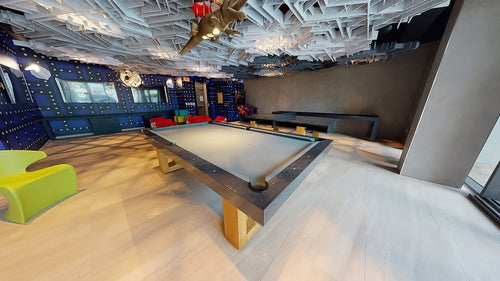
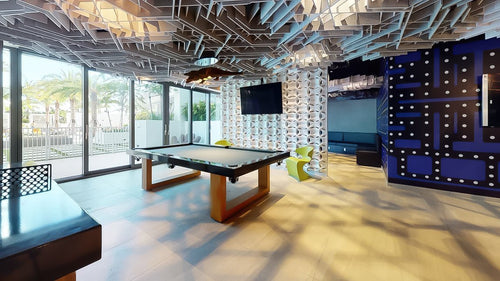
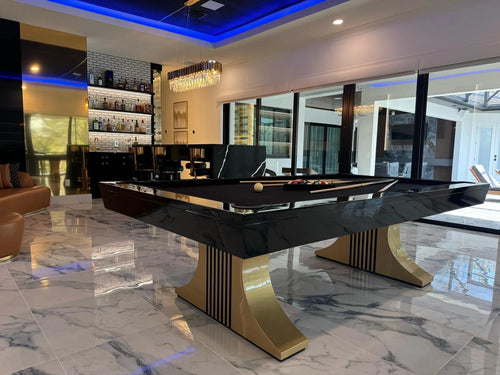
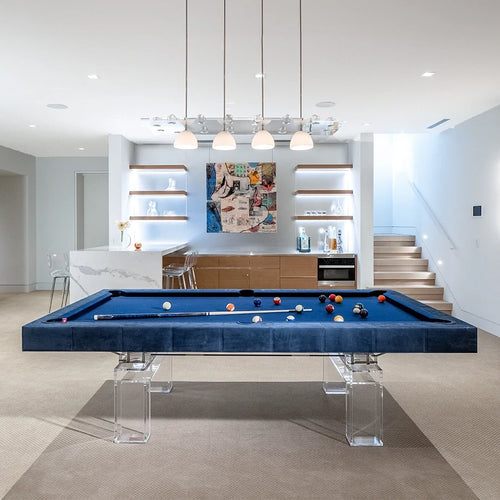
The combination works when the room is large enough to create two clear zones: one for viewing and one for play. The screen and seating should not block cue movement. The pool table should not interrupt the main sightline to the screen. The lighting should be zoned so the room can shift modes.
It works especially well in a basement entertainment suite, private bar, sports lounge, or family media room where the goal is not silent cinema but flexible use.
- Best for media lounges, sports rooms, and entertainment suites.
- Works when the room has enough width and depth.
- Works when lighting zones are separated.
- Works when seating does not crowd the playing area.
3. When It Fails
The idea fails when the pool table becomes an obstacle. If players block the screen, if viewers sit in the cue path, or if lighting the table ruins movie viewing, the room is trying to do too much.
It also fails in rooms where acoustics are very tightly designed. A pool table introduces impact noise, conversation, movement, and different furniture needs. That can clash with a high-performance theater.
- Avoid placing the table between seating and the screen.
- Avoid tight layouts with recliners inside the cue path.
- Avoid a single lighting system for both theater and pool.
- Avoid compromising a serious acoustic theater for casual play.
4. Screen Placement and Sightlines
The screen wall should be planned first. Decide where people sit, how far they sit from the screen, and whether the room is primarily for movies, sports, gaming, or mixed entertainment. Then place the pool table where it does not interrupt that experience.
Side placement often works better than center placement. In a larger room, the table can sit behind or beside the seating zone, but only if there is enough room for clear shots and circulation.
Design note: A pool table should never become the thing everyone looks around to watch the screen.
5. Lighting Conflict Between Movies and Pool
Movies want darkness. Pool wants a lit playing surface. This is the central conflict. The solution is lighting control, not compromise lighting that does both badly.
Use separate lighting zones for the screen area, seating area, bar or walkway, and pool table. The pool table light should be dimmable or separately switched so it can disappear during movie mode and turn on during play mode.
- Use blackout control for screen viewing.
- Use focused, even light over the pool table.
- Keep table lighting from spilling onto the screen.
- Use dimmers and scene controls if possible.
6. Acoustics and Ball Noise
A home theater is sensitive to sound. A pool table creates sound. Break shots, rail contact, ball movement, conversation, and foot traffic can all affect the room. In a mixed-use entertainment space, that is fine. In a serious theater, it may be a problem.
Soft materials can help: carpet, rugs, acoustic panels, upholstered seating, heavy curtains, fabric wall panels, and acoustic ceiling treatments. These can improve both theater sound and the comfort of the game area.
- Use acoustic treatments that support both uses.
- Avoid bare hard floors if the room already echoes.
- Keep the table away from delicate speakers or equipment racks.
- Consider door placement if noise could reach bedrooms or formal spaces.
7. Seating Layouts That Actually Work
The seating should not wrap the pool table too tightly. Recliners, sofas, ottomans, and drink tables need to stay outside the playing envelope. Spectator seating can work near the table, but it should be intentional.
A good layout might place theater seating toward the screen, a bar or counter behind it, and the pool table behind or to the side with its own lighting. Another option is to place the table as the central feature and use a large screen on one wall for casual viewing rather than full cinema use.
- For serious viewing: screen and seating get priority.
- For sports lounge use: pool table and screen can share attention.
- For family rooms: flexible seating is often better than fixed theater rows.
- For narrow rooms: choose one primary function instead of forcing both.
8. The Best Design Approach
The best version is not a theater with a pool table. It is a media and game lounge with theater-quality elements. That distinction matters. You can still have a large screen, excellent sound, comfortable seating, and dark finishes, but the room remains flexible enough to support play.
Choose the primary purpose first. If movies are the priority, protect the screen, seating, and sound. If entertaining is the priority, design the room around multiple zones and make the pool table part of the social layout.
Design note: A mixed-use room can be excellent. A compromised theater usually is not.
The Bottom Line
A pool table can go in a home theater room only if the room is really a media lounge or entertainment suite with enough space, separate lighting, and smart seating.
For a true cinema room, the pool table usually belongs outside the theater or in an adjacent lounge. For a flexible entertainment space, it can be one of the best additions, as long as screen sightlines, cue clearance, lighting, and acoustics are planned from the start.