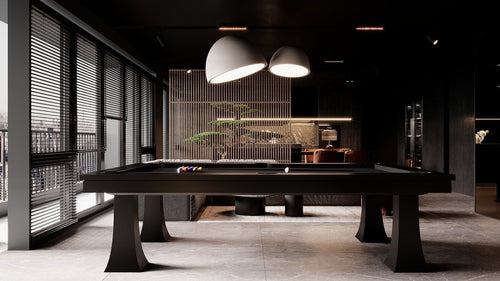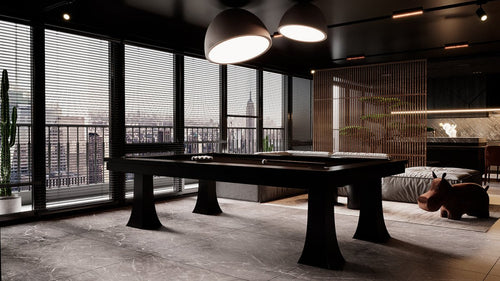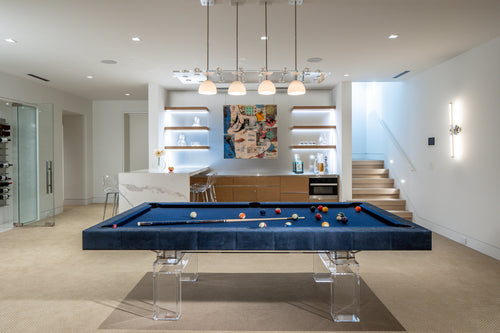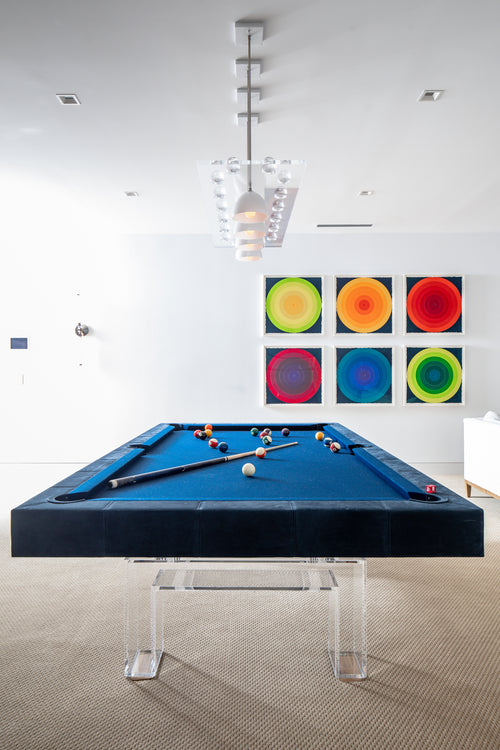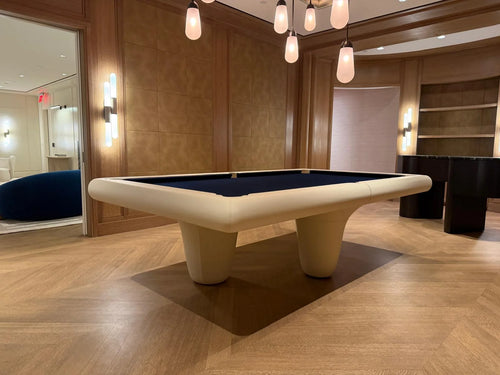


Enjoy our modern designs
Stone and marble can make a pool table feel extraordinary. They can also make it feel heavy, cold, overdesigned, or ridiculous.
That is the tension. A pool table already has visual weight. It is large, horizontal, and usually placed in a room where people are meant to gather. Add stone or marble, and the table immediately becomes more architectural. The material carries luxury, permanence, and drama. But because stone has such a strong personality, it needs to be used with discipline.
The question is not whether stone or marble is elegant. It can be. The real question is whether it belongs on that table, in that room, at that scale.
Table of Contents
1. Why Stone Changes the Table So Dramatically
Stone is not a neutral material. Marble, travertine, limestone, granite, quartzite, onyx, and slate all carry strong associations.
Marble feels formal, luxurious, and expressive. Travertine feels warm, architectural, and Mediterranean. Limestone feels soft, natural, and understated. Granite can feel durable and substantial, but sometimes too kitchen-like if handled badly. Quartzite feels high-end and dramatic. Onyx feels glamorous and theatrical. Slate feels grounded, quiet, and structural.
When stone appears on a pool table, it changes the table from furniture into something closer to architecture. That can be beautiful, but it can also make the table feel too permanent or too heavy if the rest of the room is not strong enough to support it.
2. Marble Accents
Marble is the most dramatic stone option. It has immediate luxury appeal because of its veining, depth, and association with high-end interiors.
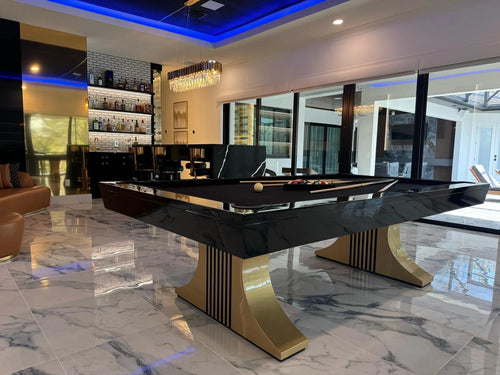
On a pool table, marble can be used in side panels, base elements, legs, aprons, rail inlays, end caps, or decorative accents. Marble works best when it is treated as a major design feature, not a random accent. If the marble is there, it should matter.
- Best For: Formal lounges, penthouses, luxury entertainment rooms, Art Deco-inspired spaces, contemporary villas, Miami-style interiors, and rooms that already use polished stone, metal, lacquer, glass, or sculptural lighting.
- Pairs With: Black lacquer, walnut, dark oak, white oak, brass, bronze, polished nickel, chrome, black felt, charcoal felt, navy felt, taupe felt, hidden pockets, modern pockets, gloss or satin finishes, sculptural lighting, and leather seating.
- Watch Out For: Strong veining, high gloss, polished metal, dramatic lighting, and bold felt all competing on the same table can make the piece feel chaotic.
3. Travertine Accents
Travertine is one of the best stone choices for modern interiors because it has warmth without the visual drama of marble. It feels architectural, natural, and expensive in a quieter way.
On a pool table, travertine can soften the idea of stone. It does not feel as cold or glamorous as marble. It feels more grounded, which makes it especially useful in Mediterranean, organic modern, coastal, desert modern, and warm contemporary interiors.
- Best For: Organic modern homes, coastal residences, Mediterranean interiors, warm neutral rooms, desert homes, villas, and interiors with plaster walls, limestone floors, oak, linen, leather, bronze, and soft lighting.
- Pairs With: White oak, walnut, taupe felt, olive felt, charcoal felt, bronze, brushed brass, blackened steel, simple leather pockets, hidden pockets, matte finishes, satin finishes, plaster walls, neutral rugs, and cream upholstery.
- Watch Out For: Travertine can look too beige if the whole room is already neutral and flat. It needs contrast through darker wood, shadow lines, bronze accents, textured rugs, or stronger felt color.
The Pro Insight: Travertine is often more livable than marble. It gives stone presence without screaming for attention.
4. Limestone Accents
Limestone is softer and quieter than marble. It has a calm, matte, natural quality that works beautifully in understated interiors.
Where marble feels decorative and expressive, limestone feels architectural. It adds weight, texture, and refinement without becoming visually loud. This makes limestone a strong choice for pool tables that need stone presence but not stone drama.
- Best For: Minimalist homes, organic modern interiors, coastal homes, warm neutral spaces, villas, and rooms where the design language is calm and material-focused.
- Pairs With: White oak, pale walnut, blackened oak, taupe felt, charcoal felt, olive felt, brushed brass, bronze, matte black metal, hidden pockets, simple leather pockets, matte finishes, satin finishes, linen upholstery, wool rugs, and plaster walls.
- Watch Out For: Limestone can feel too quiet if everything else is also pale and soft. It needs contrast somewhere.
5. Onyx and Dramatic Stone
Onyx, highly veined marble, and other dramatic stones are the most dangerous options. They can be stunning. They can also look absurd.
Onyx has translucency, color variation, and a jewelry-like quality. Strongly veined marble or quartzite can have major visual movement. These materials are not subtle. They demand attention immediately.
- Best For: Highly designed statement rooms, luxury entertainment spaces, penthouses, hospitality-inspired interiors, glamorous lounges, and spaces with controlled lighting.
- Pairs With: Black lacquer, dark walnut, high-gloss finishes, satin black finishes, polished nickel, chrome, brass, black felt, charcoal felt, navy felt, hidden pockets, minimal accessories, and sculptural lighting.
- Watch Out For: The more dramatic the stone, the quieter the rest of the table should usually be.
6. Stone as an Accent vs. Stone as the Main Feature
This is the most important distinction. Stone accents are usually easier to use well. A marble foot detail, travertine base element, limestone side panel, or stone inlay can add luxury without overwhelming the table.
A stone-dominant pool table is a much bigger commitment. If the base, apron, sides, or major surfaces are stone, the table becomes visually heavy and highly architectural. That can be incredible in the right room, but it needs space, lighting, and strong surrounding materials.
| Approach | Best Use |
|---|---|
| Stone Accents | Base panels, pedestal faces, foot details, end caps, side inserts, apron details, thin inlays, and plinth elements. |
| Stone-Dominant Tables | Statement rooms where the table is meant to anchor the entire space. |
7. Weight, Warmth, Felt, Wood, Metal, and Pockets
Stone looks heavy because it is visually heavy, even when used as a veneer or accent. Good design uses stone to create grounding, not bulk. A stone base can make sense if the top is visually lighter. A stone side panel can work if the rail is clean. A marble accent can look sharp if the rest of the table has enough negative space.
Stone can also feel cold, especially marble. The fix is warmth: wood, leather, textured rugs, warm lighting, bronze, brass, or softer felt colors. A marble table with black felt, chrome, and white walls may feel sharp but cold. Add walnut, leather seating, or warm lighting, and the whole thing becomes more livable.
Felt color matters more with stone. Black felt makes stone feel dramatic. Charcoal is one of the safest choices. Navy brings richness. Taupe works beautifully with travertine and limestone. Olive gives stone a more earthy personality. Burgundy can work in traditional rooms, but it can become heavy quickly.
Pocket style should support the level of formality created by the stone. Hidden pockets are usually the cleanest and most architectural. Modern low-profile pockets are versatile. Leather pockets can warm up stone. Shield pockets are harder to use and can become visually heavy fast.
8. When Stone Becomes Too Much
- Using Too Much Veining: Strong veining already has movement. The rest of the table should calm down.
- Pairing Too Many Luxury Materials: Marble, chrome, gloss lacquer, loud felt, ornate pockets, and complex geometry together usually feels desperate.
- Ignoring Scale: Stone can make a large table feel even heavier if the proportions are wrong.
- Forgetting Warmth: A stone table still needs to feel social, touchable, and livable.
- Using Stone Just to Signal Luxury: Marble does not automatically make the design better. If the table shape is weak, stone can make it look expensive and worse at the same time.
- Choosing the Wrong Felt: The felt can either ground the stone or make the whole table feel chaotic.
The Pro Insight: Elegance usually comes from control. Stone should anchor the table, not turn it into a sample board of expensive materials.
The Bottom Line
Stone and marble accents can be elegant on a pool table, but only when they are controlled.
Marble brings drama and luxury. Travertine brings warmth and architectural calm. Limestone brings softness and quiet refinement. Onyx and dramatic stone bring spectacle, but they need serious restraint.
Stone is best used as an accent unless the room is designed around a true statement table. A little stone can make a pool table feel bespoke and architectural. Too much stone can make it feel heavy, cold, or desperate to look expensive.
The best stone-accented pool tables do not scream. They anchor the room.