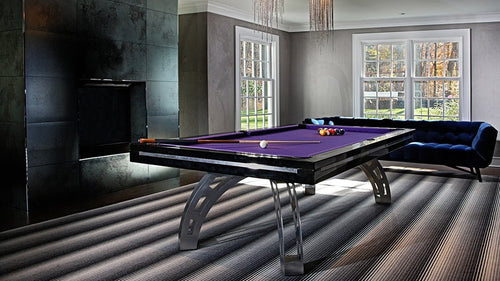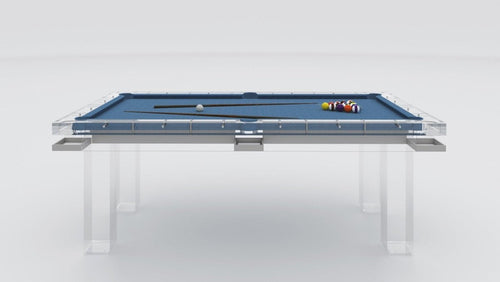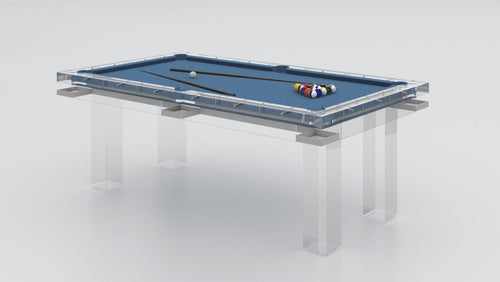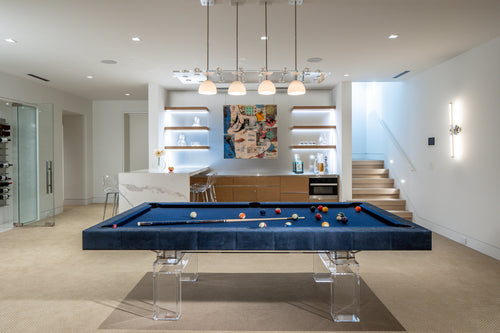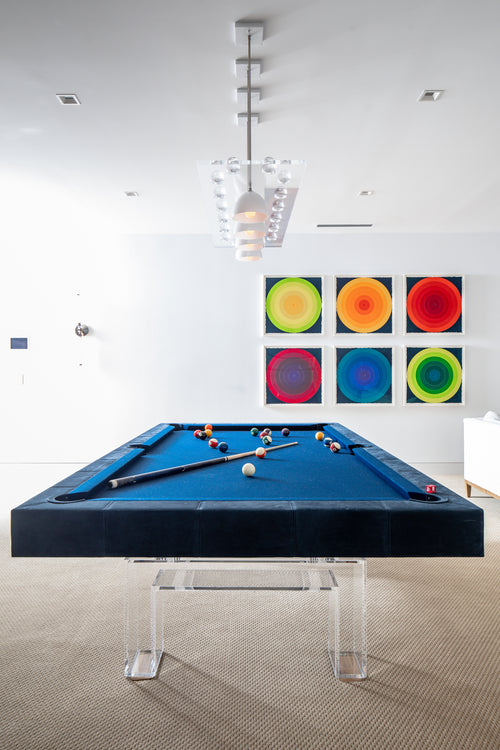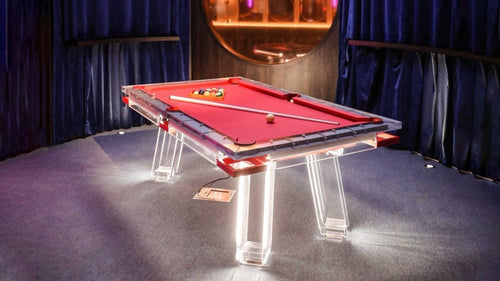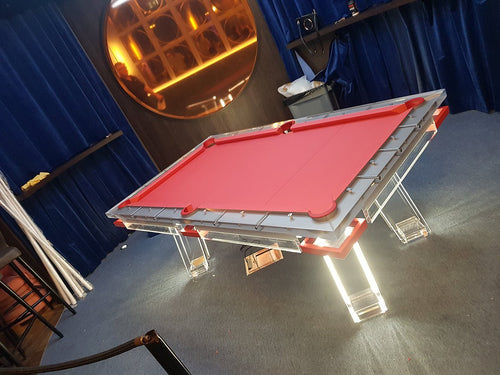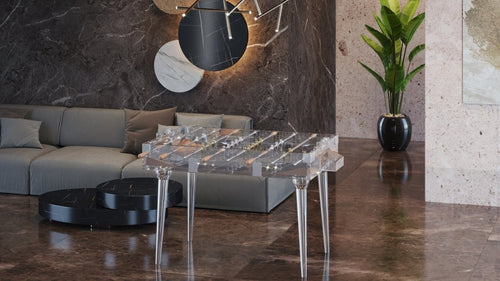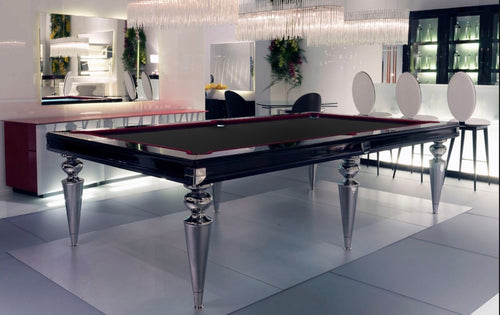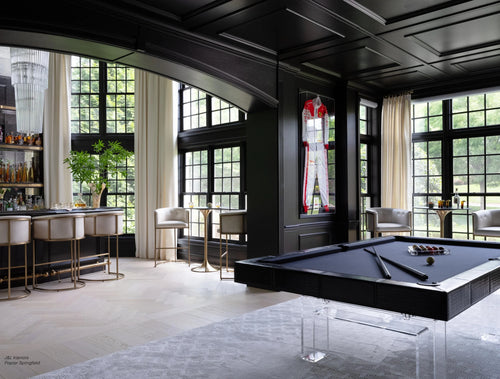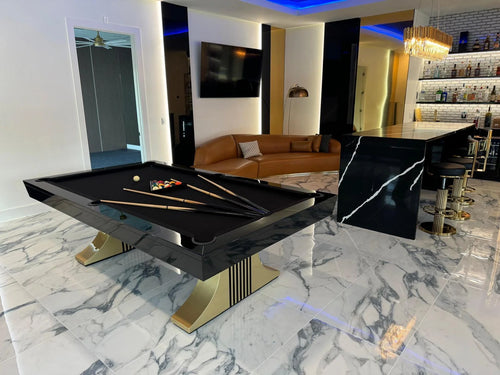


Enjoy our modern designs
From Tudor halls to palatial drawing rooms — how billiards moved indoors, won royal favor, and earned the nickname “the noble game.”
Estimated Read Time: 4 min
Billiards began as a lawn pastime and was brought inside to velvet-green tables. Favored by kings and courtiers, it became both genteel recreation and a public pastime — the original “noble game.”
Table of Contents
From lawn to table: the early days
Billiards started in late medieval Europe as a lawn game similar to croquet. Players moved the action indoors by placing play surfaces over tables and covering them in green cloth to mimic grass — the ancestor of today’s baize-covered tables. Early records tie the game to royalty: King Louis XI of France is said to have owned one of the first indoor billiard tables in the late 1400s, and those primitive tables often had a single central hole rather than modern pockets. (Sources: The Tudor Enthusiast; QCBilliards.)
Royal patronage and Tudor courts
By the Tudor era, billiards had become part of courtly life. Inventories from the period list “boards covered with green cloth,” and court figures such as Cardinal Wolsey and Henry VIII are associated with the game — Henry likely played when visiting Wolsey’s houses. The game’s presence in elite circles made it a marker of social status and leisure. (Source: The Tudor Enthusiast.)
“The noble game”
By the mid-1500s France was already calling billiards “the noble game,” a label that stuck into the 18th and early 19th centuries. Ornate tables crowded palace drawing rooms and country estates; at the same time the game’s rules and equipment began to standardize. Yet despite its aristocratic trappings, billiards never stayed exclusive — by the late 17th century many towns recorded public billiard tables, and the sport spread into taverns and public houses, bridging social classes. (Sources: The Tudor Enthusiast; QCBilliards; RauAntiques.)
Famous players and cultural traces
Royal players left memorable stories. Mary, Queen of Scots, reportedly remarked bitterly when her captors confiscated her table — after her execution a report even claimed her body had been wrapped in the table’s green cloth, underscoring how connected some nobles were to the pastime. Shakespeare later references billiards in Antony and Cleopatra (1600), showing how the game had entered cultural awareness beyond elite circles. (Sources: The Tudor Enthusiast; QCBilliards.)
Why the mix of noble origin + public appeal matters
Billiards’ trajectory — from aristocratic curiosity to widespread public pastime — helps explain its staying power. Noble endorsement gave the game cachet; public adoption gave it momentum. That dual identity shaped the game’s material culture (from ornate, carved rails to simple pub tables) and ensured both that makers built for prestige and that entrepreneurs built for volume.