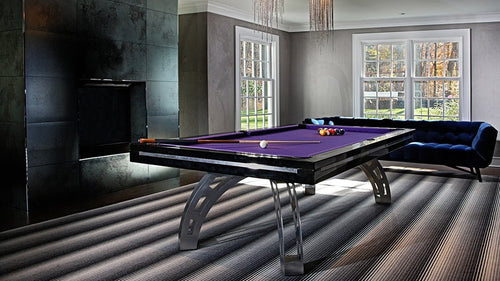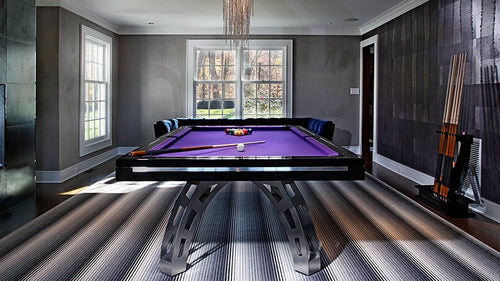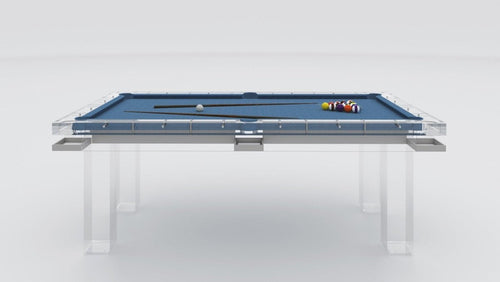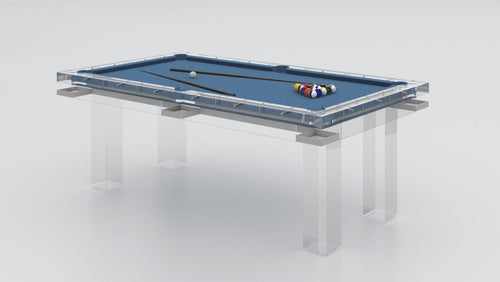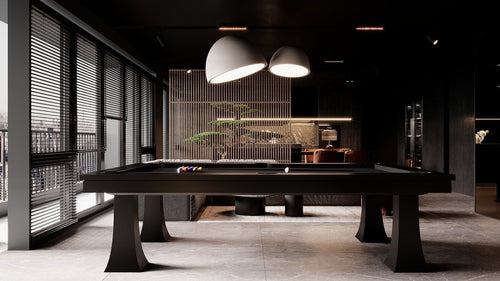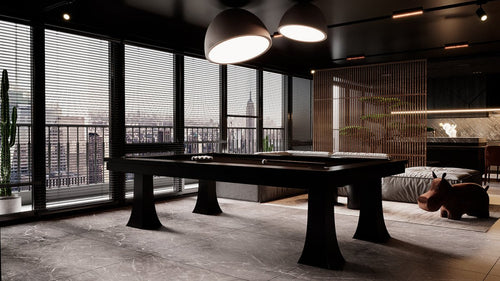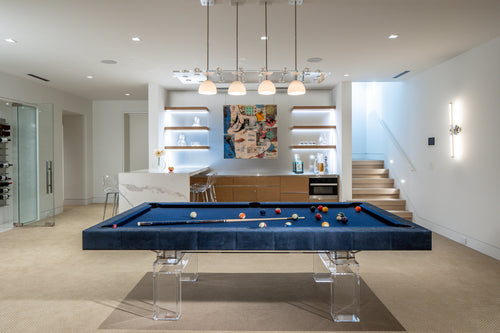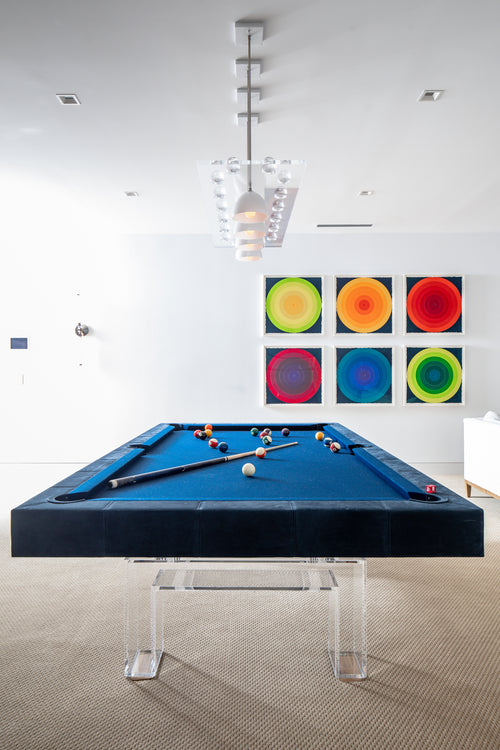


Enjoy our modern designs
Biophilic design is about more than adding plants to a room. It uses natural materials, daylight, organic textures, views, airflow, and visual softness to make interiors feel more connected to nature. A pool table can fit beautifully inside that kind of room, but it has to be handled carefully. The wrong table, lighting, or layout can turn a calm biophilic space into a normal rec room with a few plants in the corner.
In this guide:
1. What Makes a Game Room Biophilic
A biophilic game room should feel grounded, tactile, and connected to the natural world. That can mean wood, stone, linen, clay, plaster, greenery, garden views, daylight, water, natural color palettes, and softer forms. The room should feel restorative even though it is designed for play.
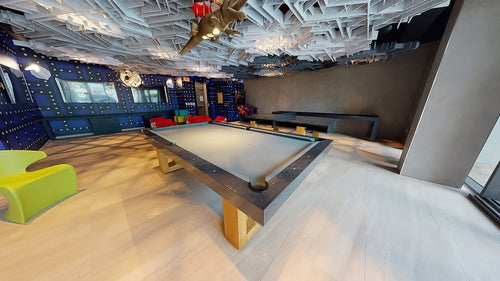
This is where many game rooms fail. They treat entertainment as an excuse for visual noise: neon signs, oversized screens, novelty decor, bright felt, heavy contrast, and cluttered accessories. A biophilic game room does the opposite. It keeps the experience social but lowers the visual volume.
Design note: The room can still be fun. It just should not feel like a basement arcade wearing a plant costume.
2. Why Pool Tables Can Actually Fit the Concept
A pool table is already compatible with biophilic design in one important way: it is physical, analog, and social. It does not require a screen. It creates movement, focus, and conversation. In a world of digital entertainment, that alone makes it useful in a calmer home environment.
The table also has strong material potential. Wood frames, natural cloth colors, leather pockets, stone details, and architectural forms can all support a biophilic room when selected with restraint.
- It encourages analog entertainment.
- It gives the room a natural gathering point.
- It can be built from warm, tactile materials.
- It can support a slower, more social form of leisure.
3. Choose Materials That Feel Natural
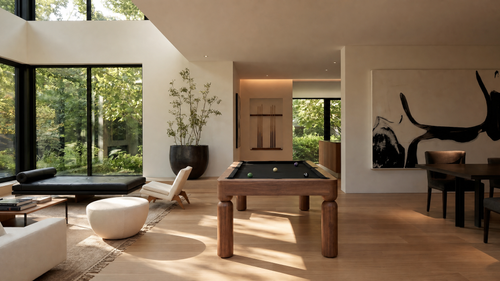
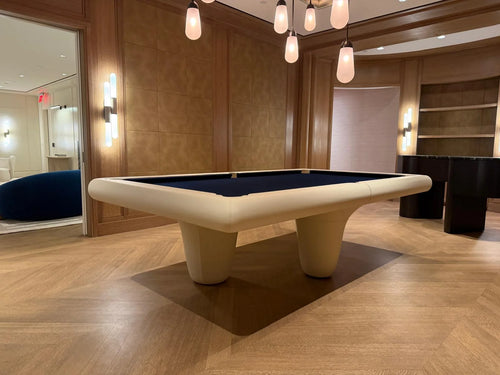
Material choice matters more than decoration. In a biophilic room, the pool table should feel like a piece of furniture or architecture, not equipment. Warm woods, open-grain finishes, honed stone, matte metal, woven textures, and soft leather details usually work better than glossy lacquer or overly reflective chrome.
The table does not need to mimic nature literally. It simply needs to avoid fighting the room. If the space has oak paneling, limestone floors, plaster walls, rattan seating, or linen upholstery, the table should borrow from that language.
- Walnut, oak, ash, and other warm woods work well.
- Honed or leathered stone feels calmer than high-polish stone.
- Matte metal is usually softer than mirror-finish metal.
- Leather pockets or rail details can add warmth without clutter.
4. Use Cloth Color Carefully
The cloth is one of the largest visible color fields in the room. In a biophilic game room, it should be chosen like a design surface, not as an afterthought. Traditional green can work beautifully if it feels intentional. Muted olive, sage, moss, taupe, charcoal, soft blue, or warm grey can also work depending on the room.
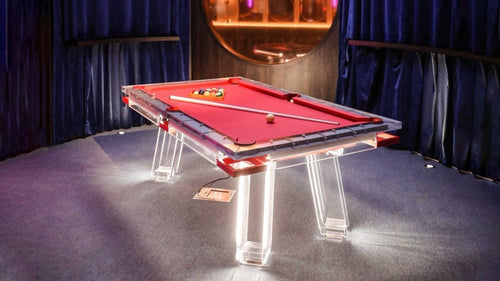
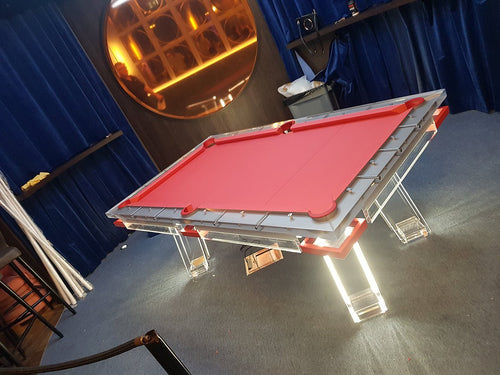
Avoid colors that create a sports-bar feeling unless that is the goal. Bright tournament blue or intense red may play well in another room, but they can overpower a calm natural palette.
Design note: In a biophilic room, the felt is not just felt. It is one of the room’s main color decisions.
5. Manage Daylight and Glare
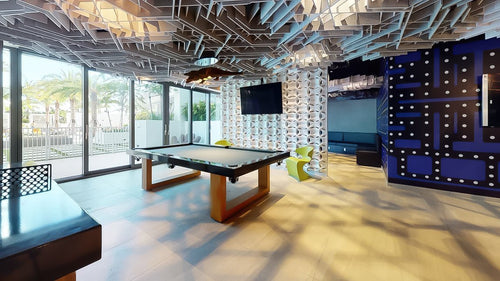
Biophilic rooms often use large windows, skylights, glass doors, and garden views. These are beautiful, but they can create glare on the playing surface or make the table difficult to use at certain times of day. Direct sun can also be hard on materials over time.
The solution is not to remove daylight. It is to control it. Use window treatments, overhangs, filtered glass, architectural shade, or table placement that gives the room natural light without turning the cloth into a glare field.
- Avoid direct harsh sunlight across the table.
- Use sheer or filtered window treatments where needed.
- Consider the sun path before finalizing placement.
- Place the table to enjoy views without making players stare into bright glass.
6. Plants Near a Pool Table
Plants can help a game room feel alive, but they need to be placed intelligently. Large plants can soften corners and frame garden views. Smaller plants can work on sideboards or shelves. But plants should not interfere with cue movement, shed onto the cloth, or create moisture problems near the table.
Avoid overplanting. The point is not to build a greenhouse around the table. A few strong plant moments usually feel more luxurious than dozens of small pots.
- Keep plants outside cue clearance zones.
- Avoid plants that drop leaves onto the table.
- Do not place heavy planters where players need to walk.
- Use greenery to frame the room, not crowd the table.
7. Indoor Outdoor Flow and Pool Table Placement
A pool table can sit beautifully near glass doors, terraces, courtyards, or gardens. This gives the room a relaxed indoor-outdoor feeling, especially in warmer climates or homes designed around entertaining. But the table still needs a stable interior environment.
If doors are frequently open, consider humidity, dust, insects, and temperature swings. If the table is in a covered transitional space, make sure the materials and maintenance expectations match the exposure.
Design note: Indoor-outdoor flow is good. Treating an indoor pool table like patio furniture is not.
8. How to Keep the Room Calm
The final test is visual calm. When you walk into the room, the pool table should feel anchored, not loud. The lighting, plants, furniture, cloth, storage, and artwork should all support the same mood.
Use fewer, better objects. Hide accessories. Keep wall decor restrained. Avoid mixing too many wood tones. Let the table, view, and materials do most of the work.
- Use built-in or concealed storage for cues and accessories.
- Choose one dominant natural material and support it with quieter secondary materials.
- Keep lighting warm and controlled.
- Avoid novelty decor that breaks the room’s calm.
The Bottom Line
A pool table can belong in a biophilic game room if it is treated as a natural, architectural object rather than a loud entertainment feature.
Use warm materials, muted cloth, controlled daylight, smart plant placement, and clean storage. The result is a room that feels social without losing the calm that makes biophilic design work in the first place.