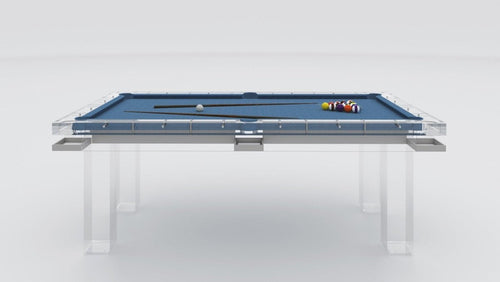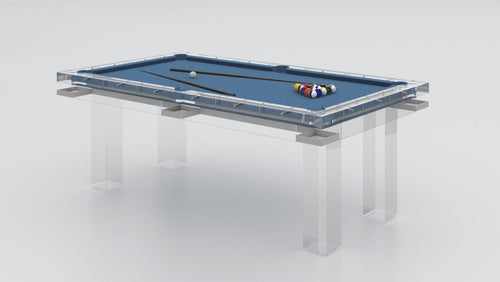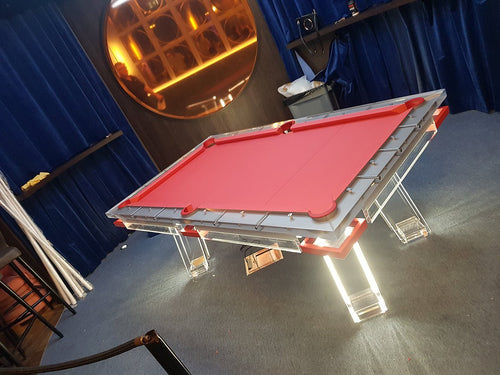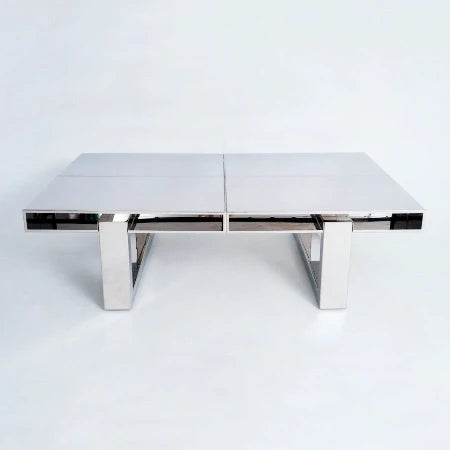


Enjoy our modern designs
A custom pool table can involve months of design, sampling, fabrication, freight, and installation. Small unanswered questions about dimensions, finishes, access, or responsibility can stop production if they are discovered too late.
A clear submittal and approval process keeps decisions moving and gives the owner, designer, contractor, fabricator, and installer a reliable project record.
In this guide:
1. Build the Schedule Backward
Start with the required installation date and work backward through site-readiness verification, freight, packaging, final inspection, fabrication, material purchasing, finish approval, shop drawing review, and design confirmation.
Ask the actual fabricator how long each stage requires. A general furniture schedule may not account for slate, custom metalwork, specialized finishes, international freight, or installer availability.
Include review periods for the designer, contractor, owner, and consultants. Record any decision date that must be met to preserve the installation schedule.
2. Define the Submittal Package
A complete package allows the team to understand the table as a coordinated whole. Fragmented submissions can create conflicting or incomplete approvals.
- Dimensioned plans, elevations, sections, and details
- Written construction and playing-component information
- Wood, metal, paint, leather, cloth, and hardware samples
- Accessory and cue-storage information
- Component dimensions, weights, and packaging plan
- Installation and site-readiness requirements
- Current fabrication, freight, and installation schedule
Design note: Label every sample with the project, table component, finish code, date, and revision.
3. Organize the Review Process
Establish one formal review path. The contractor may review scope and coordination before the architect or designer reviews the design. The owner may provide final approval of appearance and commercial decisions.
Consolidate comments before returning the submission. Conflicting markups from multiple parties should be reconciled instead of passed directly to the fabricator.
Use review statuses consistently, such as approved, approved as noted, revise and resubmit, or rejected. Define what each status means for fabrication.
4. Use RFIs for Genuine Gaps
An RFI should identify a specific conflict, omission, or unclear requirement that prevents the work from proceeding. It should cite the relevant document and explain why clarification is required.
- Missing or conflicting dimensions
- Unclear material or finish reference
- Conflict with lighting, flooring, or millwork
- Unassigned freight or installation responsibility
- Delivery route that does not fit the components
- Site condition that differs from the drawings
A marked-up plan, detail, photograph, or proposed solution can make the RFI easier to answer. RFIs should not replace the fabricator’s responsibility to develop complete shop drawings.
5. Separate Approval From Production Release
A reviewed drawing may still contain conditions requiring resolution. The team should distinguish between acceptance of the general design and authorization to purchase final materials or begin fabrication.
Production release should occur only after critical dimensions, configuration, finishes, price, schedule, and access assumptions are accepted.
Design note: Use an explicit phrase such as “released for fabrication.” Do not assume every reviewed submission authorizes production.
6. Track the Major Milestones
- Basis-of-design, budget, and procurement method accepted
- Table size, location, and orientation confirmed
- Shop drawings and construction reviewed
- Physical finish and cloth samples approved
- Final price and change orders accepted
- Table formally released for fabrication
- Pre-shipment inspection completed
- Delivery route and room readiness confirmed
- Installation inspected and signed off
At handover, use the pool table installation sign-off checklist to record tests, defects and unresolved work.
7. Control Revisions
Once fabrication is released, even a small revision may affect purchased material, completed work, packaging, freight, or installation. Revised instructions should identify cost and schedule effects before approval.
Maintain one current set of approved drawings, a finish log, submittal log, RFI log, change-order record, and milestone schedule. Superseded information should remain available but be clearly marked.
The Bottom Line
Successful pool table procurement depends on complete submittals, focused RFIs, defined approval milestones, controlled revisions, and an explicit production release.