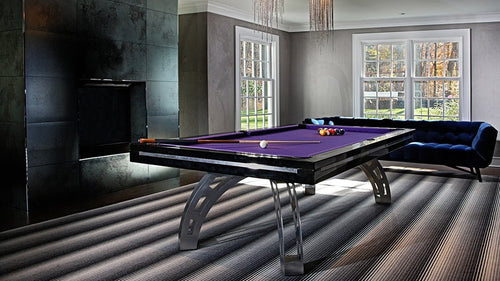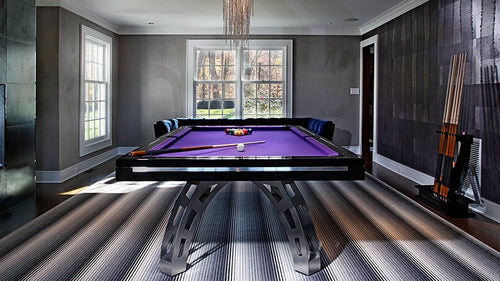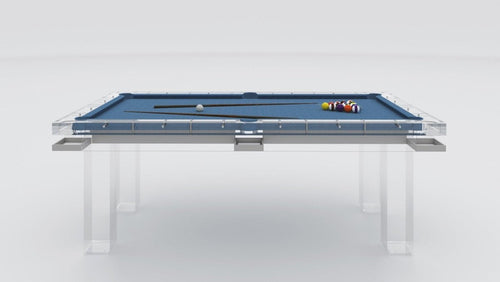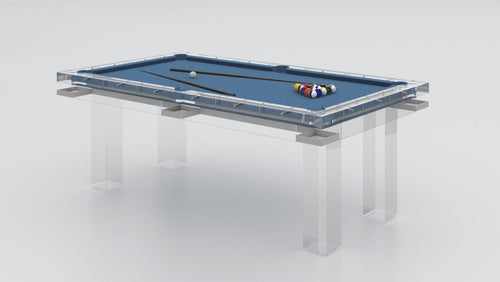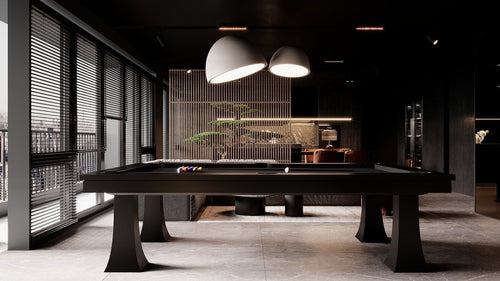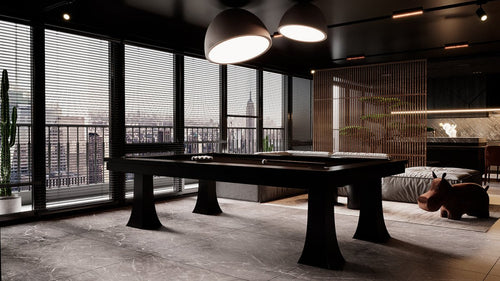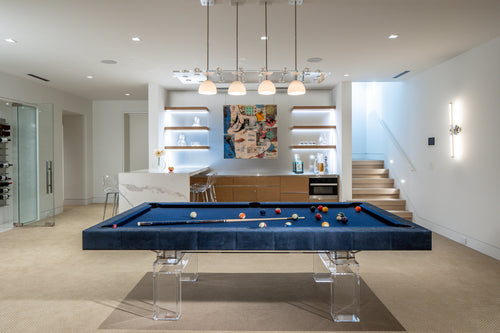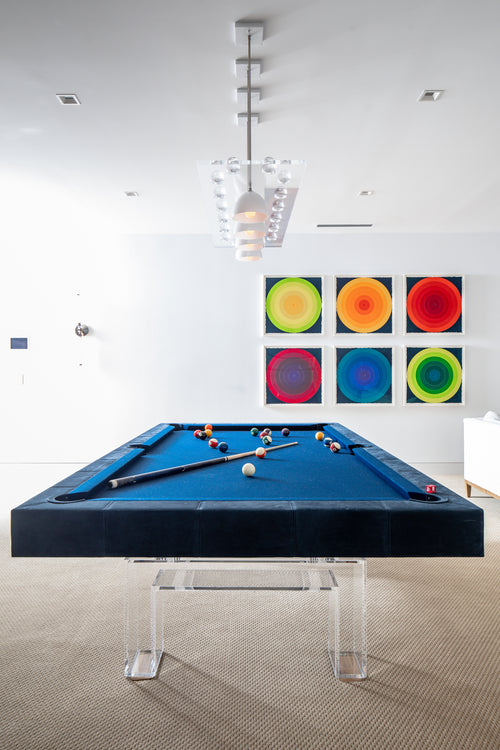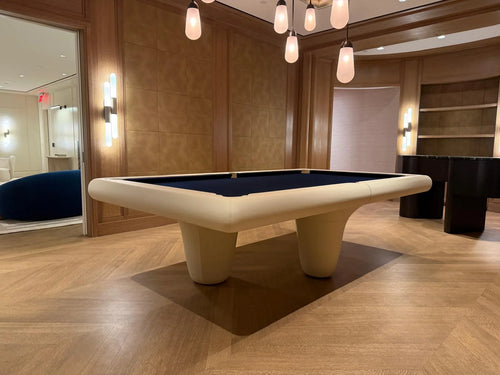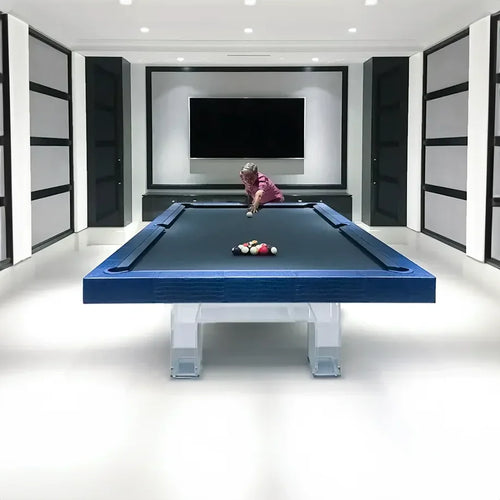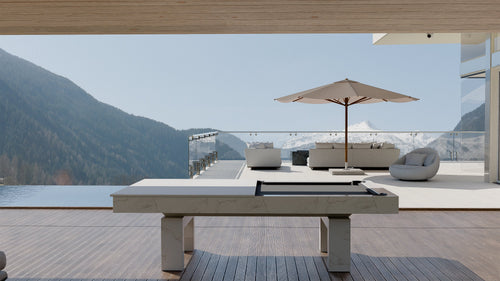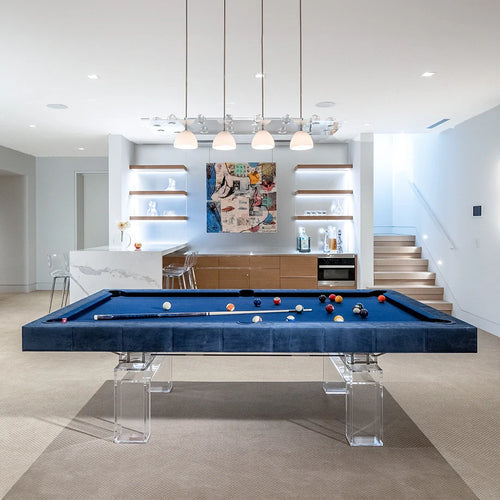


Enjoy our modern designs
Table Care & Maintenance
Leather Pocket
Care
Genuine leather pockets are the most overlooked component in a pool table's maintenance routine — and the only one with an expiration date if left untreated. Twenty minutes once a year is all it takes to prevent decades of damage.
When you clean your table you probably follow a routine: brush the felt, wipe the rails, clean the balls. There is one component that almost never makes that list — and it is the only part of the table made from organic hide that will rot and crack under stress if you ignore it long enough. The leather pockets are the forgotten maintenance item, and they are worth your attention.
The Problem
Why Leather
Pockets Crack
Leather is skin. In its natural state it is hydrated — flexible, resilient, capable of absorbing impact without failing. Once tanned and shaped into a pocket, it loses access to the biological systems that kept it that way. It relies entirely on environmental humidity and periodic conditioning to stay supple.
Dryness is the enemy. Low-humidity climates, air conditioning, heating vents, and direct sunlight all pull moisture from leather over time. The fibers shrink and tighten. They lose the elasticity that allowed them to flex under impact. When a six-ounce billiard ball hits a dry pocket at the end of a hard break, the stiff leather snaps instead of stretching. That failure mode — dry-rot cracking in the basket webbing — is entirely preventable, and entirely the result of neglect.
Leather without conditioning is just hide waiting to crack. The pocket doesn't announce its distress — it simply fails one day under an ordinary shot.— On the silent deterioration of untreated leather
Frequency
The Right
Schedule
Most households need to condition their leather pockets once every twelve months. This is not a frequent or demanding task — it is a single 20-minute session per year that prevents the kind of failure that requires full pocket replacement. The calculus is straightforward: one modest annual investment versus a costly repair and the risk of balls dropping through a ruptured basket mid-game.
Climate Adjustment
Dry desert climates — Arizona, Nevada, New Mexico, inland California — accelerate moisture loss in leather significantly. If your table sits in a low-humidity environment or near an HVAC vent, condition twice a year. If you have a humidifier running in your game room and live in a naturally humid climate, once a year is almost certainly sufficient. When in doubt, condition more rather than less — over-conditioning is far less damaging than drought.
Before You Start
What
Not to Use
The wrong product causes faster deterioration than no product at all. Several common household substances cause specific, irreversible damage to leather pockets and the surfaces around them.
Never Use
Olive Oil or Kitchen Oils
Culinary oils go rancid inside leather. The smell becomes permanently embedded in the hide and transfers to the room. They also do not penetrate leather pores the way purpose-built conditioners do, leaving a surface film that attracts dust and grime.
Never Use
Harsh Cleaners
Products like Windex, bleach solutions, or any ammonia-based cleaner strip the natural oils from leather on contact. They accelerate exactly the drying process you are trying to reverse — and they do it permanently, with no recovery.
Never Use
Colored Shoe Polish
Shoe polish pigment transfers. Billiard balls rolling through a pocket treated with colored polish will pick up that pigment and carry it directly onto your cloth, creating stains that cannot be brushed out. Use only clear, pigment-free conditioners.
The Process
Step-by-Step
Conditioning Guide
-
Protect the Cloth First
Leather conditioner is oil-based. A single drop landing on Simonis or any premium wool cloth leaves a permanent dark stain that cannot be removed by any cleaning method. Before touching any conditioner, slide a piece of cardboard or thick plastic sheeting inside the pocket and underneath the leather shield to create a complete barrier between the leather and the felt below it.
Do this before opening the conditioner. Not after. -
Remove Chalk Dust
Chalk accumulates inside the pocket basket over time — it is an inevitable byproduct of normal play. Use a soft microfiber cloth or a vacuum with a brush attachment to remove it before applying any product. Conditioning over chalk dust creates an abrasive paste that works into the leather's surface and accelerates wear rather than preventing it.
-
Apply Conditioner to a Cloth, Not the Leather
Dispense a small amount of conditioner onto a clean rag and apply from the rag to the leather — never squeeze or pour directly onto the pocket. Work the product gently into both the exterior shield and, more importantly, the basket webbing. The webbing absorbs the impact of every ball pocketed and requires the most attention. Use circular strokes and ensure full, even coverage across the entire surface.
The basket web takes the most mechanical stress. Give it more conditioner time than the shield. -
Let It Penetrate, Then Buff
Allow the conditioner to sit for 10 to 15 minutes. The oils need time to migrate into the leather fibers rather than sitting on the surface. After the wait, take a fresh dry cloth and buff away any residue until the surface is no longer visibly wet or tacky.
Test with a paper towel pressed firmly against the leather. If the towel comes away clean, the pockets are ready to play. If it picks up oil, continue buffing. Oil transferring to pool balls will eventually transfer to the felt — the same outcome you were trying to prevent at step one.
What to Buy
Recommended
Products
Purpose-built leather conditioners outperform household alternatives in every relevant dimension — penetration depth, hydration retention, and compatibility with tanned hide. Two categories of product are particularly well-suited to pool table pockets.
Option 01
Neatsfoot Oil Conditioner
Deep Penetration
Neatsfoot oil is rendered from cattle shin bones and has been used on working leather — saddles, harnesses, baseball gloves — for centuries. It penetrates deeply into hide pores, restoring suppleness from the inside out. Avoid compounds cut with petroleum products; pure neatsfoot oil is the better choice for organic hide.
Option 02
Saddle Soap with Beeswax
Clean + Condition
Quality saddle soap cleans surface grime while conditioning simultaneously. Formulations containing beeswax add a protective barrier that helps slow future moisture loss. Apply as you would any conditioner — to a rag, not directly to the leather — and buff thoroughly after the penetration period.
If It's Too Late
Already
Cracked?
Conditioning restores moisture to leather that is dry but structurally intact. It cannot reverse cracking, repair splits in the webbing, or restore flexibility to leather that has already dry-rotted. Dead fibers do not absorb conditioning product — they simply remain dead.
Point of No Return
If your pockets feel brittle or crunchy to the touch, or if you can see visible tears in the basket webbing, conditioning will not help. Applying oil to heavily cracked leather may actually accelerate failure by lubricating the surfaces of existing cracks and allowing them to spread under load. At this stage, replacement is the correct path.
The silver lining: pocket replacement is also an opportunity. If the table's aesthetic has grown stale, new pockets in a different leather color — shifting from cordovan to black, or from tan to mahogany — can refresh the entire look of the table without the cost of recovering the cloth or refinishing the wood.
// The Verdict
Your table is an ecosystem. The wood needs polish, the cloth needs brushing, and the leather needs oil. Twenty minutes once a year keeps your pockets soft, quiet, and strong enough to catch millions of balls without failure — and costs far less than the replacement you are preventing.