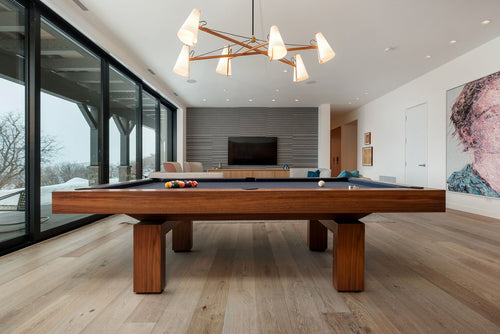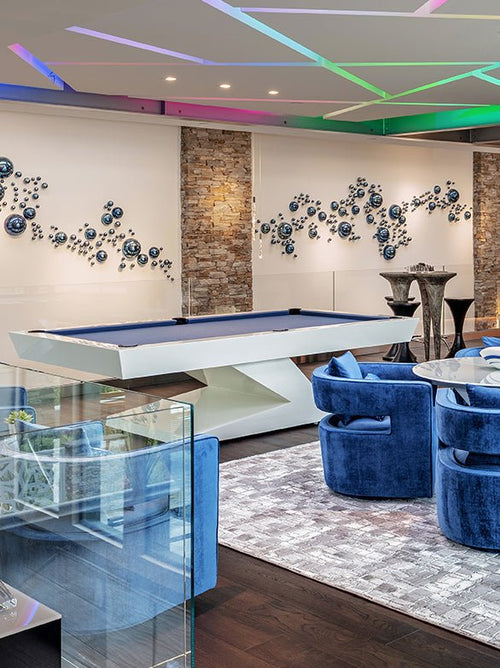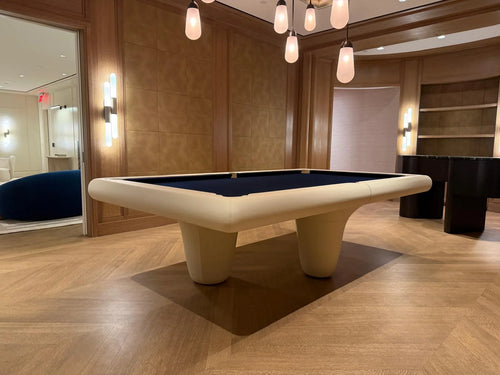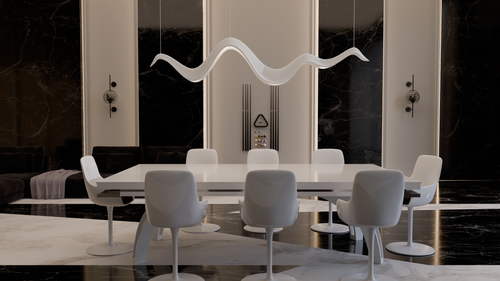


Enjoy our modern designs
Protecting your gear and polishing your game room’s aesthetic.
You’ve invested in the table, the felt is pristine, and the lighting is dialed in. But if your cues are leaning precariously against the drywall, you’re missing the final piece of the puzzle. A proper rack isn't just about storage; it’s about respect for your equipment and defining the flow of your room.
The debate usually narrows down to two distinct styles: the sleek Wall-Mounted Rack and the classic Floor-Standing Rack.
Both will keep your sticks straight, but they offer vastly different vibes and functionality. Here is how they stack up so you can choose the right fit for your sanctuary.
Table of Contents
The Minimalist’s Choice: Wall-Mounted Racks
The wall-mounted rack is the darling of modern design. It transforms your equipment into a vertical gallery, clearing the floor and creating a sophisticated, "pro-shop" look.
The Advantages
- Maximum Space Efficiency: This is the undisputed champion for tight rooms. By utilizing vertical wall space, you keep the perimeter of your table completely clear for walking and shooting.
- Superior Cue Protection: Hanging cues by gravity is the best way to prevent warping. Plus, being elevated keeps expensive shafts away from vacuum cleaners, pets, and toddlers.
- Integrated Decor: A wall rack acts as art. Whether it’s a simple 6-cue holder or a complex unit with a mirror and score beads, it fills empty wall space with purpose.
The Drawbacks
- Installation Effort: You need a drill, a level, and a stud finder. If you aren't handy, mounting a heavy rack securely can be a headache.
- Permanence: Once it’s up, it’s up. Moving the rack means patching drywall and repainting. It is rarely a good option for renters.
Best For: Small game rooms, "man caves" with limited square footage, and players who prefer a clean, uncluttered aesthetic.
The Traditionalist’s Choice: Floor-Standing Racks
The floor rack is a piece of furniture in its own right. It carries a sense of tradition, mimicking the old-school pool hall vibe. It commands presence and says, "This room is for playing."
The Advantages
- Zero Installation: Assembly is usually minimal, and absolutely no tools are required to set it in place. No holes in the wall, no dust, no stress.
- Total Portability: Reorganizing the room? Moving to a new house? Just pick it up. The flexibility of a floor rack is unmatched.
- The "All-in-One" Factor: Floor racks are often designed as command centers. They frequently include built-in coasters for drinks, ash trays, drawers for tips, and shelves for full sets of balls—features wall racks often lack.
The Drawbacks
- The Footprint: It takes up precious real estate. In a smaller room, a floor rack might sit exactly where you need to stand to take a rail shot.
- Vulnerability: Because it sits at ground level, it’s more prone to being bumped into. If it isn't weighted properly, there is a tipping risk in high-traffic areas.
Best For: Large rooms with ample walkways, renters who can't drill holes, and those looking for a furniture piece that holds drinks and accessories alongside cues.
The Final Verdict: How to Decide
If you are torn between the two, let your room dictate the decision.
Go Wall-Mounted if every inch of floor space matters. If you find yourself hitting the wall with your cue butt when you shoot from the rail, you cannot afford a floor rack. Get the gear on the wall and open up the room.
Go Floor-Standing if you have a spacious room and want a social hub. A nice corner floor rack becomes a gathering spot for players to rest their drinks, chalk up, and grab their next stick.
Whichever you choose, the goal remains the same: stop leaning your sticks against the wall. Your game room—and your cue tips—will thank you.