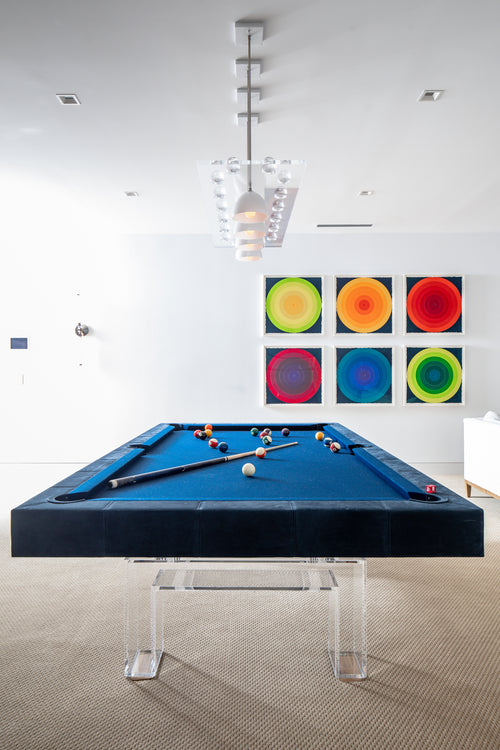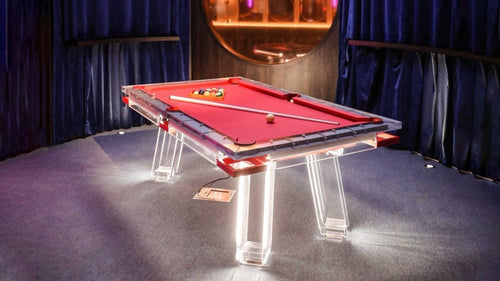


Enjoy our modern designs
Spots on a cue ball make rotation easier to observe. That can help you compare the shot you intended with the shot you produced, especially on video. The markings do not diagnose every miss, and they do not replace an accurate aim line or a repeatable practice setup.
What a plain ball makes harder to see
An unmarked white ball offers fewer visual cues about its rotation than a spotted ball. Its path and collision result still provide information, so it is too strong to say a plain ball tells you nothing. Use markings as an additional observation tool, not a verdict on your stroke.
For a useful comparison, repeat the same layout, contact point and intended speed. Note the result before changing several things at once.
Observe rotation with care
Watch the direction of rotation and how it changes before and after contact. Slow-motion video can help, but camera frame rate and viewing angle can make a rapidly spinning pattern misleading. Visual inspection does not automatically provide an accurate numerical spin rate.
A practical drill is to play a short straight shot several times, then compare the ball’s path, visible rotation and final position. If you want to diagnose your delivery, include the cue tip and stroke in the recording rather than filming only the ball.
Sidespin, squirt and throw are different
Sidespin rotates the ball about a roughly vertical axis. A sideways tip offset also produces squirt: the cue ball initially departs from the cue’s direction. It is not the name for an object ball being deflected at contact. Dr. Dave Alciatore’s squirt explanation distinguishes the cue-ball effect.
Object-ball throw is a separate consequence of friction during ball-to-ball contact. A spotted cue ball may reveal unwanted sidespin, but it cannot show by itself whether the error came from aim, tip placement, stroke alignment or another factor.
Read draw, follow and stun at the collision
For a forward-moving ball with backspin, the top rotates backward relative to its center and the bottom rotates forward. In a normal straight draw shot, backspin must remain when the cue ball hits the object ball; after that collision, cloth friction produces the backward motion. The cue ball does not simply reverse because ordinary forward travel eventually “uses up” its backspin. Dr. Dave’s draw-shot analysis emphasizes spin at object-ball contact.
Follow and stun are also conditions to judge at contact. A center-height strike does not guarantee stun after a long trip, because cloth friction changes rotation. Forward spin does not automatically mean immediate rolling without slip. Compare the spin and the resulting cue-ball path rather than treating one tip-height label as the whole explanation.
Choose a compatible ball
Check the manufacturer’s model, diameter, weight and intended table type. A six-spot training cue ball, a red-circle ball and a single-dot ball are not names to treat as interchangeable specifications. Match the ball to your set and any coin-table return mechanism.
Prices vary by seller and date. Buy from an identifiable supplier and follow the maker’s cleaning guidance; the pattern alone does not establish authenticity or an upgrade over your existing ball.
Use feedback as part of practice
Start with a short, repeatable shot. Decide whether the goal is stun, draw, follow or controlled sidespin, then compare the visible rotation with the outcome. Change one variable and repeat. If the pattern seems unclear, review the camera angle or ask a qualified instructor to assess the stroke.
The useful promise is modest: spots make rotation easier to see. Better practice comes from combining that observation with a clear goal and careful comparisons.
Selected factual claims reviewed October 19, 2026. Follow the instructions for your specific equipment.