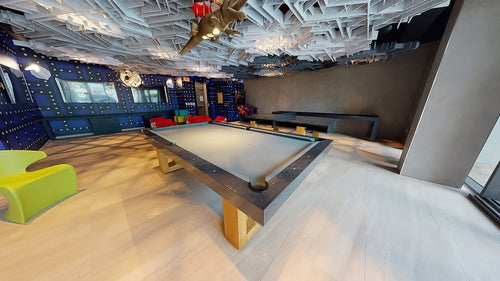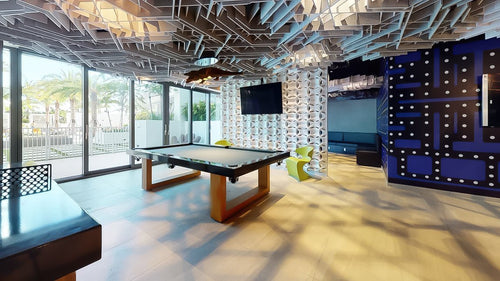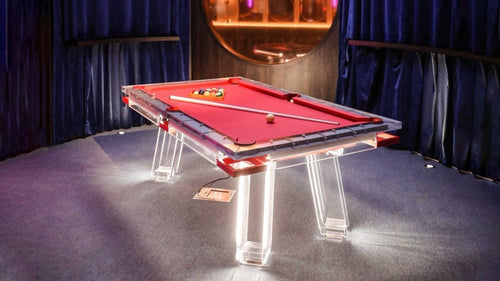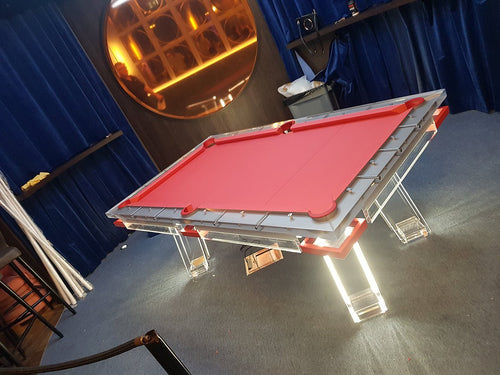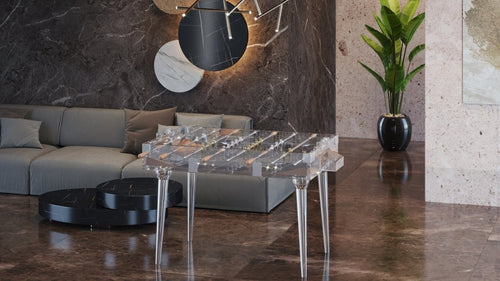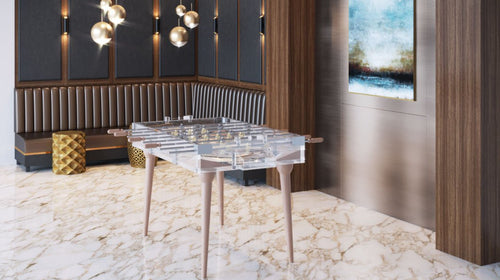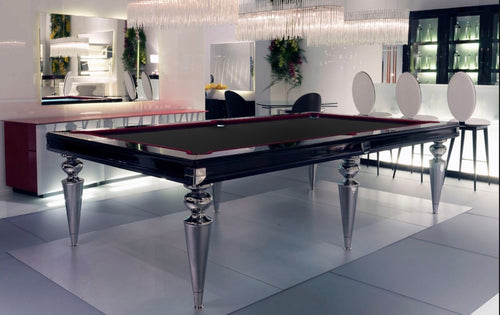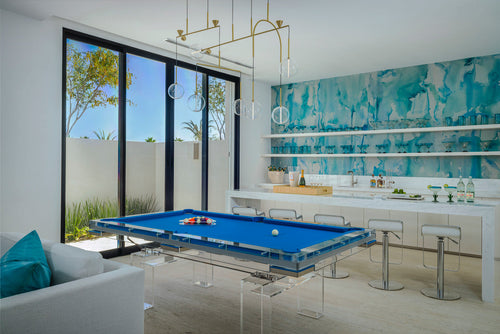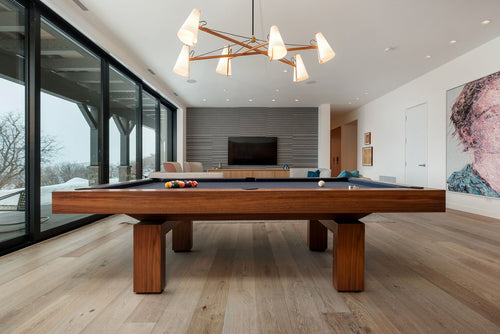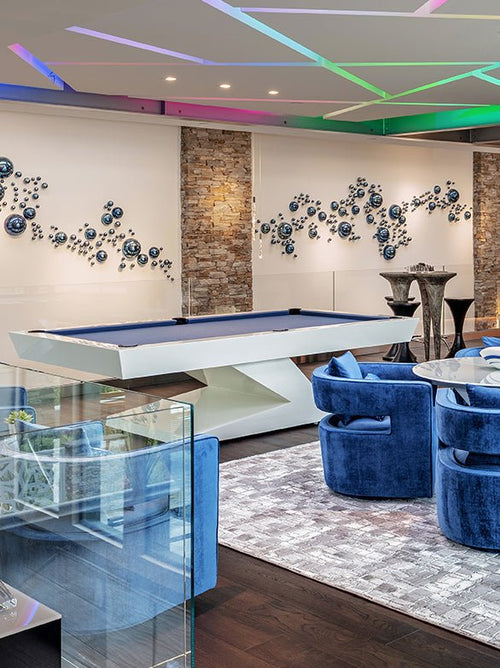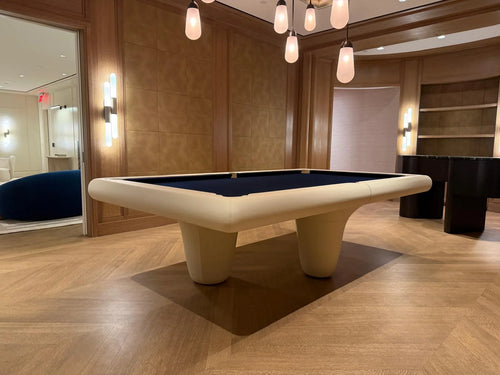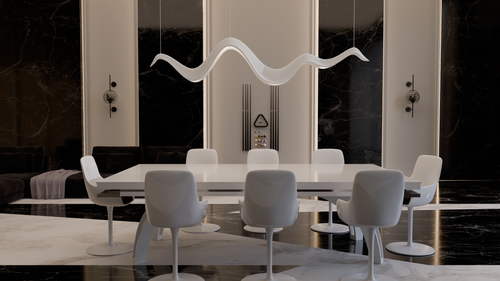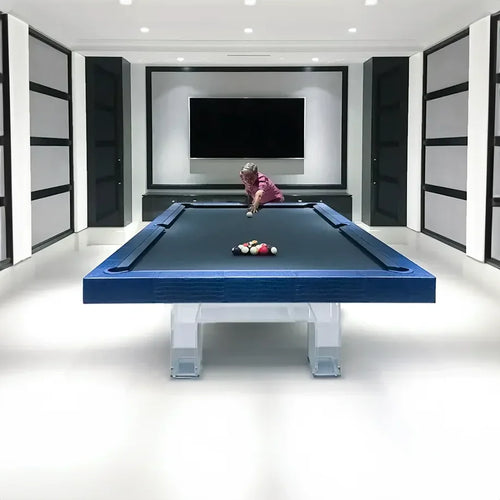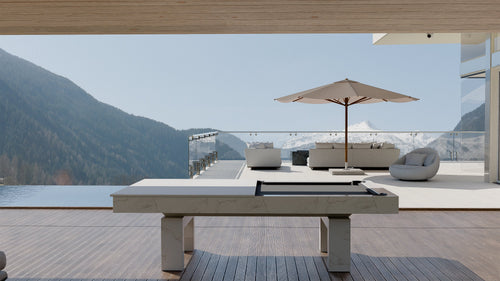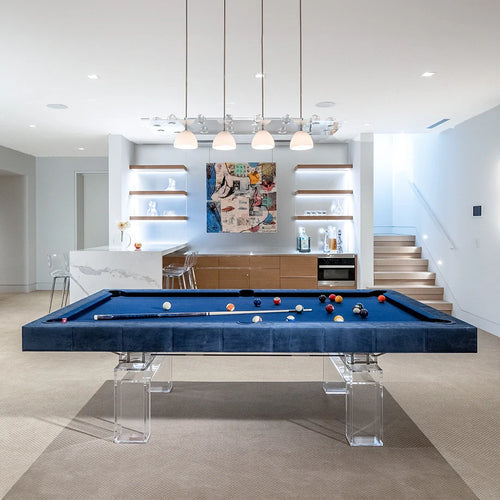


Enjoy our modern designs
Yes, you can.
But whether you should depends on the room, the table, and how disciplined you are about the design.
That’s the real answer.
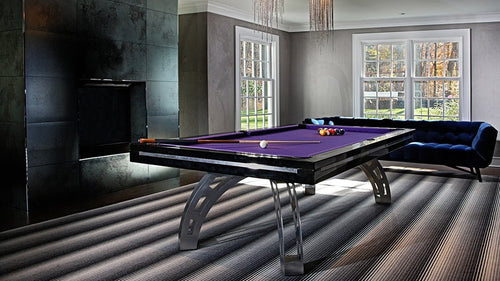
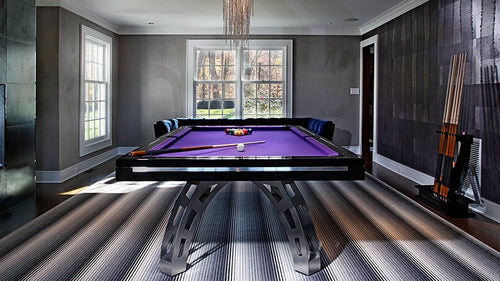
A pool table in a living room can look incredible. In the right home, it makes the space feel confident, custom, and far more interesting than another generic sofa-and-coffee-table setup. It can turn the room into a social space, a design statement, and a real focal point all at once.
It can also make the whole room feel cramped, confused, and slightly ridiculous if it’s forced.
My blunt take: a pool table works in a living room only when the room is designed around the reality of the table, not when the table is treated like an accessory. It is too large, too heavy, and too visually dominant to fake your way through.
If you respect that, it can work beautifully.
Table of Contents
- 1. Why People Want a Pool Table in the Living Room
- 2. The Core Question Is Not “Can It Fit?”
- 3. When a Pool Table in a Living Room Works Best
- 4. When It Usually Does Not Work
- 5. The Living Room Has to Become a Hybrid Space
- 6. Size Matters More Than People Want to Admit
- 7. The Best Pool Table Styles for Living Rooms
- 8. The Table Has to Match the Living Room’s Design Language
- 9. Furniture Layout Changes Everything
- Final Verdict
- FAQ
Why People Want a Pool Table in the Living Room
Because in many homes, the living room is the best room.
It often has:
- the most square footage
- the best ceiling height
- the strongest natural light
- the nicest finishes
- the most social energy
- the best connection to entertaining
So it makes sense. Instead of hiding the pool table in a basement or bonus room, people want it in the part of the house that actually feels designed.
That is especially true in:
- open-plan homes
- luxury condos
- lofts
- second living areas
- large great rooms
- modern homes where the pool table is meant to feel like furniture, not rec-room equipment
The idea is not weird anymore. The execution is what separates good from bad.
The Core Question Is Not “Can It Fit?”
That is where people screw it up.
They ask: Can I fit a pool table in the living room?
The better question is: Can I fit a pool table in the living room and still have a good living room?
Those are different questions.
A table can physically fit and still ruin:
- circulation
- furniture layout
- visual balance
- cue clearance
- conversation areas
- the feeling of openness
- the entire purpose of the room
So yes, fitting matters. But the bigger issue is whether the room still functions well once the table is there.
When a Pool Table in a Living Room Works Best
A pool table in a living room usually works when at least a few of these are true:
1. The Room Is Genuinely Large
Not “kind of open.” Actually large enough to support both gameplay and living-room use without the furniture feeling crushed.
2. The Layout Is Open
Open-plan rooms, great rooms, and loft-like spaces handle pool tables better because there is more flexibility around circulation and zoning.
3. The Table Is Visually Aligned With the Room
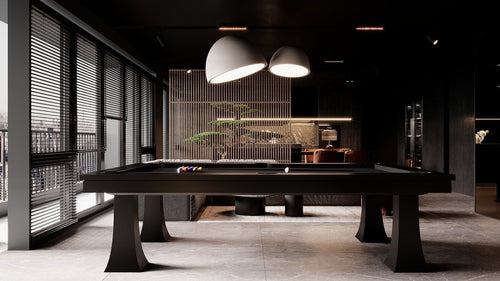
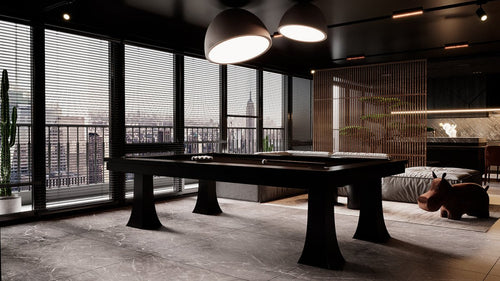
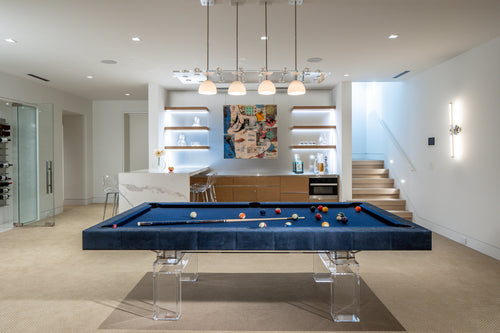
A clean, furniture-grade, modern or sculptural pool table works far better in a living room than something that looks like it belongs in a sports bar.
4. The Room Is Designed Around the Table From the Start
If the table is part of the plan, it can work. If it is an afterthought shoved into leftover floor space, it usually looks wrong.
5. The Table Is Doing Double Duty as Furniture and Entertainment
This is where high-end pool tables shine. They do not just provide play. They contribute to the architecture of the room.
When It Usually Does Not Work
Let’s be honest. Sometimes it is just a bad idea.
A pool table in a living room usually fails when:
- the room is too tight
- the table blocks normal circulation
- the furniture gets pushed awkwardly against walls
- the ceiling light no longer makes sense
- the room loses its comfort and starts feeling like a compromise
- the table style clashes with the rest of the house
- you want full playability but do not actually have the clearance for it
This is especially common when people try to keep the exact same living room layout and “just add the table.”
That almost never works.
The Living Room Has to Become a Hybrid Space
This is the mindset shift.
The moment a pool table enters the living room, the room is no longer just a living room. It becomes a hybrid social space.
That means you are balancing:
- lounging
- conversation
- entertaining
- circulation
- gameplay
- visual composition
That is not a bad thing. In a lot of high-end homes, it is actually better. The room becomes more dynamic and more memorable.
But it does mean you need to stop designing it like a standard formal seating room.
Size Matters More Than People Want to Admit
You can make a pool table work in a living room, but size discipline matters.
People love the idea of the biggest possible table. Then they realize:
- sofas need space too
- people need to walk around the room
- cue clearance is real
- the room still needs to feel comfortable
So the right table for a living room is often not the biggest one the room can technically swallow. It is the one that allows the room to keep functioning well.
Bluntly: a slightly smaller table in the right layout usually looks better than an oversized table that dominates everything.
The Best Pool Table Styles for Living Rooms
This matters a lot.
If the table is going into a living room, it should look like it belongs near actual furniture. That means the best styles are usually:
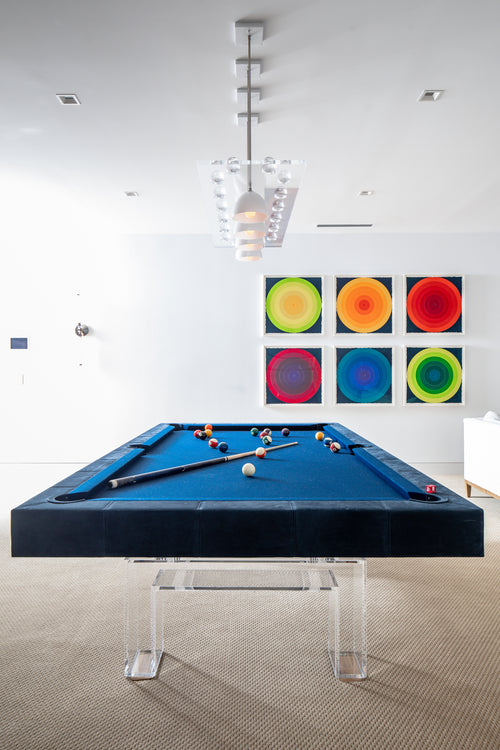
Modern Pedestal Tables
Cleaner silhouette, less visual clutter, more furniture-like.
Sculptural Bases
These help the table feel intentional and design-led rather than recreational.
Light or Medium Wood Finishes
Often easier to integrate into softer interiors and modern living spaces.
Refined Dark Wood Tables
These can work beautifully in larger, moodier, more formal living rooms.
Dining-Conversion or Dual-Purpose Designs
Especially useful if the room needs flexibility.
What usually works less well:
- overly ornate traditional tables
- bulky legs with heavy carved detailing
- loud felt colors
- cheap black finishes
- anything that screams game room instead of living space
The Table Has to Match the Living Room’s Design Language
This is non-negotiable.
A living room is usually one of the most visually resolved spaces in a house. That means the pool table needs to speak the same design language as the rest of the room.
If the room is:
- minimalist, choose cleaner silhouettes
- warm contemporary, choose oak, walnut, bronze, or softer forms
- dramatic modern, choose darker finishes and sculptural bases
- organic modern, choose natural woods and calmer felt tones
- transitional, choose a table that bridges classic and modern rather than leaning too hard either way
The table does not need to disappear. But it does need to belong.
Furniture Layout Changes Everything
This is where success or failure usually happens.
The pool table and the seating area should not fight each other.
Good layouts usually do one of two things:
1. They Zone the Room Clearly
The table occupies one side or one defined portion of the room, while the lounge seating occupies another.
2. They Use the Table as the Central Anchor
This works in very large rooms where the pool table can sit centrally and the furniture supports it without crowding it.
What usually fails:
- stuffing seating too close to the table
- keeping a giant coffee table plus the pool table
- pushing all the furniture to the edges with no logic
- making people walk through active cue space just to move around the room
If the room layout feels awkward, the table is probably in the wrong place or the room is too small for the idea.
Cue Clearance Still Matters in a Living Room
This does not go away just because the room is stylish.
A living room pool table still needs realistic space around it. If a sofa arm, sideboard, fireplace edge, or wall is too close, the room becomes annoying to use.
And yes, some people accept tighter clearance in living rooms because the table is partly a design feature. That is fine if it is intentional. But it should be a conscious compromise, not an accident.
Be honest:
- Is the table for serious play?
- casual social use?
- mostly visual impact with occasional games?
That answer changes what compromises are acceptable.
Lighting Becomes More Important, Not Less
A pool table in a living room needs a better lighting plan than a pool table in a separate game room.
Why? Because the table now has to work as:
- a gameplay surface
- a design object
- part of the room’s evening atmosphere
That usually means layered lighting:
- centered table light or pendant
- ambient room lighting
- accent lighting around the seating area
- enough control so the space does not feel harsh
A pool table dropped under the wrong chandelier or off-center fixture will look bad immediately.
The Room Should Not Feel Like a Man Cave
This is where a lot of people go wrong.
A living room with a pool table should still feel like a living room. It should not suddenly become themed, cheesy, or overly masculine unless that is very intentionally the design language of the home.
Usually that means:
- restrained felt colors
- good materials
- clean storage
- no cluttered wall décor
- no sports-bar cues
- no random neon or novelty elements
- furniture that still feels residential and refined
The goal is to elevate the room, not downgrade it into a cliché.
What Works Best in Different Living Room Types
Open-Plan Great Room
Usually one of the best situations. There is room to zone the table and keep the living area functional.
Loft-Style Living Room
Also strong, especially with sculptural or industrial-modern tables.
Formal Living Room
Harder, but possible if the table is exceptionally refined and the room is large enough.
Small Family Living Room
Usually the hardest situation. This is where the idea often sounds better than it looks.
Secondary Living Room or Lounge
Often ideal. Less pressure than the main formal living space, but still prominent and social.
The Biggest Mistakes People Make
1. Choosing the Wrong Table Style
The table looks recreational while the room looks residential.
2. Overcrowding the Room
The table fits, but the room stops breathing.
3. Ignoring Cue Clearance
Looks fine until someone actually tries to play.
4. Refusing to Rethink the Furniture Layout
A living room with a pool table needs a new plan, not the old plan plus one giant object.
5. Using Loud Finishes or Felt
A living room usually rewards restraint more than a dedicated game room does.
6. Forgetting the Room Still Has to Feel Comfortable
The table should add energy, not kill the room’s livability.
The Best Formula for Making It Work
If you want the simplest version that usually works, it is this:
- choose a furniture-grade pool table
- use a clean or sculptural base
- keep the palette restrained
- give the room real clearance
- zone the seating area properly
- center the lighting
- treat the room as a hybrid social space
That is the formula.
Final Verdict
Yes, you can put a pool table in a living room.
And in the right home, it can look far better than hiding it in a separate game room nobody uses.
But it only works when the table is treated as part of the room’s architecture and furniture plan, not as some oversized extra you squeeze in afterward.
My honest take:
- in large, open, design-led living rooms, it can be excellent
- in tight or already crowded living rooms, it usually becomes a mistake
- the table needs to be visually refined
- the layout needs to be rethought completely
- the room still has to feel like a place people want to live in
That is the real test.
Not whether the table fits.
Whether the room still works once it is there.
FAQ Section
Can a Pool Table Go in a Living Room?
Yes, a pool table can go in a living room if the room has enough space, proper clearance, and a layout that can support both entertaining and everyday living.
Does a Pool Table in a Living Room Look Bad?
Not necessarily. It can look excellent if the table is furniture-grade, the design matches the room, and the layout feels intentional. It usually looks bad only when it feels forced or overcrowded.
What Kind of Pool Table Looks Best in a Living Room?
Modern, sculptural, pedestal, or refined custom pool tables usually look best because they integrate more naturally with residential furniture and contemporary interiors.
Can You Still Have a Normal Seating Area With a Pool Table in the Living Room?
Yes, but the room needs enough space and the furniture layout has to be designed around the table rather than competing with it.
Should a Living Room Pool Table Be Smaller?
Often, yes. A slightly smaller table can make more sense in a living room because it preserves circulation, seating comfort, and overall balance.
What Is the Biggest Mistake When Putting a Pool Table in a Living Room?
Usually trying to keep the old living room layout unchanged and simply adding the table. The whole room needs to be rethought once the table is part of it.