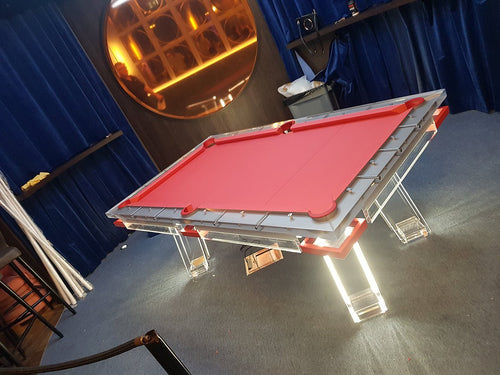


Enjoy our modern designs
A ferrule is the component immediately behind the cue tip on many cue designs. When it needs replacement, compatibility with the shaft matters more than a broad claim that one material has a better “hit.” Start with the cue maker’s specification and a repairer who knows that construction.
Why “pre-ban” is not enough
A seller’s “pre-ban ivory” description is not a blanket permission to buy, sell or cross borders with a cue. U.S. rules distinguish species, provenance, the type of transaction and narrowly defined exceptions; state laws can impose further restrictions. International movement has additional requirements. Check the relevant authorities for the item and route before a transaction or journey. U.S. Fish & Wildlife Service elephant ivory guidance.
For an existing collectible cue, retain the documentation and seek qualified advice before selling, shipping or altering it. Historical interest alone does not establish a legal exception.
Compare the specified part, not the material label
“Composite” covers different products and constructions. Ask for the actual replacement material, dimensions and compatibility with your shaft. Avoid claims that an unnamed material is maintenance-free, immune to heat, impossible to crack or a precise percentage equivalent to ivory.
Feel and sound are preferences, so try a complete cue when possible. A material comparison without a controlled test cannot establish that every player will experience the same result.
Deflection is a shaft-design question
Predator describes its low-deflection performance in terms of engineered front-end construction. That is a useful reminder that a ferrule cannot be judged independently of the shaft. A synthetic ferrule alone does not make every cue a low-deflection cue. Predator’s explanation of its shaft technology.
Ask the cue maker whether changing the ferrule would alter the intended construction or affect warranty coverage. If you are comparing shafts, use a consistent test and allow time to adapt rather than assuming the material name predicts the result.
Care and repair
Apply playing chalk to the tip. Chalk retention is not a reason to choose a ferrule material. Follow the cue maker’s cleaning and storage guidance, and have a loose or damaged component inspected before continued play.
Check whether your specific cue is intended for breaking. Neither “ivory” nor “composite” is a substitute for the manufacturer’s intended-use guidance. Keep repair records and ask what was fitted.
A useful buying checklist
- Identify the cue and shaft model.
- Confirm the manufacturer-approved repair specification.
- Ask about care, intended use and warranty implications.
- For any wildlife-derived material, establish provenance and applicable rules before purchase, sale or travel.
For a new playing cue, choose a documented specification and a serviceable design. Treat sweeping material-performance claims as questions to investigate, not facts to repeat.
Fact-checked and updated October 18, 2026.