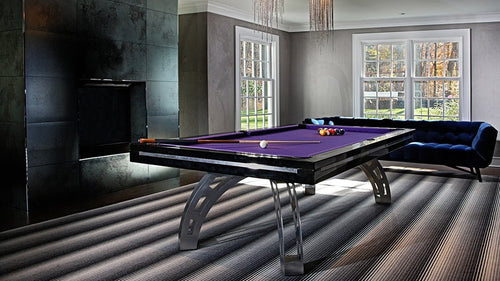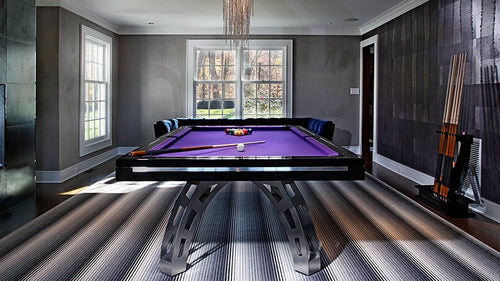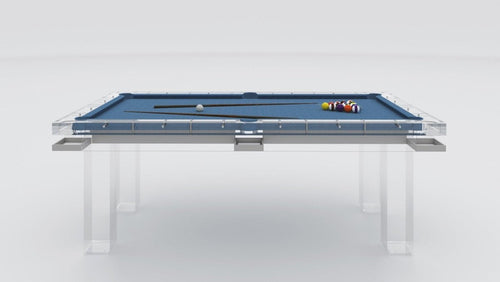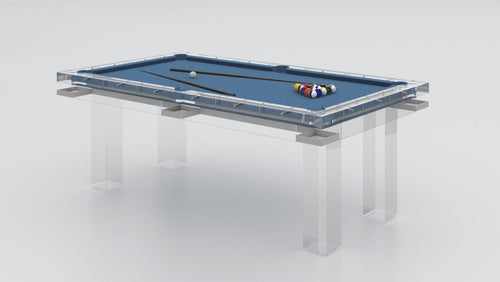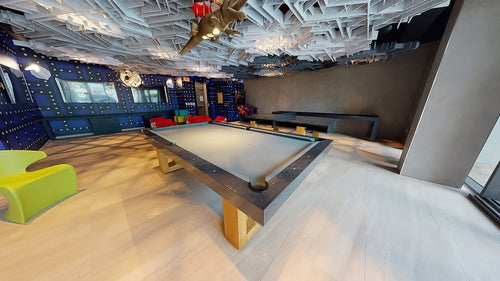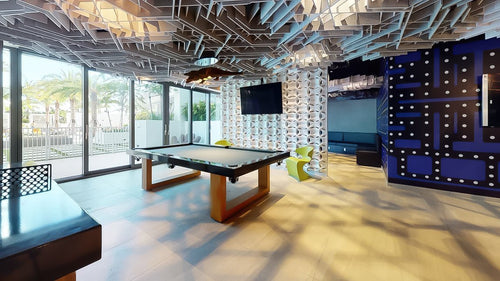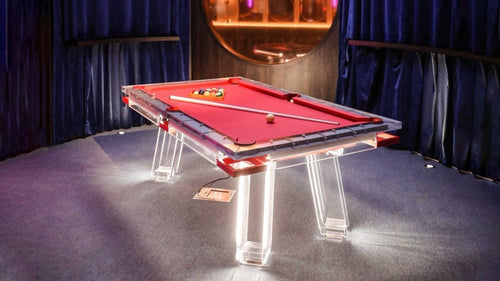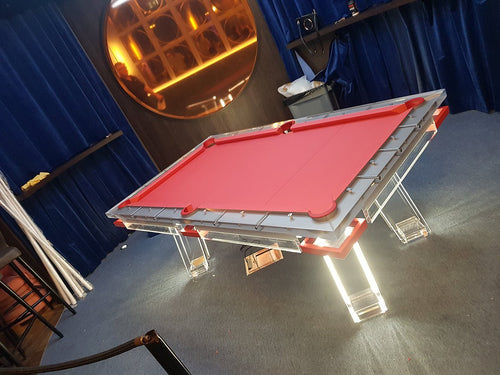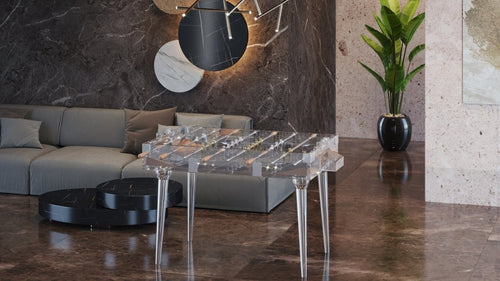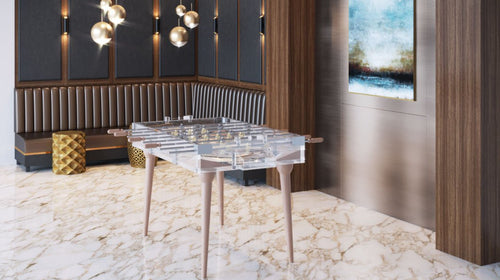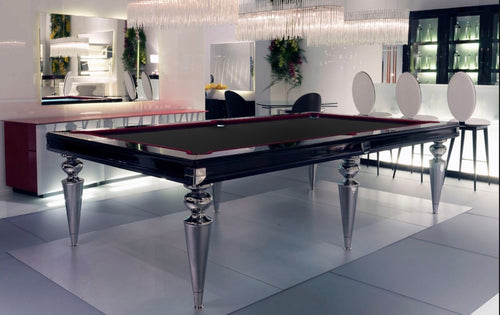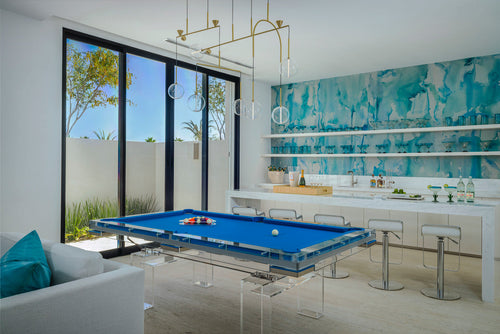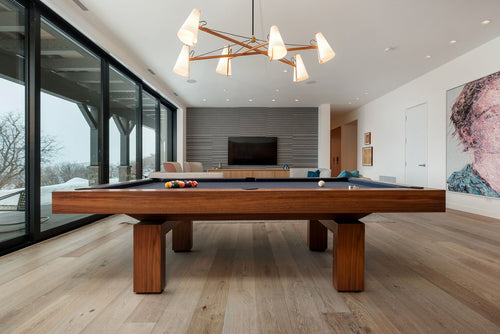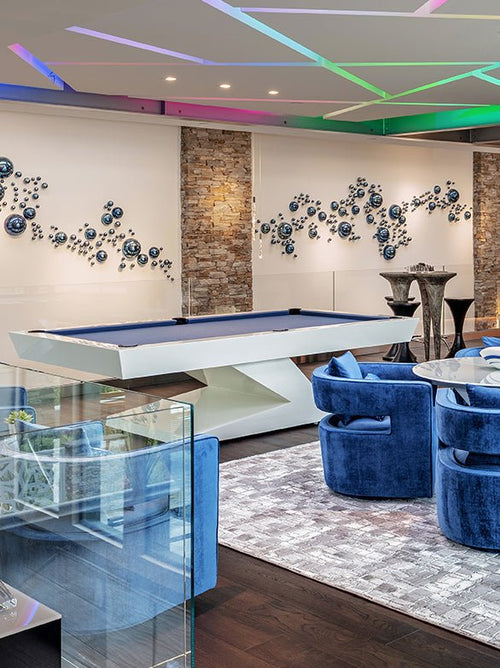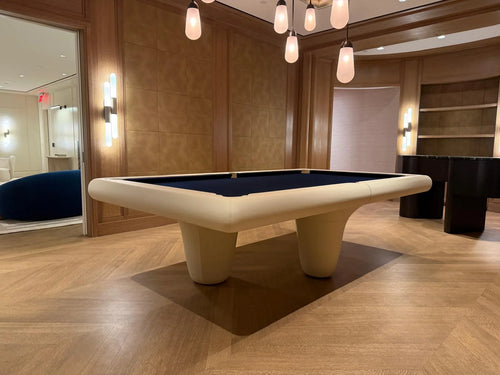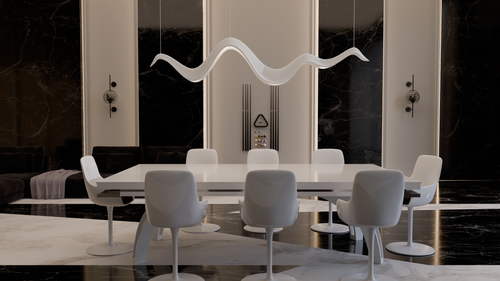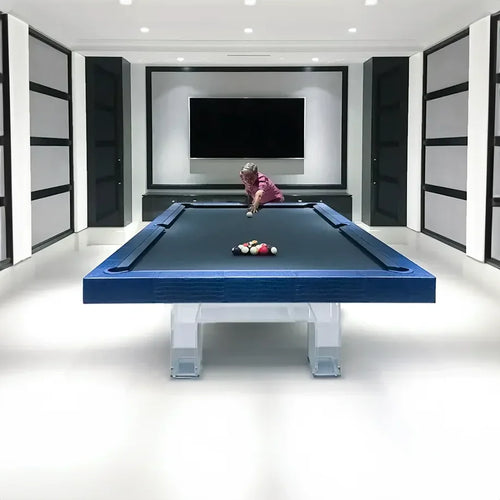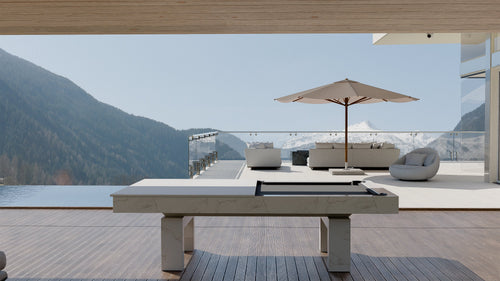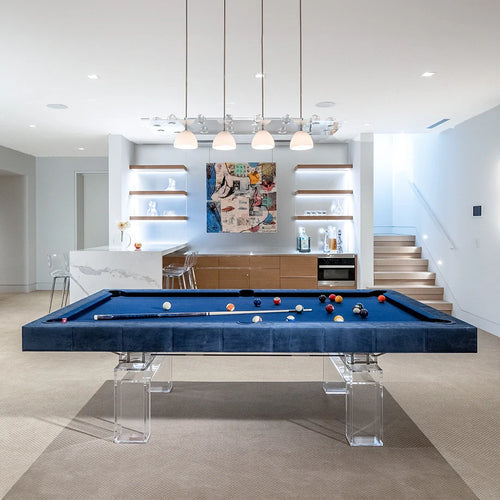


Enjoy our modern designs
Choosing a custom pool table sounds simple until you actually try to do it.
At first, it feels like a style decision. Then you realize it is also a sizing decision, a layout decision, a materials decision, a design decision, and in many homes, a long-term architectural decision too.
That is why people get stuck. They start by thinking, Which table do I like? But the better question is: Which table actually fits the room, the way I live, and the look I want this house to have?
That is what this decision matrix is for. A custom pool table should not just be beautiful in isolation. It should make sense in context. It should fit the room physically, visually, and emotionally. It should feel like it belongs there.
My blunt take: most people make the wrong choice when they lead with finish or aesthetics before solving for size, room function, and visual weight. The smarter move is to work from structure first, then refine the design.
Table of Contents
- Why a Decision Matrix Matters
- The Core Rule
- The Custom Pool Table Decision Matrix
- Step 1: Start With the Room
- Step 2: Decide Whether the Table Should Blend or Lead
- Step 3: Pick the Right Base Style
- Step 4: Choose Wood Tone
- Step 5: Select Hardware Finish
- Step 6: Match Felt Color
- Step 7: Be Honest About Usage
- The Real Decision Paths
- The Biggest Mistakes Buyers Make
- The Best Way to Decide Fast
- Final Verdict
- FAQ
Why a Decision Matrix Matters
A luxury pool table is too large and too expensive to choose casually.
This is not a lamp. It is not a chair. It is not some accent piece you can easily swap out later. It is a centerpiece. Once it is in the room, it affects circulation, sightlines, furniture layout, lighting, and the entire mood of the space.
That means the right decision has to balance several things at once: the room’s dimensions, the home’s design language, how often the table will actually be used, who is using it, how formal or relaxed the space should feel, whether the table should blend in or dominate, and what materials the room can visually support.
If you only optimize for one of those, you can easily end up with a table that looks good in a product photo and wrong in your house.
The Core Rule
Before anything else, decide these three things:
- How the room needs to function
- How the table needs to feel visually
- How much statement the room can handle
Everything else comes after that.
The Custom Pool Table Decision Matrix
Here is the cleanest way to think through the decision.
| Decision Area | Choose This If... | Usually Best Option |
|---|---|---|
| Room Size | The room is tighter or more multifunctional | Cleaner silhouettes, lighter finishes, visually lighter bases |
| Room Size | The room is large and can support more mass | Darker woods, sculptural bases, bolder proportions |
| Interior Style | The home is minimalist or modern | Pedestal, plinth, or geometric bases with restrained finishes |
| Interior Style | The home is warm contemporary or transitional | Softer woods, trestle bases, bronze or brass accents |
| Visual Goal | You want the table to blend in | Lighter woods, stainless hardware, simpler base profile |
| Visual Goal | You want the table to anchor the room | Darker wood, sculptural base, stronger hardware contrast |
| Usage | The table will be used heavily | Prioritize playability, durability, and stain-resistant material choices |
| Usage | The table is also a design piece | Prioritize sculptural form, finish quality, and architectural presence |
| Mood | You want bright, open, relaxed luxury | Light wood, pale neutrals, simpler lines |
| Mood | You want depth, drama, and formality | Walnut, blackened metal, darker felt, stronger contrast |
| Household | The space is more casual or family-oriented | Forgiving finishes, balanced proportions, less precious materials |
| Household | The space is highly curated and adult-oriented | More aggressive design choices and statement details |
That is the skeleton. Now let’s go through the decisions that matter most.
Step 1: Start With the Room, Not the Table
This is the part people skip, and it is why they make bad choices.
The room decides more than the product page does. Before choosing wood, felt, or metal finish, figure out how much open clearance the room has, whether the room feels airy or enclosed, whether the table is the main focal point or one of several, how formal the room already is, and whether the house leans modern, transitional, organic, or dramatic.
A room with limited breathing space usually wants a table that feels lighter. A large, open room usually needs a table with enough presence to hold its ground.
This sounds obvious, but a lot of people still buy a visually heavy table for a room that cannot carry it.
Step 2: Decide Whether You Want the Table to Blend or Lead
This is one of the most important questions: do you want the pool table to feel integrated into the room, or do you want it to announce itself?
Choose a quieter table if:
- The room already has strong architecture.
- There is statement lighting or major art present.
- The table shares space with a living or entertaining area.
- You want the room to feel calm and balanced.
Choose a bolder table if:
- The room needs a focal point.
- The space is large and visually flat.
- The table is the star of the room.
- You want a more editorial or luxury-forward look.
A lot of bad design comes from making everything compete. If the room already has three stars, the pool table should not become a fourth.
Step 3: Pick the Right Base Style
The base controls the attitude of the table. This is not some minor construction detail. It is the stance of the whole piece.
Four-Leg Bases
Four-leg bases are best when you want familiarity, warmth, softer integration, and a more furniture-like presence. They usually work best in transitional homes, warmer contemporary spaces, and less aggressive design schemes.
Pedestal or Twin-Pedestal Bases
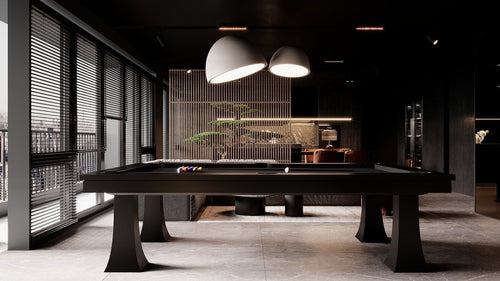
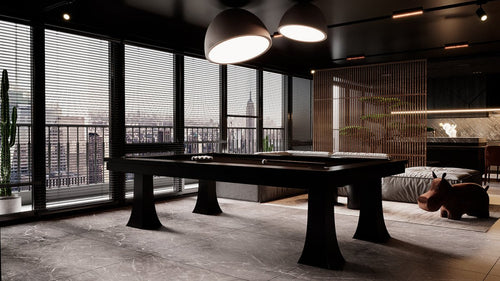
Pedestal or twin-pedestal bases are best when you want a cleaner silhouette, a more modern feel, less visual clutter around the corners, and stronger design presence. They are especially strong for modern homes, open-plan rooms, and statement interiors.
Sculptural or Plinth Bases
Sculptural or plinth bases are best when you want architectural weight, a centerpiece effect, and a table that feels like design furniture. They are strongest in large rooms, dramatic interiors, and homes with strong contemporary architecture.
My honest take: if the house is genuinely modern, pedestal and sculptural bases usually win.
Step 4: Choose Wood Tone Based on What the Room Needs
People often choose wood tone based on personal taste alone. That is not enough.
The wood tone should correct or reinforce the room.
Light Wood
Light wood is better when the room needs openness, softness, brightness, a more current or organic feel, and less visual weight. It is usually strongest for modern homes, Scandinavian and Japandi-inspired spaces, smaller rooms, and homes with lighter palettes.
Dark Wood
Dark wood is better when the room needs contrast, formality, gravity, visual grounding, and stronger luxury energy. It tends to work best in larger rooms, moodier interiors, and homes with stone, leather, darker accents, or dramatic contemporary spaces.
Bluntly: light wood is safer, dark wood is bolder.
Step 5: Select Hardware Finish by Mood, Not Trend
Hardware finishes should relate to the room’s tone.
- Brass: Choose brass if you want visible richness, warmth, and classic luxury energy.
- Stainless: Choose stainless if you want a clean modern look, neutrality, and an easy match.
- Blackened metal: Choose blackened metal if you want architectural contrast, stronger edge, and a sharper contemporary feel.
- Bronze: Choose bronze if you want warmth without flash, quiet luxury, depth, and maturity.
The fast version is simple: brass gives noticeable luxury, stainless gives clean restraint, blackened metal gives bold modern contrast, and bronze gives refined warmth.
Step 6: Match Felt Color to the Design Intent
Felt is not just a playing surface. It changes the attitude of the table fast.
Neutral Felt Tones
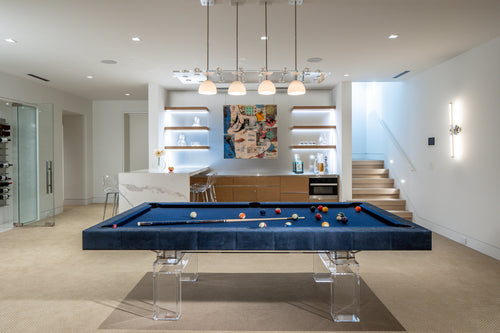
Neutral felt tones are best when you want a calmer look, better integration into high-end interiors, and a more furniture-grade feel. Good examples include taupe, charcoal, camel, warm gray, muted green, and soft blue-gray.
Stronger Felt Tones
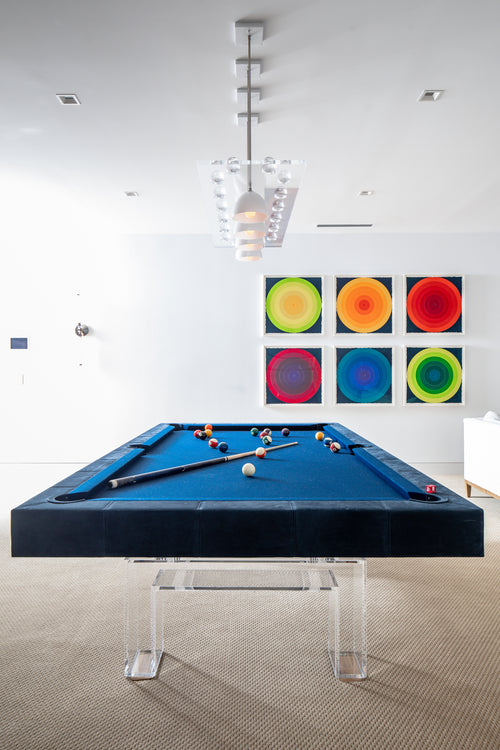
Stronger felt tones are best when you want a more classic billiards identity, more color presence, and a stronger personality. Good examples include deep navy, forest green, burgundy, and black.
For most luxury homes, muted tones usually age better than loud ones.
Step 7: Be Honest About Usage
This part matters more than people admit. A table used three times a week should be chosen differently from a table used six times a year.
If the Table Is for Serious Play
Prioritize room clearance, proper proportions, durable finishes, felt practicality, and long-term usability.
If the Table Is Mainly a Design Object
Prioritize silhouette, base design, material impact, and visual harmony with the room.
The truth is most buyers want both. That is fine. But one side usually matters more, and pretending otherwise leads to compromise in the wrong place.
The Real Decision Paths
Here is the easiest way to simplify the whole thing.
Path 1: The Modern Minimalist
Choose a pedestal or plinth base, light or medium wood, stainless or blackened metal, neutral felt, and restrained proportions. This is best for modern homes, bright rooms, minimal interiors, and people who want the table to feel architectural but controlled.
Path 2: The Warm Luxury Room
Choose a four-leg or soft sculptural trestle base, walnut or medium oak, bronze or brass hardware, muted warm felt, and layered textures. This works best for transitional homes, organic modern interiors, and rooms with stone, linen, leather, and warmer tones.
Path 3: The Statement Room
Choose a sculptural pedestal or geometric base, dark wood or mixed materials, blackened metal or bronze, darker or moodier felt, and stronger contrast. This is best for large entertaining spaces, dramatic interiors, and rooms that need a centerpiece.
Path 4: The Safe Long-Term Choice
Choose a balanced pedestal or refined four-leg base, medium wood tone, stainless or bronze, neutral felt, and classic proportions. This is best for buyers who want the least risk, homes likely to evolve over time, and spaces where resale-friendliness matters.
The Biggest Mistakes Buyers Make
Choosing Based on the Table Alone
A beautiful table can still be wrong for the room.
Overestimating How Much Visual Weight the Room Can Handle
This happens constantly. The table ends up feeling too dense, too dark, or too dominant.
Matching Finishes Too Literally
The wood and metal do not need to match every surrounding surface perfectly. They need to relate well.
Ignoring How the Table Will Actually Be Used
A table selected only for looks can become annoying in real life. A table selected only for function can feel visually dead.
Going Too Safe in a Room That Needs Personality
Some rooms need a stronger move. Not every good decision is a quiet one.
The Best Way to Decide Fast
If you want the shortest useful version, use this:
- Small or bright room: lighter wood, cleaner base, quieter finish.
- Large or dramatic room: darker wood, sculptural base, stronger contrast.
- Modern house: pedestal or plinth, blackened metal or stainless.
- Warm luxury house: walnut, bronze or brass, softer silhouette.
- Want a safe choice: medium wood, neutral felt, stainless or bronze.
- Want a statement: sculptural base, darker finish, stronger hardware presence.
That gets you most of the way there.
Final Verdict
The best custom pool table is not the most expensive one, the boldest one, or even the most beautiful one in isolation.
It is the one that solves the room properly.
A good custom pool table decision starts with space, moves through visual weight, and ends with materials and details. That order matters. If you get it backward, you risk buying a table that is attractive but wrong.
My honest take: start with room size and function, decide whether the table should blend or lead, choose the base before obsessing over finish, use wood tone and hardware to tune the mood, and keep the entire room in mind the whole time.
That is the actual matrix. Not just what looks good on its own, but what looks right where it is going to live.
FAQ
What is the most important factor when choosing a custom pool table?
Usually the room itself. Size, circulation, visual weight, and design style should come before finish details.
Should I choose the base style before the wood finish?
Yes. The base has a bigger impact on the table’s overall presence and how modern, classic, or sculptural it feels.
What is the safest custom pool table choice?
A balanced pedestal or refined four-leg design in a medium wood tone with neutral felt and stainless or bronze hardware is usually the lowest-risk option.
What makes a pool table feel more modern?
Cleaner silhouettes, pedestal or plinth bases, restrained detailing, lighter or matte woods, and stainless or blackened metal finishes.
What makes a pool table feel more luxurious?
Strong proportions, premium materials, good restraint, and finishes that suit the room. Dark walnut, bronze, brass, sculptural bases, and muted felt often read as more luxurious when handled well.
Should the pool table match the rest of the room exactly?
No. It should relate to the room, not disappear into it or match every finish literally.
Looking for a table designed around your room rather than forced into it afterward? Explore custom pool tables, designer pool tables, and luxury pool tables tailored to the proportions, materials, and mood of modern homes.