

Enjoy our modern designs
History & Culture
Artistic Pool and
Trick Shots
From informal exhibitions and parlor spectacle to a scored, standardized discipline, artistic pool shows how cue sports turned theatrical ingenuity into formal competition.
Trick shots are where billiards stops being just a game and becomes performance. What began as informal flourishes and parlor theatrics evolved into a codified, competitive discipline—artistic pool—with standardized shots, scoring, and world championships.
The Overview
A Short
Primer
Trick shots sit at the intersection of performance, experimentation, and precision. They are designed to impress, but the best of them also reveal something deeper: how much control a skilled player can exert over spin, speed, angle, and timing.
That dual identity is what makes artistic pool interesting. It is not simply entertainment, and it is not conventional match play either. It is a discipline built around the repeatable execution of shots that look improbable to everyone else.
Artistic pool exists because cue sports discovered that showmanship and technical mastery were never opposites. The spectacle was the proof.— On why trick shots became a discipline
Early History
Roots: Spectacle in the
19th Century
The fascination with fancy shots is almost as old as billiards itself. In the 1800s, skilled players performed elaborate “fancy shots” between matches to entertain spectators. These displays were not just diversions—they demonstrated what new techniques and equipment could actually do.
Early pioneers such as François Mingaud, often associated with the leather cue tip, helped show the public that cue-ball action could be manipulated in dramatic ways. Draw, sidespin, and curve were not merely technical discoveries. In exhibition form, they became theater.
Why This Era Matters
The first generation of exhibition players established the basic logic of trick-shot culture: a shot could be useful, beautiful, and commercially valuable at the same time.
Public Performance
Exhibition Culture and the Rise of
Celebrity Players
By the late 19th and early 20th centuries, exhibitions had become a practical business model. Champions toured, drew crowds, and used trick shots to separate themselves from ordinary professionals. The spectacle was not a side act anymore. It was part of the brand.
Players such as Willie Hoppe and Ralph Greenleaf helped popularize this model. Later, television and variety programming amplified it even further. Trick shots were made for the screen: short, visually legible, and instantly impressive. That format turned trick-shot specialists into recognizable personalities well beyond the billiards world.
Hall Culture
Grassroots Creativity: Pool Halls and
Challenges
Professional exhibitions were only one side of the story. The other developed in ordinary pool halls, where players invented unusual setups to kill time, settle bets, or prove nerve. These informal challenges created a laboratory for experimentation.
Banks off clustered balls, improvised jump sequences, and awkward cueing positions all thrived in small-room culture because the cost of experimentation was low and the reward was immediate: attention, money, or status. The hall scene fed the stage, even if it did not always get the credit.
Formalization
From Stunts to Structure: The Birth of
Artistic Pool
-
Improvised Shots Became Repeatable Routines
What started as one-off demonstrations gradually became a recognizable catalog of shots that could be taught, rehearsed, and compared.
-
Promoters and Specialists Created Formats
Players and organizers such as Paul Gerni and Tom “Dr. Cue” Rossman helped convert spectacle into judged routines and structured events.
This is the point where trick shots stop being random flair and start becoming a discipline. -
Institutional Backing Gave It Weight
The WPA Artistic Pool Division and world championship formats gave the category legitimacy through standard shot lists, categories, and scoring.
-
Mastery Became Measurable
Once shots were standardized, players could be judged on precision, consistency, execution, and breadth of skill instead of pure crowd reaction.
That shift matters. A trick shot in casual culture can be memorable once. An artistic-pool shot has to be reproducible under pressure. That is a completely different standard.
Shared Vocabulary
Signature Shots and
Categories
Artistic pool depends on a common catalog of challenge types. The categories vary in difficulty and style, but together they test a player’s command of the cue ball and the table environment.
Category 01
Draw & Follow
Core SkillSpin Control
FocusBackspin / Topspin
These shots test how precisely a player can move the cue ball backward or forward after contact.
Category 02
Banks & Kicks
Core SkillRail Geometry
FocusMulti-Rail Accuracy
These reward line judgment, angle prediction, and touch across one or more rails.
Category 03
Jumps
Core SkillClearance
FocusElevation Control
Jump shots require controlled force and clean contact without collapsing into foul-prone chaos.
Category 04
Massé & Curve
Core SkillExtreme Spin
FocusCurved Pathing
These are among the most theatrical shots, but also among the most technically punishing.
Prop shots add another layer by introducing cups, obstacles, or unusual setups. That expands the discipline from pure table geometry into staged problem-solving.
Modern Era
Notable Artists and
Modern Stars
The modern discipline has produced players who combine real technical depth with performance instincts. Mike Massey and Andy Segal are closely associated with artistic pool’s competitive side, while Florian Kohler helped bridge old-school trick-shot culture with the internet era.
Kohler’s rise especially matters because it proved that viral visibility and formal credibility could reinforce each other rather than compete. The audience moved online, but the appeal stayed the same: people still want to watch the improbable become controlled.
Tools and Mechanics
Equipment and Technique
Tweaks
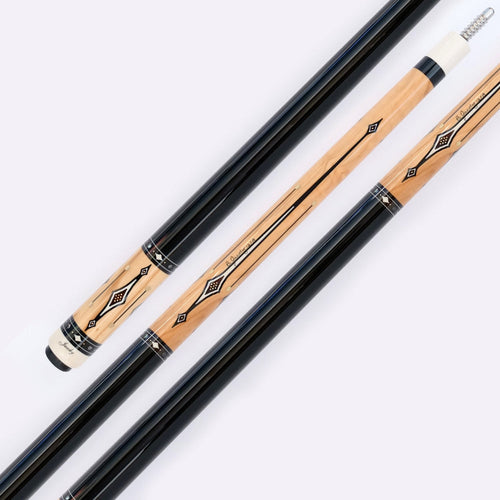
Some trick-shot specialists use equipment tailored to their needs: low-deflection shafts, jump cues, or cues suited for more extreme massé work. But the gear is not the real story.
The real foundation is fundamentals—tip condition, cue delivery, angle visualization, ball-response intuition, and endless rehearsal. Specialized equipment can tighten margins, but it cannot replace command.
Cultural Relevance
Why Trick Shots
Matter
Artistic pool matters because it plays three roles at once. It entertains. It pushes innovation. And it exposes the hidden physics inside cue sports in a way ordinary match play often does not.
It also expands billiards culturally. A well-executed trick shot is shareable, understandable, and immediate even to non-players. That makes it one of the few cue-sport forms that can reliably pull new eyes into the game.
Misread 01
“It’s Just Showboating”
That misses the point. High-level artistic pool depends on reproducibility, not random flair.
Better View
Treat it as technical performance under theatrical conditions.
Misread 02
“Equipment Does the Work”
Specialized gear helps, but it does not substitute for stroke, timing, or table knowledge.
Better View
The cue matters less than the player’s ability to repeat the line.
Misread 03
“It Has Nothing to Do with Real Pool”
Trick shots often deepen understanding of spin, rebound, and cue-ball behavior that carries back into standard play.
Better View
Artistic pool exaggerates fundamentals. That is part of why it teaches so much.
// Conclusion
Trick shots began as amusement and became an art form because players kept pushing the limits of what the table—and the cue ball—could do. Today, artistic pool stands as a formal discipline that rewards imagination as much as repetition. The spectacle survived because the skill underneath it was real.