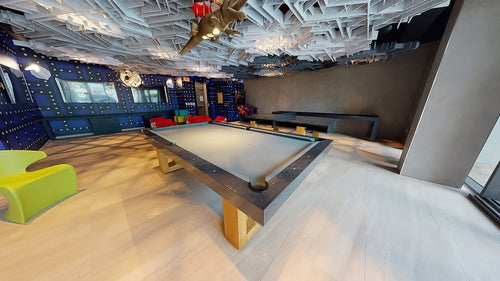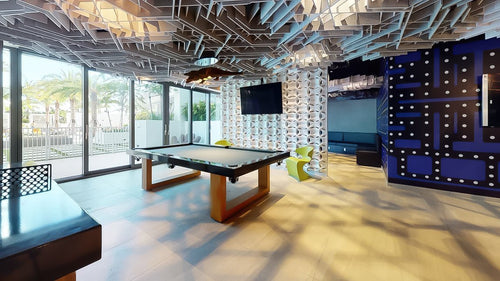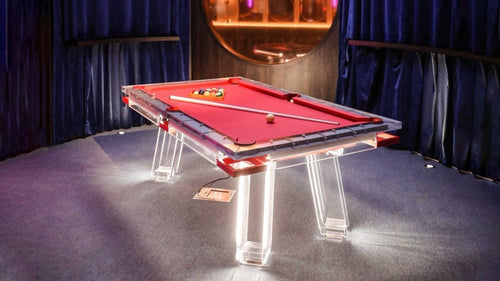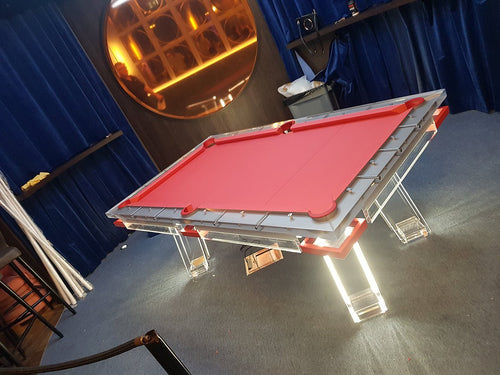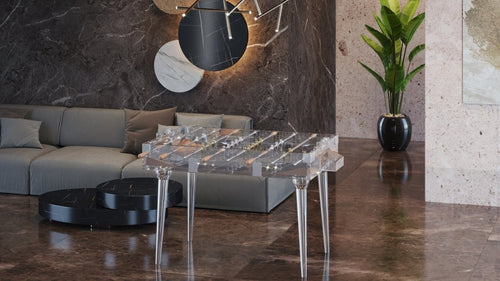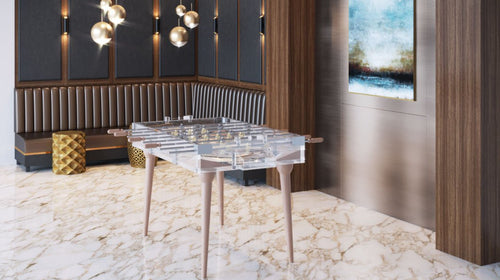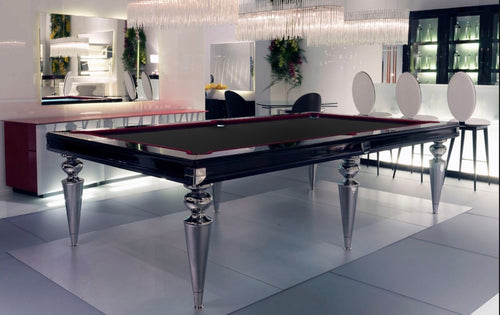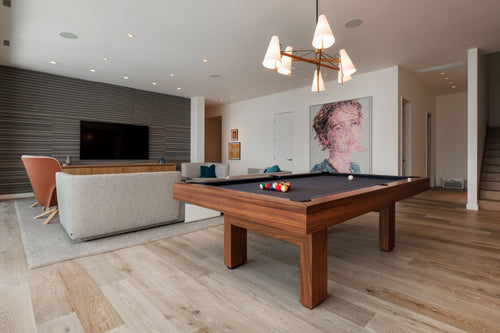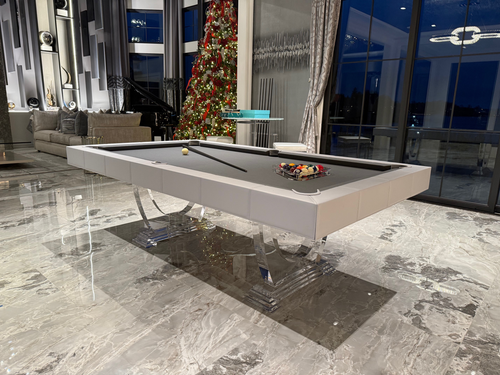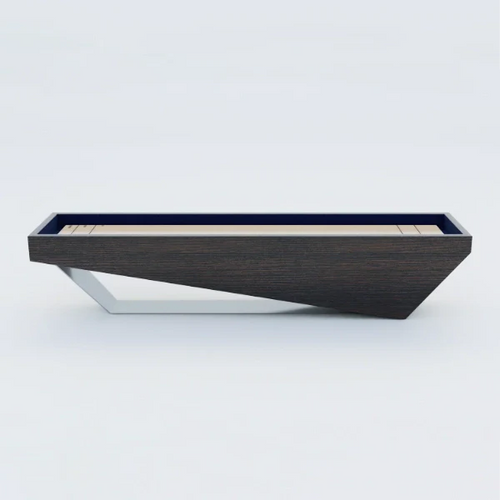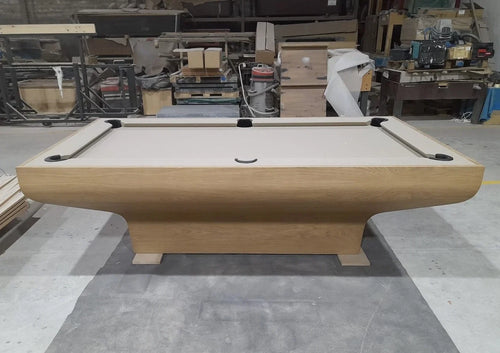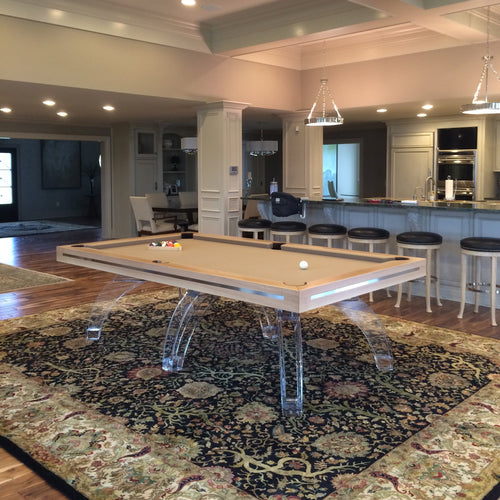


Enjoy our modern designs
Work & Positioning
The corner office used to be about distance. Modern leadership reads differently. Today, authority is less about separation and more about control, fluency, and how a room makes people feel.
A pool table in the corner office is not really about recreation. It is about positioning. It changes the tone of the room, the posture of the meeting, and the kind of authority being projected.
Executive Optics
The Office as a
Signaling Tool
The corner office used to be organized around hierarchy. Big desk. Closed door. Formal seating across from it. Clear distance between the person in charge and everyone else.
That model is fading. Modern CEOs are not always trying to look untouchable. They are trying to look sharp, strategic, and culturally current. The office has become less of a barrier and more of a stage.
A pool table says something a conference table never can: I think in angles. I play long games. I am comfortable competing without needing the room to feel hostile.— On what executive furniture communicates without saying it aloud
Everything in an executive office sends a message. A traditional desk signals authority. A glass desk signals modernity. A lounge arrangement signals collaboration. A pool table signals something more layered: confidence, perspective, and comfort with tension that does not need to be over-managed.
It shifts the energy from interrogation to engagement. Instead of sitting across a desk like opponents, people stand side by side, lining up a shot, talking through ideas without the stiffness of a formal meeting setup.
Behavioral Advantage
Psychology: Movement Changes
Conversation
There is a reason negotiations often improve when people walk, change posture, or interact with something tangible. Movement lowers defensiveness. It interrupts the frozen formality that can make every silence feel loaded.
Dynamic 01
Shared Focal Point
EffectLess Pressure
ResultMore Natural Dialogue
A pool table gives both people something to orient around, which makes the conversation feel collaborative rather than confrontational.
Dynamic 02
Silence Without Awkwardness
ContextBetween Shots
ResultRhythmic Conversation
The game structures pauses in a way that makes silence feel natural instead of strained, which often leads to more honest exchanges.
Dynamic 03
Structured, Not Rigid
MoodGuided Flow
EffectLower Defensiveness
The table provides enough structure to keep the interaction focused without forcing it into the artificial stiffness of a formal sit-down.
Use Case 04
Creative and Fast-Growth Leaders
Best FitFounders / Agency Heads / Operators
WhyCulture Is Currency
In environments where leadership style is part of the brand, the office has to communicate something more nuanced than rank alone.
Aesthetic Discipline
Design Without Looking
Frivolous
There is a line between strategic and gimmicky. Cross it, and the entire move collapses. A neon game-room vibe inside a corporate headquarters does not read as visionary. It reads unserious.
What Works
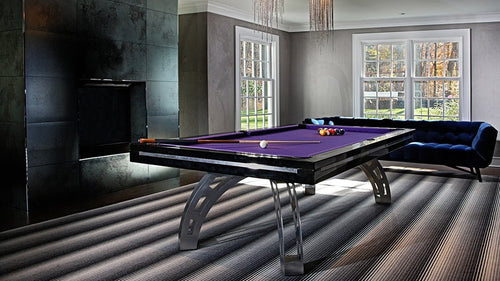
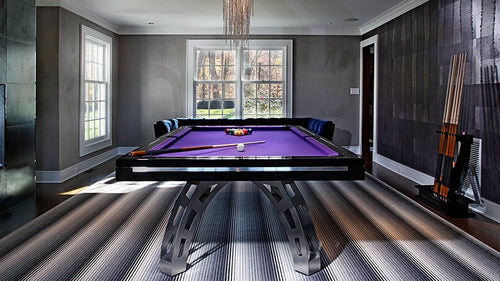
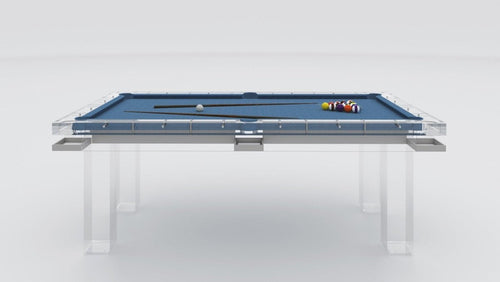
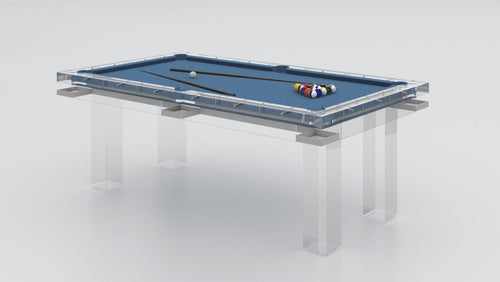
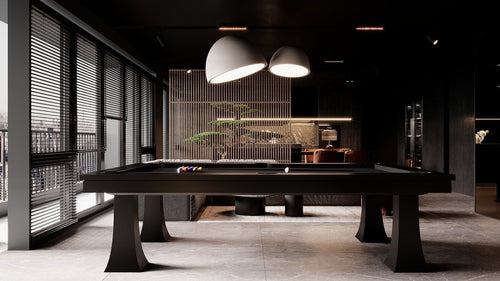
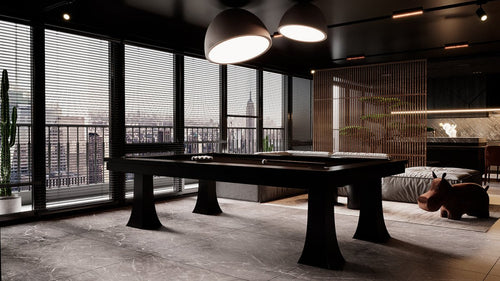
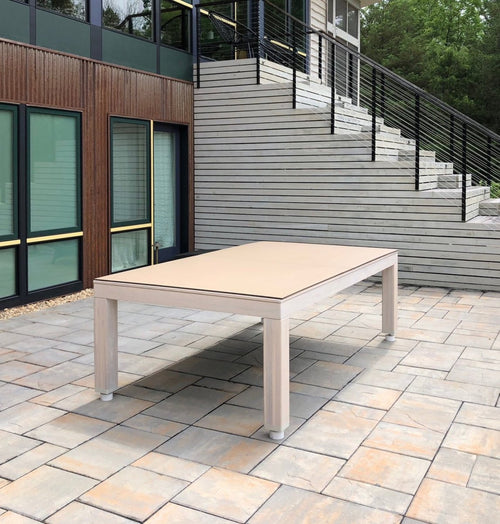
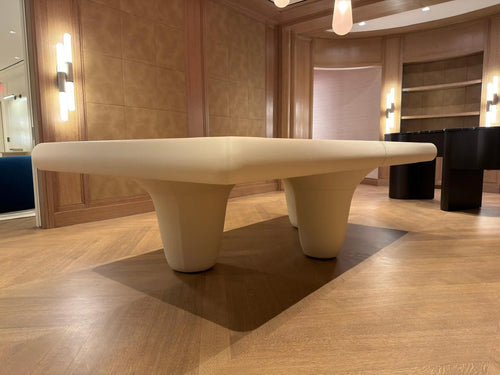
A modern, restrained table in walnut, oak, or matte black reads intentional. Neutral cloth, clean lines, and the absence of loud branding keep the object aligned with executive architecture rather than entertainment décor.
Placed correctly—not dominating the room and not shoved awkwardly against a wall—the table becomes sculptural. It reads as part of the office composition first, and a game surface second.
That distinction matters. The right table says performance matters here, but so does perspective. The room feels less like a boardroom annex and more like a place where strategy is actually lived.
Cultural Signaling
Recruiting and
Retention
Top-tier talent does not evaluate compensation alone anymore. People evaluate environment, leadership style, and whether a company feels human or merely polished.
Signal 01
Human, Not Sterile
MessageConfidence
EffectLeadership Feels Real
An executive office that feels lived in and intentional suggests a leader comfortable with balance without looking soft or unserious.
Signal 02
Pressure and Play Coexist
AudienceTalent / Investors / Partners
EffectSubtle Competitive Edge
The office suggests a culture where ambition is high, but the environment is confident enough not to perform stiffness for its own sake.
Signal 03
Modern Authority
Old ModelRigid Formality
New ModelCalm Control
In many modern companies, authority now looks like ease under pressure, not theatrical distance from everyone else in the room.
Signal 04
Office as Brand Asset
RoleCultural Proof
ResultEnvironment Supports Strategy
For companies in tech, media, design, private equity, and startups, the office itself becomes part of the company’s pitch.
// The Bottom Line
Not every CEO should install a pool table. In highly traditional industries, the signal could land wrong. But in modern companies, the corner office is evolving. Authority now looks like calm control, not rigid formality. A well-designed pool table is not about killing time. It is about controlling the tone of the room—and in business, tone is leverage.