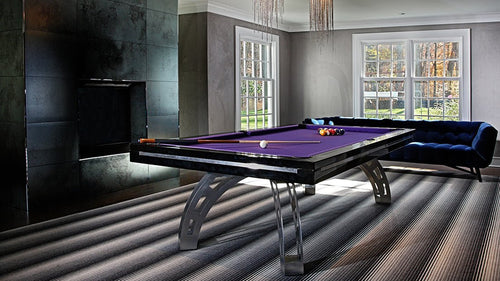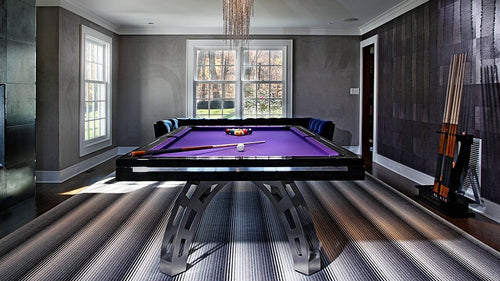


Enjoy our modern designs
For decades, a pool table was easy to recognize before anyone took a shot. Heavy wood frame. Green felt. Leather pockets. Carved legs. A hanging billiard lamp above it. Maybe a cue rack on the wall and a bar somewhere nearby. The formula was familiar, and in the right room, it still has real charm.
But luxury interiors have changed.
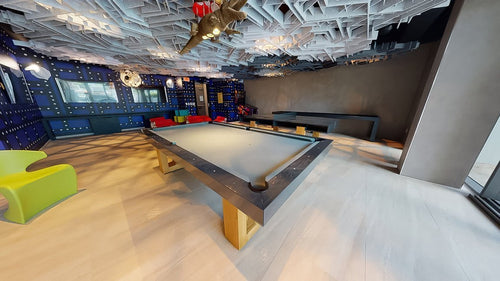
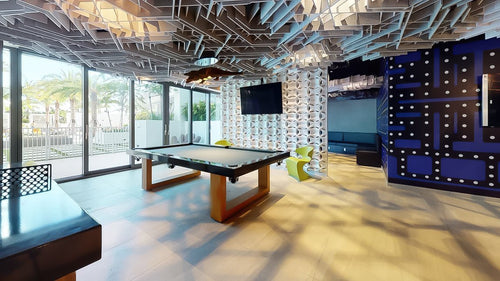
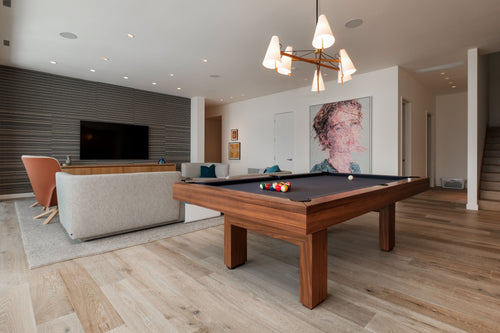
Pool tables are no longer limited to basements, club rooms, and dedicated game spaces. They are moving into open-plan living rooms, penthouses, formal lounges, waterfront homes, outdoor terraces, and rooms where the design language is much closer to architecture than recreation.
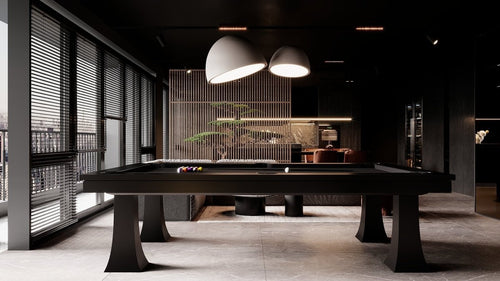
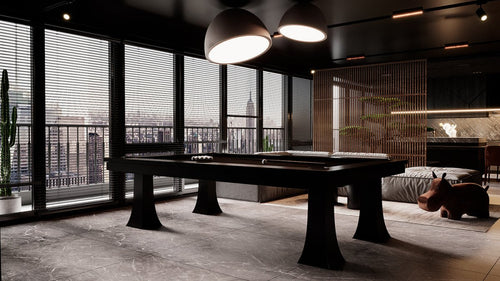
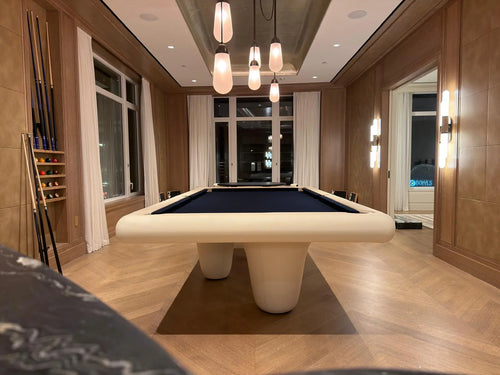
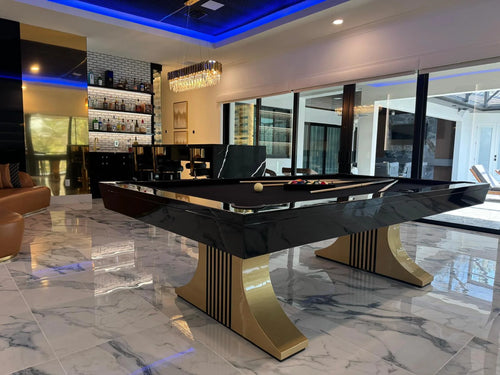
The best pool tables today do not always announce themselves as pool tables first. They may look like sculptural furniture, a dining table, an architectural object, or a material statement placed at the center of a room. They still need to play correctly, but visually, they have become more refined, more integrated, and often much less obvious.
Table of Contents
- 1. The Old Billiard Room Had a Fixed Look
- 2. The Table Has Entered the Main House
- 3. Furniture First, Game Table Second
- 4. The Felt No Longer Has to Be Green
- 5. Materials Have Moved Beyond Heavy Wood
- 6. The Base Has Become Architecture
- 7. Pockets Are Getting Quieter
- 8. The Table Is Becoming Social Furniture
- 9. Performance Still Separates Design From Decoration
- The Bottom Line
1. The Old Billiard Room Had a Fixed Look
The traditional pool table came from a very specific visual world. It belonged to rooms with darker wood, heavier furniture, green cloth, bar elements, and a strong sense of enclosure. The table was not expected to blend into the rest of the home because the billiard room itself was usually separate.
That separation made the design easier. A pool table could look like a pool table because the entire room was built around that identity. It did not have to relate to a modern kitchen, formal living room, glass staircase, stone fireplace, or view across the main floor.
In many homes, that old formula still works when the architecture supports it. The problem begins when that same table is placed in a home that does not speak that language. A heavy green-felt table in a pale open-concept room can feel like a transplant.
2. The Table Has Entered the Main House
The biggest reason pool tables look different now is simple: they are being placed in different rooms.
A table in a basement can afford to be more literal. A table in the main living area cannot. Once a pool table becomes visible from the kitchen, dining room, foyer, stairwell, or outdoor terrace, it has to behave like part of the interior.
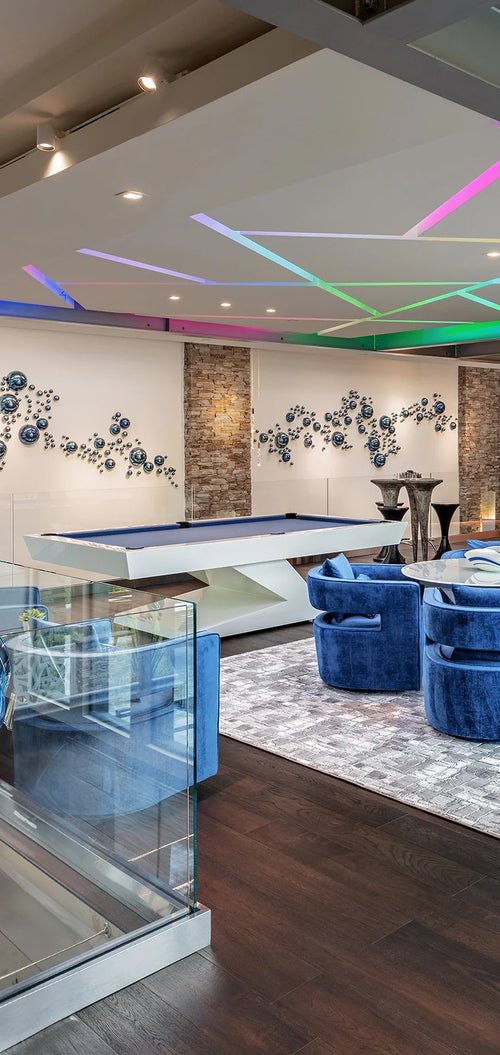
The table must look good from a distance. It must relate to the flooring, ceiling, lighting, furniture, and architecture. It must work when no one is playing. Modern pool tables solve this by becoming more architectural: cleaner bases, refined proportions, custom finishes, restrained felt colors, and better integration with the room.
The Pro Insight: This is not about hiding the game. It is about elevating the object so it belongs to the home it is in.
3. Furniture First, Game Table Second
A good modern pool table often reads as furniture before it reads as equipment. This is one of the most important shifts.
In a luxury home, the table has to hold its own beside custom sofas, stone coffee tables, built-in millwork, sculptural lighting, art, and architectural materials. If it looks like specialized game equipment, it can make the room feel less refined.
This does not mean the table should lose its purpose. A pool table still needs proper slate support, accurate leveling, reliable rail response, and a playing surface that performs. The difference is that the technical parts are no longer allowed to dominate the visual language.
4. The Felt No Longer Has to Be Green
Nothing makes a pool table feel traditional faster than green felt. That is not necessarily a bad thing. Green is iconic for a reason, and in the right setting it can still look excellent. But it carries a strong association with billiard halls, clubs, bars, and older game rooms.
Modern interiors often need a different answer. Felt is one of the largest visible surfaces on the table, so the color has enormous influence over how the piece reads.
| Felt Color | Modern Effect |
|---|---|
| Charcoal | Makes the table feel architectural and controlled. |
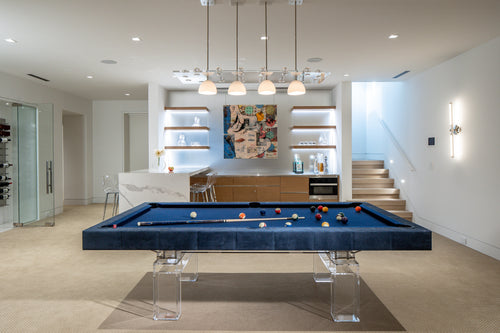
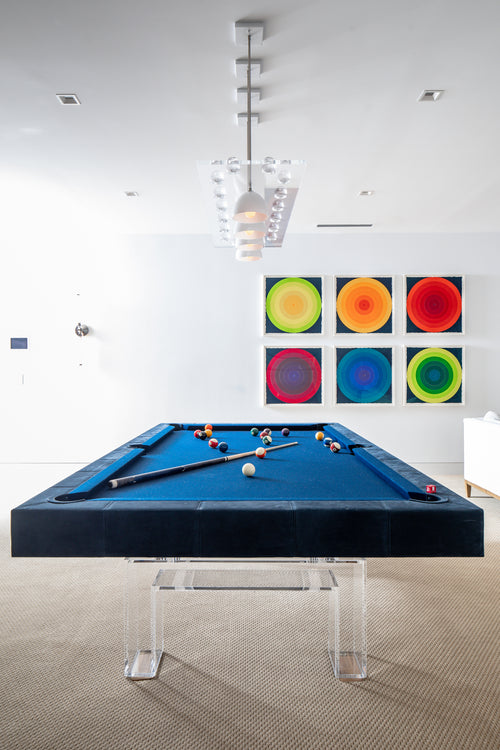
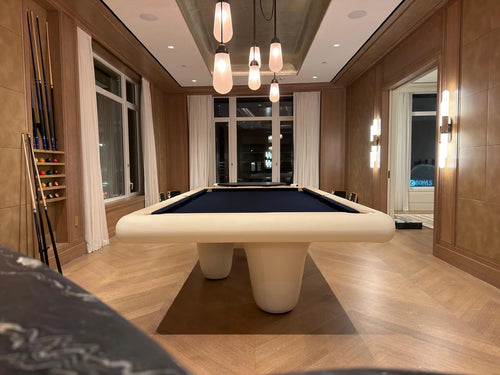
| Navy | Adds depth without becoming loud. |
| Taupe | Softens the table inside a neutral room. |
| Olive | Feels rich and understated with walnut, bronze, leather, or muted stone. |
5. Materials Have Moved Beyond Heavy Wood
Traditional pool tables are usually associated with wood, and wood is still one of the strongest materials for a table. The difference is that modern luxury design gives the table a much broader vocabulary.
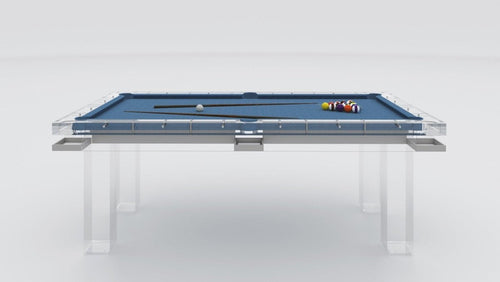
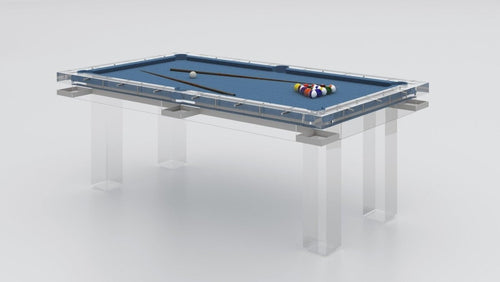
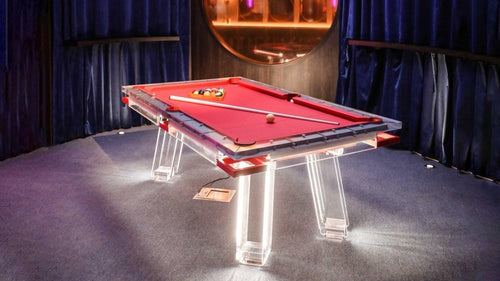
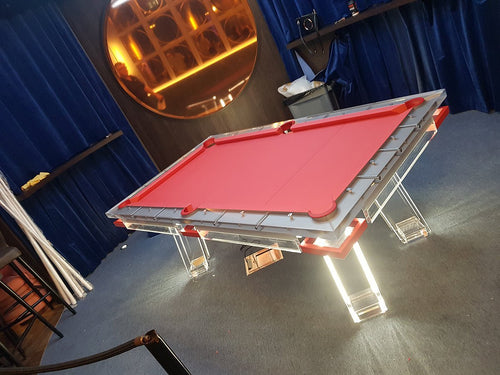
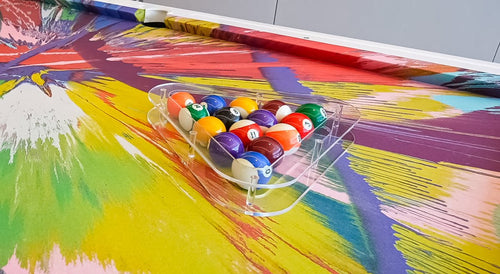
A pool table can now involve walnut, oak, ash, lacquer, metal, stone, leather, acrylic, Lucite, glass, carbon, aluminum, or combinations of several materials. This does not mean every table should become a material experiment. It means designers have more ways to make the table respond to the home.
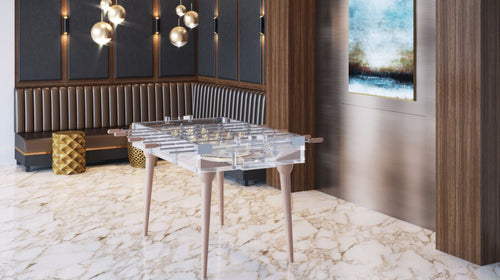
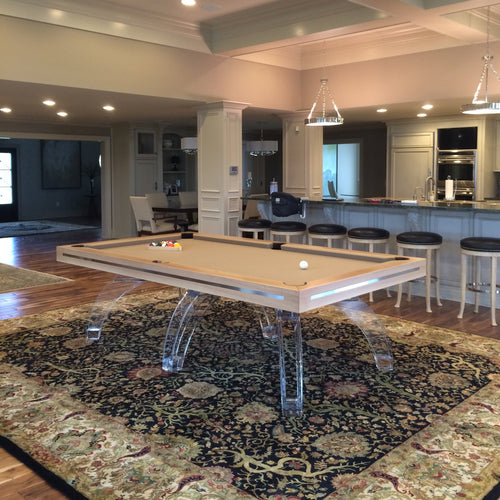
A Lucite or acrylic base can make a table feel lighter in a glass-walled room. A metal frame can suit sharper architecture. A stone accent can connect the table to floors, fireplaces, counters, or wall surfaces. Leather details can add warmth and tactility.
6. The Base Has Become Architecture
The base is where many modern pool tables separate themselves from older designs.
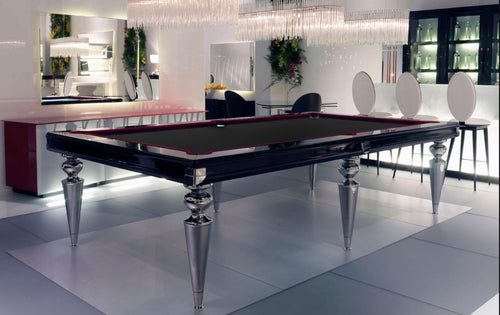
Traditional tables often relied on legs, carved supports, or heavy pedestal forms. Those details made sense in rooms where furniture was heavier and more decorative. But in modern interiors, the base has become a place for architectural expression.
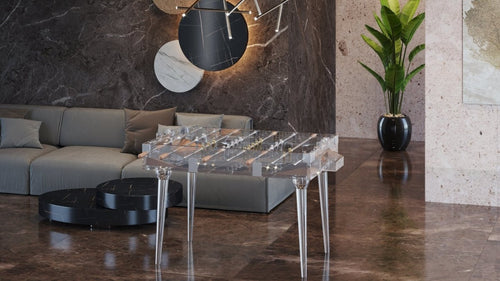
Some tables use clean geometric supports. Some use open frames. Some use transparent structures. Some use sculptural forms that feel closer to a dining table or art object than a classic billiard table. The base determines how the table occupies the room. A heavy base makes the table feel grounded. An open base lets the room breathe. A transparent base preserves sightlines.
7. Pockets Are Getting Quieter
Pockets used to be one of the most recognizable features of a pool table. Leather drop pockets, shield pockets, visible hardware, and decorative pocket shapes all helped create the classic billiard look. In modern interiors, those details can sometimes feel too literal.
That is why many contemporary tables make pockets quieter. Hidden pockets, cleaner openings, reduced hardware, and more integrated pocket designs allow the table to feel less like game equipment and more like refined furniture.
Traditional pockets still have their place, especially in warmer, classic, or club-inspired rooms. The point is not that hidden pockets are always better. The point is that pocket style should be chosen with the same seriousness as any other design detail.
8. The Table Is Becoming Social Furniture
A pool table has always been social, but the way it supports social life has changed.
In older game rooms, the table was often the main activity in a separate space. People went to the room to play. In modern homes, the table may sit near a bar, lounge, kitchen, terrace, or dining area. People may gather around it before dinner, play casually during a party, watch from nearby seating, or simply use it as a visual anchor for the room.
That makes the table more than a game surface. It becomes social furniture. It gives the room a reason to gather without making the space feel like an arcade or basement.
9. Performance Still Separates Design From Decoration
A pool table can look completely new, but it still has to respect the fundamentals of the game. This is where some design-led pieces fail. They look striking in a room, photograph well, and attract attention, but they do not deliver the quality of play expected from a serious table.
That is not luxury. It is decoration with pockets.
A proper table still needs stable construction, accurate leveling, reliable rail response, quality cushions, a serious playing surface, and professional installation. The design has to support the engineering, not undermine it. A table can look light, but it cannot feel unstable. It can look minimal, but it cannot play inconsistently.
The Bottom Line
The most interesting modern pool tables do not need to explain that they are pool tables from across the room. They earn attention in a different way.
They hold the space through proportion, material, and presence. They relate to the architecture instead of importing a separate game-room identity. They make the room more useful without making it less elegant. They invite play, but they also look complete when no one is playing.
That is why the best pool tables do not always look like pool tables anymore. They have moved beyond the visual clichés of the category and into the larger world of furniture and interior architecture.
The best version does not look like it was borrowed from a billiard hall. It looks like the home made room for it.