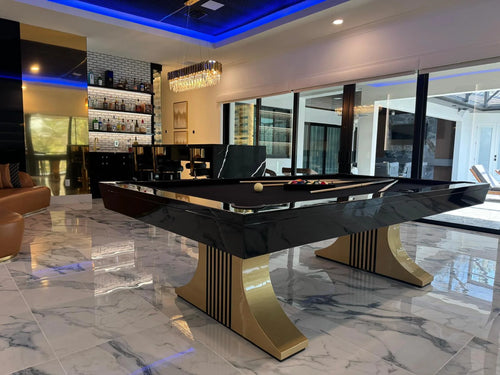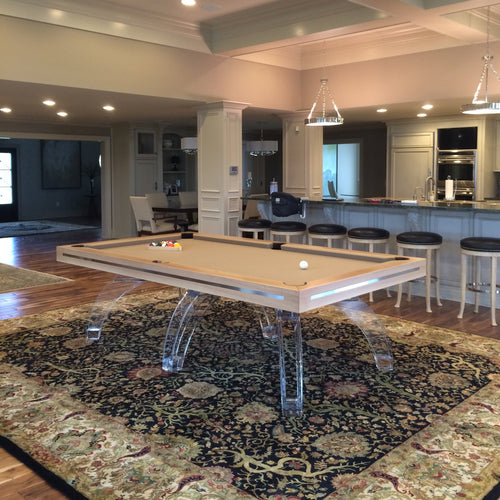


Enjoy our modern designs
Estimated Read Time: 2 mins |
Bank Pool makes cushion judgement central: only legal called banks score. This overview follows the WPA rules, which distinguish short-rack and full-rack games. Practising banks rewards careful aim, speed control and repeatable cueing.
Equipment & Setup
- Nine-ball diamond: first to five points. Fifteen-ball triangle: first to eight. Use the short-rack diamond or full-rack triangle arrangement specified in WPA Section 13.2.
- Break from behind the head string. Incoming players normally play the cue ball where it lies; a scratch gives ball-in-hand behind the head string.
- WPA Bank Pool is played head-to-head.
How to Play
Call the ball, pocket and cushion sequence. The cue ball must contact the called ball before another ball or cushion. That object ball must bank cleanly without contacting another ball or recontacting the cue ball. The rules allow incidental contact with rail sections adjacent to the called pocket.
Scoring & Strategy
Each valid bank scores one. Break pots do not score; balls pocketed without a valid bank are generally spotted after the inning. A standard foul costs one point, owed if necessary. Three consecutive fouls lose the rack, subject to the required warning. See WPA Section 13 for break requirements and spotting exceptions.
Simplified Option
For a casual practice drill, players may agree to simpler calling requirements. Label that as a house variation and keep its scoring separate from a match played under WPA rules.
Why Play Bank Pool?
Bank Pool refines the pure physics of pocket billiards, elevating cushion knowledge to center stage. It rewards precision over power and tests geometric cue control and mental focus, making every inning a compelling challenge for players and spectators alike.
Conclusion
Bank Pool turns each visit into a careful choice of angle, pace and position. Keep the rulebook nearby while learning, agree on the rack format, and build consistency before adding more ambitious banks.