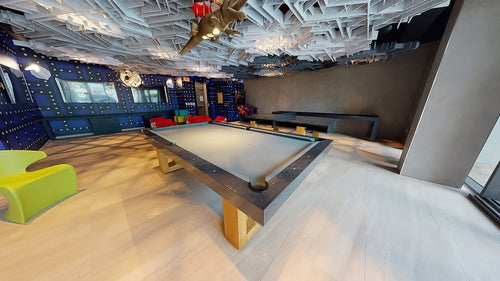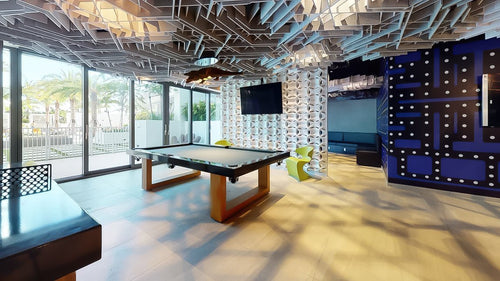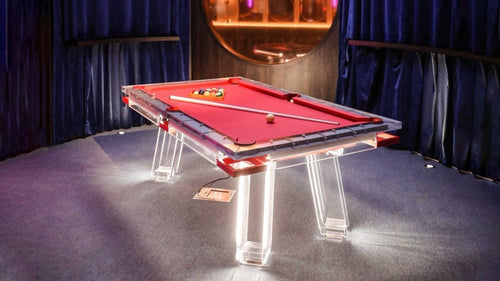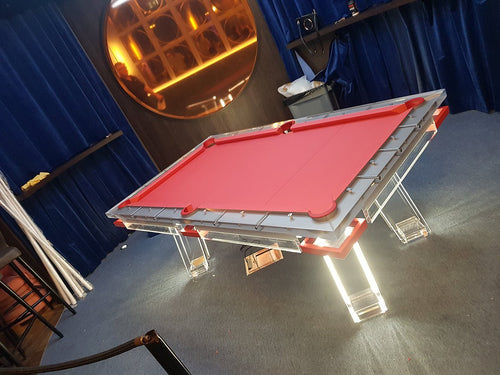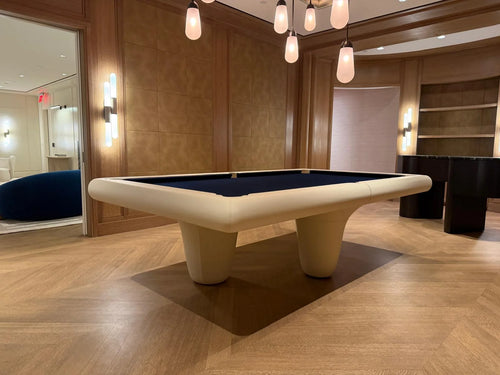


Enjoy our modern designs
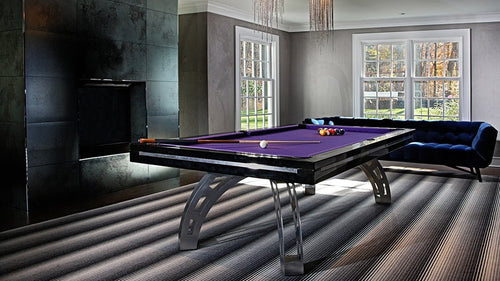
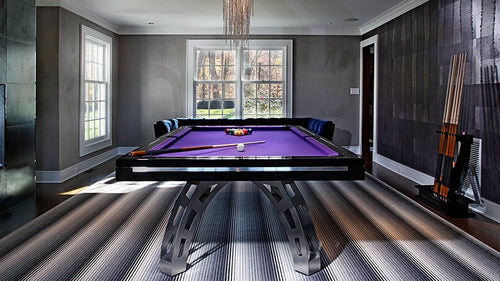
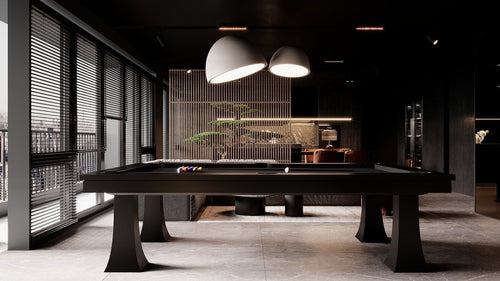
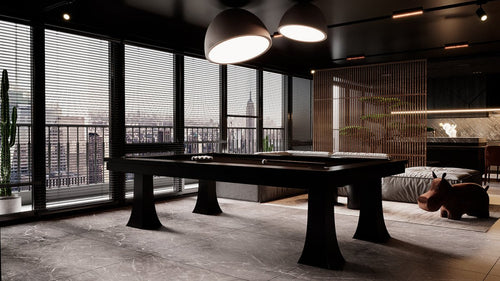
Black pool tables are popular for a reason. They can look dramatic, modern, masculine, minimal, and expensive. In the right room, a black table has presence. It can ground the space, sharpen the design, and make the pool table feel more like a sculptural furniture piece than traditional game-room equipment.
But black is not automatically elegant. It can also look heavy, predictable, overly masculine, or visually flat. In some rooms, a black pool table feels refined. In others, it feels like the default choice people make when they want something “luxury” but have not thought through the room.
The difference comes down to proportion, finish, contrast, lighting, and how much black the room can actually handle.
Table of Contents
1. Why Black Pool Tables Are So Popular
Black is one of the easiest ways to make a pool table feel serious. It reduces visual noise, hides some wear better than lighter finishes, and works with many modern interiors. It can feel sharp in a penthouse, moody in a lounge, architectural in a contemporary home, or dramatic in a private game room.
Black also has range. A black table can be minimal and quiet, or bold and theatrical. It can pair with brass, chrome, walnut, marble, leather, concrete, glass, or dark wall finishes. That flexibility makes it appealing to homeowners and designers who want a pool table that feels mature rather than nostalgic.
The danger is that black can feel too easy. Because it usually looks good in isolation, people may choose it without considering whether it is truly the best answer for the room.
Designer insight: Black is powerful, but it is not neutral in the way people think. It changes the weight, mood, and hierarchy of the entire room.
2. When a Black Pool Table Feels Elegant
A black pool table feels elegant when the room gives it enough space, contrast, and material support. It needs room to breathe. If the table is large, dark, and surrounded by other heavy objects, the room can become visually dense.
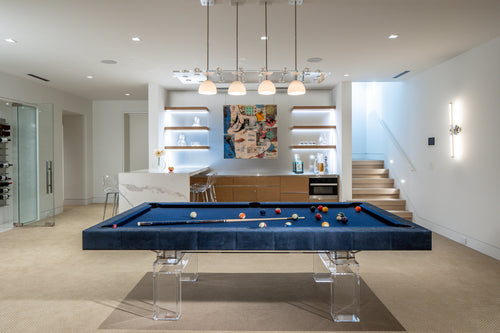
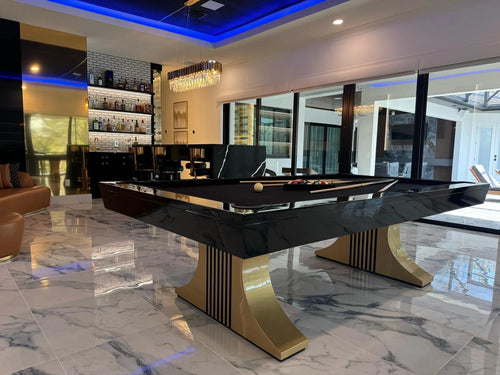
Black works especially well when it anchors a lighter or more textural room. Against pale stone, warm wood, neutral walls, or architectural lighting, a black table can feel crisp and deliberate. It gives the room a center without requiring ornament.
It can also work beautifully in darker rooms, but only when the lighting and materials are layered. A black table in a dark room needs texture, sheen variation, or contrast so it does not disappear into a single heavy mass.
Elegance comes from control. The black table should feel like part of the composition, not just the darkest object in the room.
3. When Black Becomes Risky
Black becomes risky when it makes the room feel too heavy. A pool table is already a large object. In black, its visual weight increases. That can be useful in a spacious room, but oppressive in a smaller one.
Another risk is predictability. Black pool tables are common in modern game rooms, luxury showrooms, and masculine interiors. If the room already has black walls, black seating, black bar cabinetry, black lighting, and black metal accents, the table may not feel distinctive. It may simply blend into a familiar formula.
Black also shows certain types of maintenance. Dust, chalk residue, fingerprints, and hair can be more visible on dark surfaces, especially if the finish is glossy or very smooth. It may hide some scuffs better than white, but it is not maintenance-free.
The biggest risk is thinking black automatically solves taste. It does not. A bad black table is still a bad table.
4. Matte, Satin, Gloss, or Textured Black?
The finish determines the personality of a black pool table. Matte black feels modern, architectural, and restrained. Satin black feels softer and often more livable. Gloss black feels dramatic and formal, but it can show reflections, fingerprints, and dust more easily. Textured black can add depth and reduce the flatness that sometimes comes with solid black furniture.
For most luxury interiors, satin or textured black is often the safest choice. It gives the table presence without making it look too theatrical. Gloss black can be beautiful, but it needs the right lighting and maintenance expectations.
Finish should also be considered alongside the rest of the room. If the space already has polished stone, glossy cabinetry, and reflective metals, a high-gloss black table may be too much. If the room is soft, matte, and textural, a slightly sharper finish may create useful contrast.
Pro tip: Do not choose “black” as a single finish decision. Matte black, satin black, gloss black, and textured black behave like different materials.
5. Choosing the Right Cloth Color
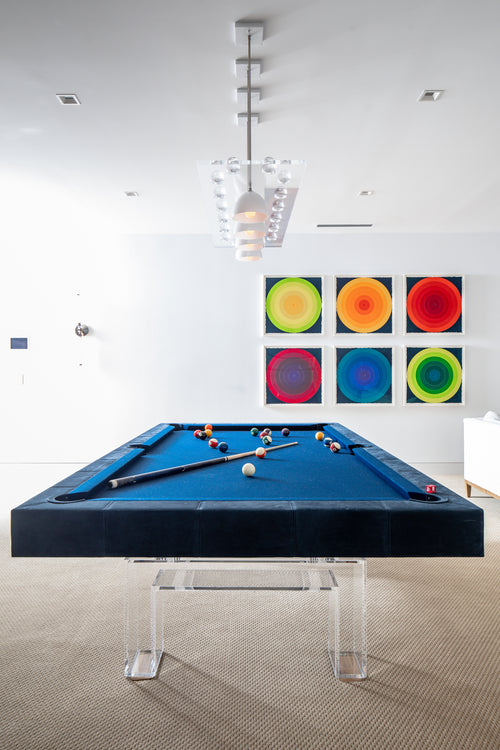
Cloth color can make a black pool table feel elegant or obvious. Traditional green creates a classic contrast. Charcoal, navy, black, camel, burgundy, or deep blue can make the table feel more tailored. Bright cloth colors can work, but they usually push the table into a more graphic and less timeless direction.
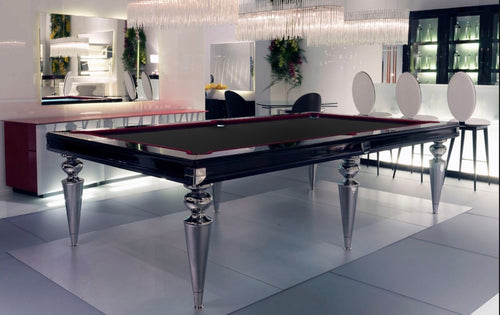
A black table with black cloth can look extremely sleek, but it needs careful lighting and enough surrounding contrast. Otherwise, the table can become visually flat. A black table with grey or navy cloth often feels more balanced. A black table with tan or camel cloth can soften the mood and make the piece feel more furniture-like.
The right cloth color depends on whether the table should be the strongest feature in the room or a quieter anchor. In a loud interior, a subdued cloth may be best. In a restrained room, a richer cloth color can give the table more personality.
The mistake is treating cloth as a gaming detail rather than a design surface. On a black table, the cloth is one of the largest visible color decisions in the room.
6. How to Keep Black from Feeling Flat
Black pool tables can become visually flat if the table is one solid dark block with no material contrast. To avoid that, designers can introduce texture, edge definition, metal detail, wood warmth, leather pockets, or subtle changes in sheen.
A black table with brushed brass accents feels different from one with chrome. A black table with walnut rails feels different from full black lacquer. A black table with leather pockets feels warmer than one with hard exposed hardware. These details change the mood without ruining the elegance of the black frame.
The surrounding room also matters. Black looks better when it has something to play against. Stone, plaster, oak, linen, glass, metal, and soft upholstery can all give the table a richer context.
When black is used without texture, it can look flat. When black is supported by material contrast, it can look expensive.
7. How to Avoid the Overdone Black Game Room Look
The overdone black game room is easy to picture: black pool table, black walls, black leather seating, neon lighting, dark bar, sports memorabilia, and too many shiny surfaces. It may look dramatic at first, but it often feels predictable and heavy.
To avoid that, the black table needs contrast and restraint. Use lighter walls, warm woods, soft textiles, architectural lighting, or stone surfaces to break up the darkness. Let the table be one strong element, not part of an all-black costume.
Accessories should also be controlled. Black cue racks, black stools, black lighting, and black decor can quickly make the room feel themed. A luxury room does not need every object to repeat the same color to feel cohesive.
The best black pool tables are not trying to create a “man cave.” They are trying to create a room with depth, mood, and discipline.
The Bottom Line
Black pool tables can be elegant, but they are not automatically sophisticated. They work best when the room gives them space, contrast, texture, and proper lighting.
The safest version is not always the darkest or glossiest one. Often, the better choice is a black table with controlled finish, thoughtful cloth color, and enough material contrast to keep it from feeling flat.
Black is powerful. Used well, it makes the pool table feel architectural and refined. Used lazily, it becomes the same overdone game-room move everyone has already seen.