

Enjoy our modern designs
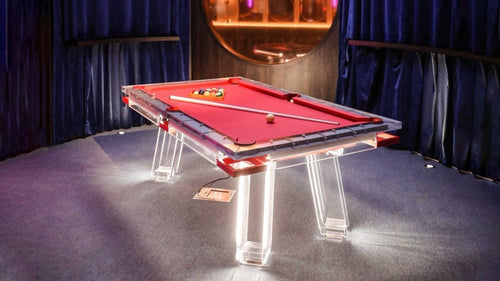
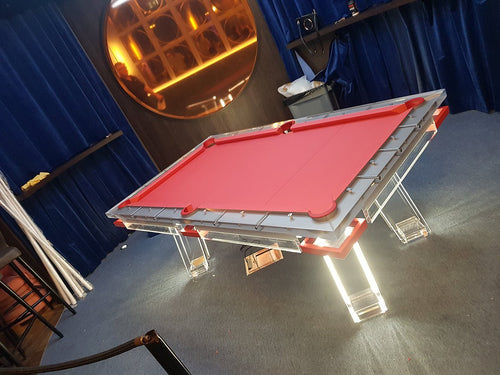
You have just installed a stunning custom pool table. You chose a "Camel" or "Gold" felt to match the warm oak tones of your hardwood floors. It looks elegant, sophisticated, and clean.
Then, you invite your friends over. Someone grabs a cube of standard blue chalk, chalks up their cue, and leans over the table.
By the end of the night, your beautiful golden felt is covered in blue smudges. You try to brush them away, but they just smear into a greenish-grey haze.
Congratulations, you have just stained your table.
There is a widespread myth that "Chalk is just dust, it vacuums right up." The reality is that billiard chalk is comprised of abrasive silica and strong dyes. If that dye contrasts with your cloth, it will embed itself into the fibers and permanently alter the color of your table.
Here is the Golden Rule of chalk that every table owner needs to know.
Table of Contents
The "Universal Blue" Mistake
Walk into any dive bar, and you will see "Master Blue" chalk. It is the industry standard. Because it is so ubiquitous, most people assume it is the only option.
If you have Blue or Tournament Green felt, blue chalk is fine. The dust blends in invisibly.
But if you have Red, Tan, Grey, or Black felt, using blue chalk is a disaster.
- Blue Chalk on Red Felt: Creates purple, bruised-looking spots that make the table look dirty.
- Blue Chalk on Tan/Camel Felt: Creates muddy, dark smudges that look like mold or grease.
- Blue Chalk on Grey Felt: It stands out as a distinct blue stain, ruining the monochrome aesthetic.
The Rule: Match the Cloth, Not the Room
The solution is simple, yet often overlooked: Buy chalk that matches your felt color.
Chalk manufacturers (like Master and Silver Cup) make chalk in almost every color of the rainbow: Burgundy, Gold, Spruce, Grey, Black, Rust, etc.
- If you have Burgundy felt, use Burgundy chalk.
- If you have Camel felt, use Gold/Tan chalk.
- If you have Charcoal felt, use Grey chalk.
When you match the color, the dust that inevitably falls on the table becomes invisible. It blends into the weave. Your table looks cleaner for months longer because the debris is camouflaged.
The "Pro Performance" Exception
You might ask: "But I see pros on TV using Blue chalk on Grey tables. Why?"
Professional players prioritize grip over cleanliness. Some players believe that certain dyes (specifically blue and green) hold the chemical binding agents better than others (like red or black, which can be slightly more "oily" or "slippery" depending on the brand).
However, unless you are running 100-ball racks in a televised tournament, the microscopic difference in grip is not worth ruining the aesthetic of your $10,000 custom furniture piece. For the home player, the performance difference is negligible, but the visual difference is huge.
Can You Clean the Stain?
If you have already used blue chalk on a non-blue table, you have a problem.
- Do NOT use water: Water activates the dye. If you wipe a chalk mark with a damp rag, you are essentially painting the cloth. You will set the stain permanently.
- The only fix: Use a specialized pool table brush and vacuum (suction only, no rotating bristles). You can get most of it out, but if the chalk has been ground into the fibers by the ball, a faint discoloration will likely remain until you re-felt the table.
The Verdict
Your table came with a specific cloth color for a reason. Don't let a $0.50 cube of chalk ruin the look.
Throw away the generic blue cubes that came with your starter kit. Spend the $5 to get a box of chalk that matches your felt. It is the cheapest and most effective way to keep your game room looking professional.