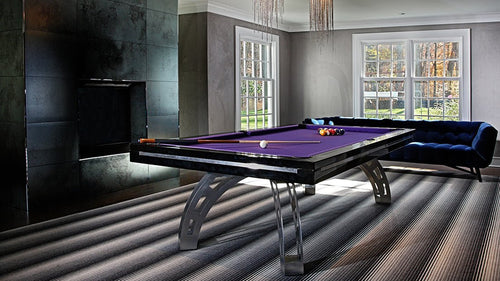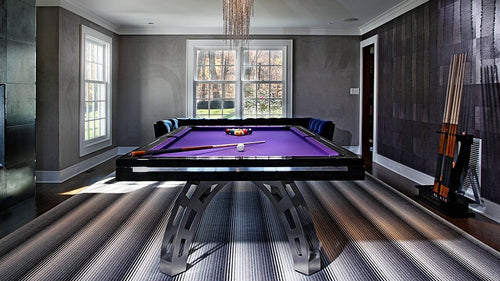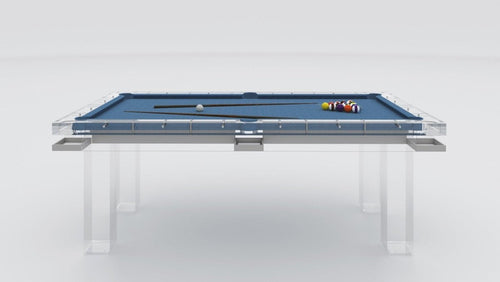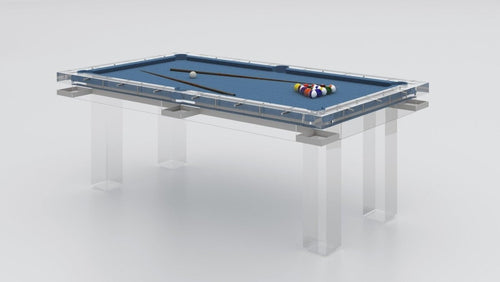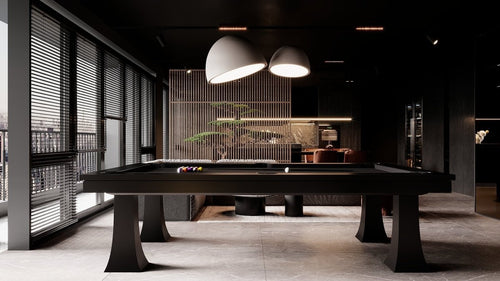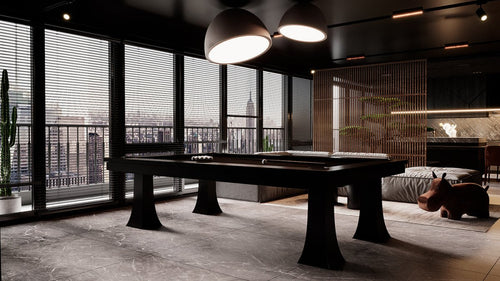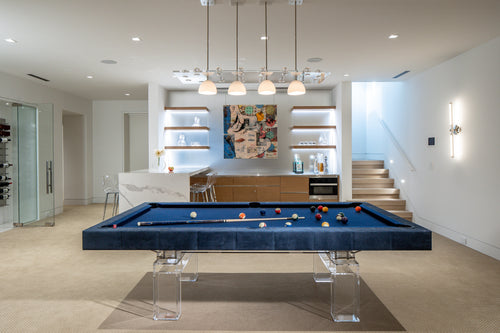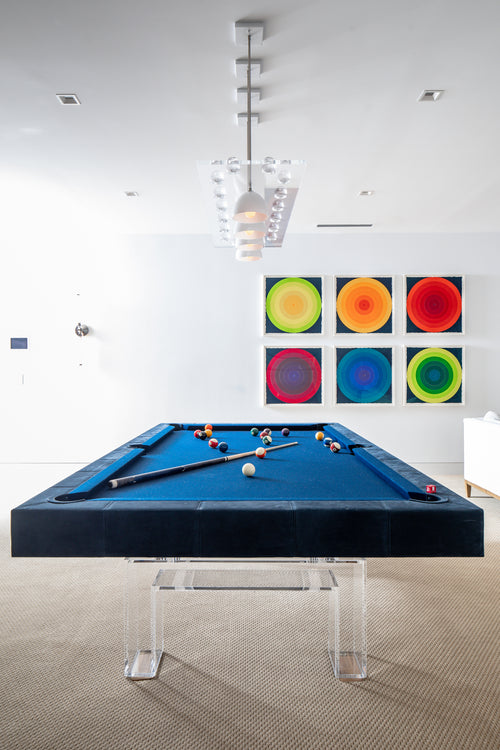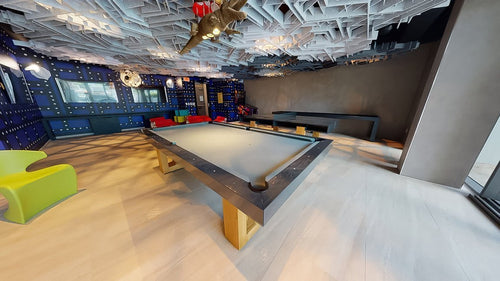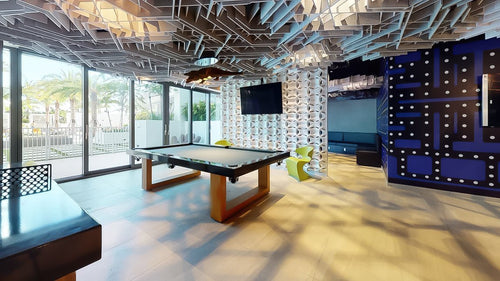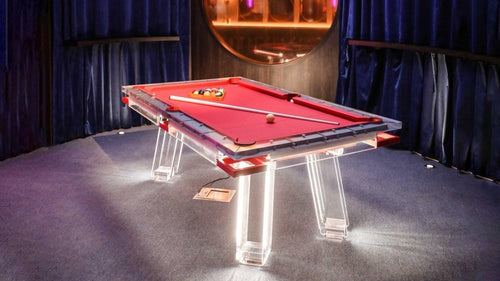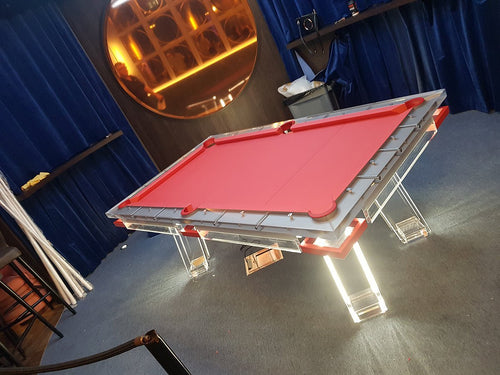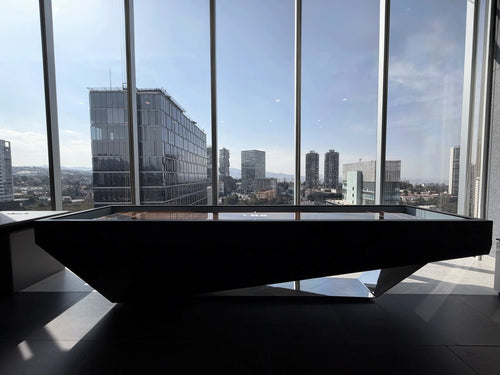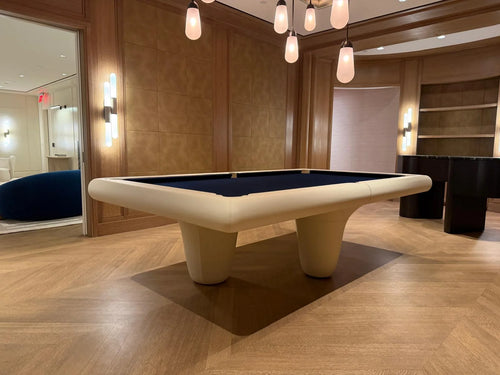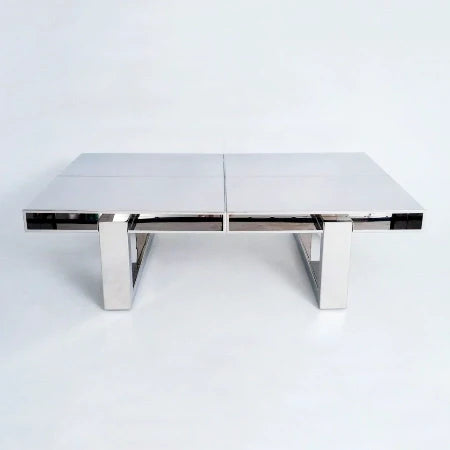


Enjoy our modern designs
Designing a stylish, functional, and safe game room around a pool table takes careful planning and a few practical precautions. Whether you’re decorating an upscale entertainment space or creating a family-friendly rec room, these tips will help keep everyone comfortable and minimize risks.
1. Choose the Right Room Layout
- Adequate Clearance: Plan from the actual playing area and cue length, with extra room for a backswing and circulation. Try a full cue at cushion-height obstacles; five feet is a planning allowance, not a guarantee for every room.
- Furniture Placement: Keep large furniture or décor items—like couches, coffee tables, or shelves—away from the table edges. This prevents accidental bruises and provides an open, inviting atmosphere for gameplay.
2. Prioritize Lighting and Visibility
- Overhead Lighting: Install a dedicated pool table light (or a fixture that provides an even glow) directly above the table to reduce distracting shadows and bright spots. Squinting or straining to see the balls can lead to awkward stances and accidents.
- Avoid Glare: Use lamps compatible with the fixture and stay within its rated actual wattage. Check illumination and glare at the table; use a dimmer only when the lamp and fixture support it.
3. Secure Corners and Edges
- Rounded Table Corners: Consider pool tables with smoothly rounded corners to reduce the risk of bruises if someone bumps into the table. Sharp corners can be hazardous in a busy game room.
- Corner/Edge Guards: Consider securely fitted guards where appropriate, checking that they do not interfere with play or detach into small accessible parts. They supplement supervision rather than making the table childproof.
4. Invest in Non-Slip Flooring
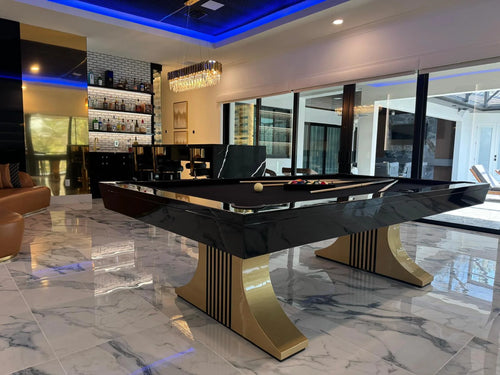
- Wood or Vinyl Floors: Slick tile or overly polished concrete might lead to slips and falls—especially when players step back to line up a shot. Opt for flooring materials that balance aesthetics with traction.
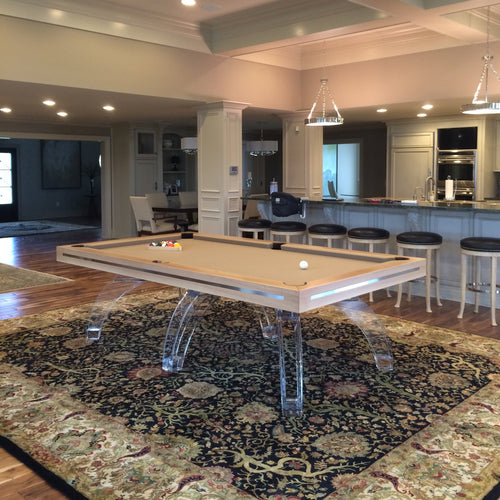
- Area Rugs or Mats: If you prefer tile or hardwood, place non-slip area rugs or runner mats in high-traffic areas. Keep any rug flat and secure, check its edges for trip hazards and remove it if it shifts during use.
5. Organize Cue Sticks and Accessories
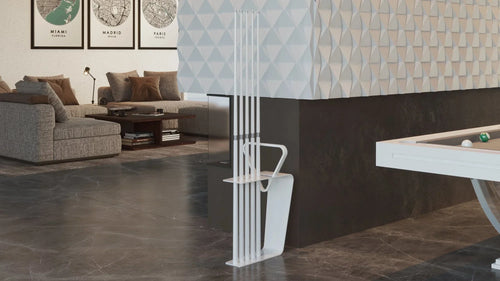
- Wall-Mounted Racks: Store cue sticks upright in a dedicated rack. Fit the rack securely and keep it clear of circulation routes; correct storage reduces loose-cue clutter.
- Lockable Cabinets: For an extra layer of safety—especially where children are concerned— consider a cabinet or closet with a secure lock. Accessories like chalk, extra balls, and brushes can be kept neatly out of reach.
6. Control Chalk Dust and Maintain Air Quality
- Ventilation: Keep chalk dust from accumulating and maintain suitable room ventilation. An air purifier is not a substitute for cleaning or an assurance that every airborne contaminant has been removed.
- Regular Cleaning: Follow the table and cloth maker’s instructions. For Simonis cloth, the maker permits careful vacuuming with a nonrotating brush attachment and limited suction; that does not authorize an ordinary rotating floor head on every cloth.
7. Child Safety Measures
- Supervise Younger Players: Pool tables and cues can seem like a playground for adventurous kids. Supervision is key—especially for novices who might climb on the table or swing a cue without caution.
- Protective Covers: A normal dust cover protects the cloth, not children or pets. It is not a load-bearing platform or safety barrier. Prevent unsupervised access and do not allow anyone to climb, sit or stand on the table.
- Rules and Boundaries: Teach children game room etiquette—like not running around the table while people are shooting, and always being mindful of swinging cues.
8. Proper Equipment Maintenance
- Check Table Stability: Stop using a table with loose legs, movement or damaged parts and arrange an inspection. Do not test its stability by pushing, climbing or adding weight.
- Leveling: Keep the table level so balls don’t roll unpredictably. Professional maintenance or a quick check with a leveling tool can help prevent weird ball behavior that prompts players to lunge or reach awkwardly.
- Felt Care: Avoid drinks, food, or hot items on or near the felt. Spill stains cause damage and might lead to slips if liquids drip onto floors.
9. Keep It Tidy and Clear of Clutter
- Clear Walkways: Ensure paths to exits, restrooms, or other areas of the room are free of loose items. Stray cues, shoes, or other objects can create trip hazards.
- Smart Storage: Use shelving, cabinets, or decorative baskets to stow away balls, racks, or personal belongings. A tidy room is a safer room.
10. Encourage Responsible Play
- Limit Rowdy Behavior: Avoid overly forceful breaks and reckless shots that might cause balls to fly off the table or cues to swing erratically.
- Respect Personal Space: Encourage players to stand well behind a person who’s shooting. Crowding near the table can lead to bumped cues and accidental contact.
Final Thoughts
A safe game room depends on clear space, suitable lighting, secure storage, supervision and sound equipment. Review the particular table’s care instructions and address damage promptly. A cover, corner guard or tidy layout can serve a useful purpose, but none guarantees a room without risk.
Sources
References checked October 19, 2026: Brunswick: cover purpose and table care; Simonis: careful low-suction, nonrotating vacuum care; Fixture-maker example: actual wattage limit.