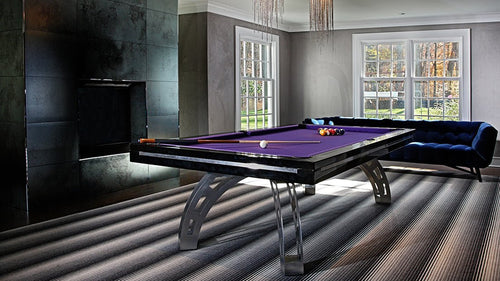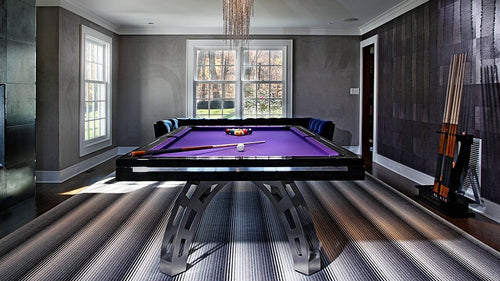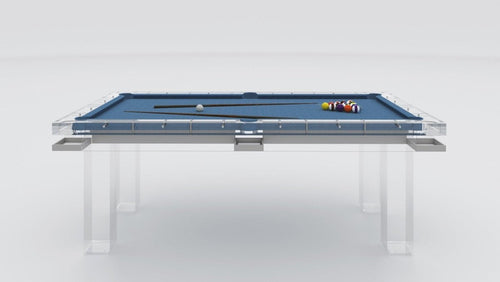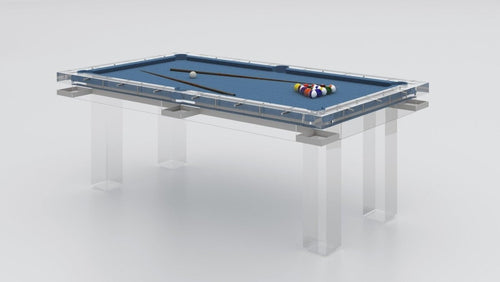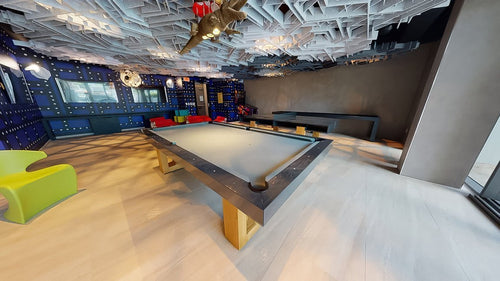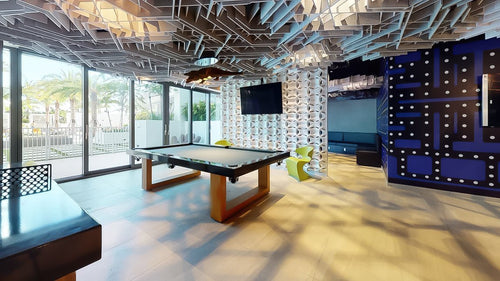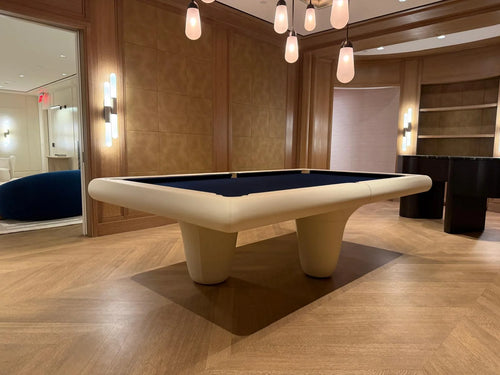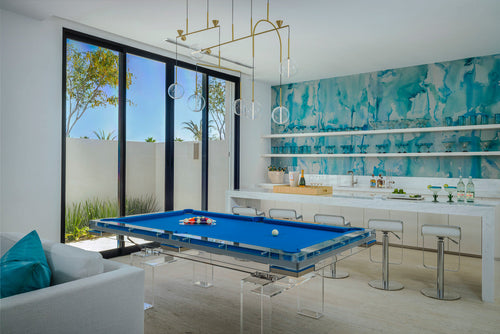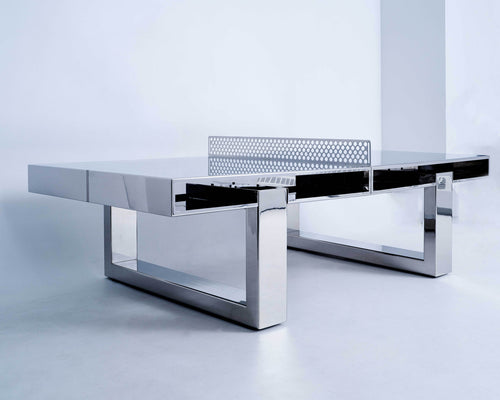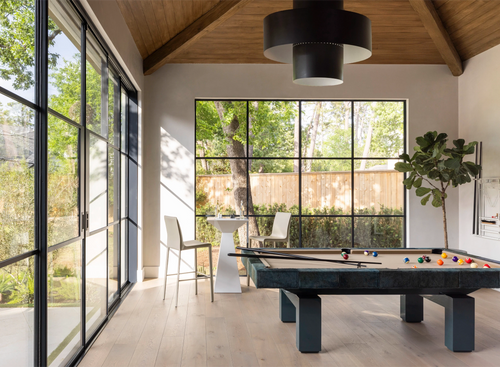


Enjoy our modern designs
Minimalist Game Room Design
A standard table tennis setup can feel loud, bulky, and visually chaotic. But when the table is designed with discipline, a ping pong table can become a clean architectural centerpiece rather than a piece of sporting equipment fighting the room.
Minimalism is not simply about emptiness. It is about intention. Every object has to earn its place, and that is exactly why a well-designed ping pong table can work inside a minimalist home.
Design Tension
A Ping Pong Table Looks
Anti-Minimalist at First
Minimalism is often defined by what is absent: no clutter, no unnecessary ornamentation, no excess. It is a design philosophy rooted in restraint and intentionality.
At first glance, a 9-by-5-foot ping pong table seems like the wrong object for that world. Standard sporting goods tables are bulky. They often use loud blue or green tops, heavy graphic lines, visible wheels, folding metal mechanisms, and hardware that makes the room feel busier before anyone even starts playing.
That is the real issue. It is not the game itself. It is the visual language of the typical table.
Play and minimalism are not opposites. The problem is not the ping pong table. The problem is bad table design.— On bringing game tables into restrained interiors
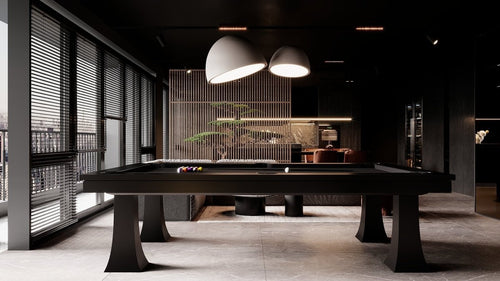
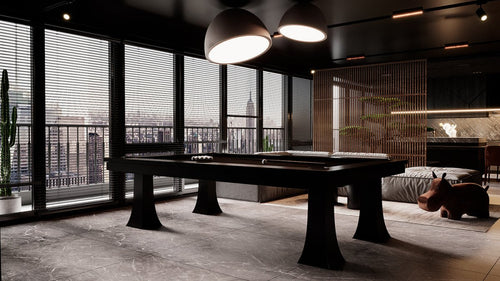
A minimalist home can absolutely hold a table tennis setup, but the table has to behave like architecture. The lines need to be clean. The materials need to be controlled. The base needs to feel intentional. The net needs to disappear when the game is over.
The goal is not to hide play completely. The goal is to make play feel like it belongs inside the discipline of the room.
Concealed Utility
The Best Minimalist Object
Does More Than One Thing
One of the core ideas of minimalism is that every object should serve a clear purpose. The strongest objects often serve more than one.
In a minimalist home, a dedicated game room can sometimes feel like a poor use of square footage. A separate table that only functions as sports equipment may be difficult to justify, especially in an open-plan home where every large object affects the atmosphere of the whole space.
This is where the convertible ping pong dining table becomes powerful. Instead of treating the game table as a recreational add-on, the table can function primarily as a high-end dining table, conference table, or architectural surface. The game is hidden in plain sight.
Minimalist Move 01
Convertible Function
Primary RoleDining
Hidden RolePlay
A table that works as furniture first and game surface second feels more intentional in a minimalist home.
Minimalist Move 02
Invisible Net
SystemRemovable
GoalNo Trace
The net should come off cleanly without clamp marks, visible scars, or leftover hardware.
Minimalist Move 03
Subtle Boundary Lines
Instead OfPainted Lines
UseInlay / Tone
Wood inlays, tonal linework, or barely visible markings preserve the table’s quiet surface.
Minimalist Move 04
Monochrome Surface
MoodCalm
EffectLess Visual Noise
A restrained surface lets the table hold the room without shouting over everything else.
The invisible net matters. Premium minimalist tables should use sleek removable net systems, often with slim metal posts, leather detailing, or integrated receivers. When the net comes down, the table should not look like a game table missing a part. It should return to being furniture.
For decorative, casual-use furniture, subtle inlays or an unmarked top may suit the design brief. These are choices that can depart from regulation table-tennis markings; decide the required playing standard before approving the surface.
Palette Control
Make the Table Whisper
Instead of Shout
A traditional ping pong table announces itself immediately. The color is loud, the lines are bright, and the hardware is obvious. In a minimalist interior, that kind of visual volume can break the room.
The solution is not to remove character. The solution is to control it.
A minimalist table should work within the existing palette of the home. Matte black, charcoal, warm white, pale oak, ash, walnut, smoked glass, brushed metal, and clear acrylic can all work depending on the room. What matters is restraint.
Gloss creates sharper highlights; matte finishes spread reflections more diffusely and often look calmer. Lower sheen does not necessarily mean greater light absorption. Konica Minolta explains this distinction.
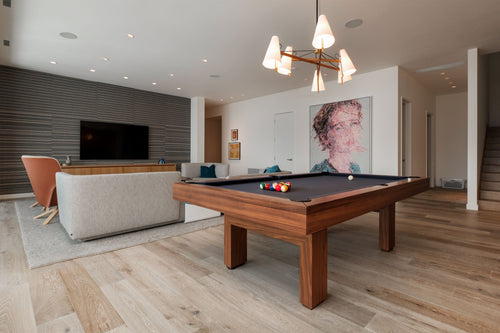
Raw woods are especially useful in softer minimalist homes. A table crafted from white oak, ash, or pale walnut with a clear low-sheen finish brings warmth without adding clutter. This is the Scandinavian lesson: minimalism does not have to feel cold if the materials are honest.
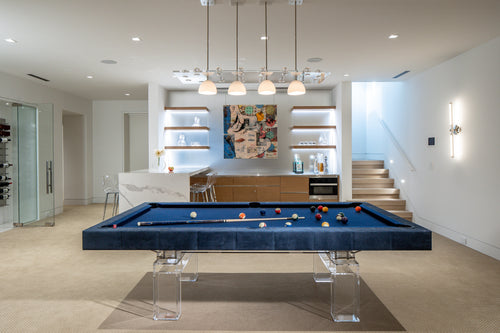
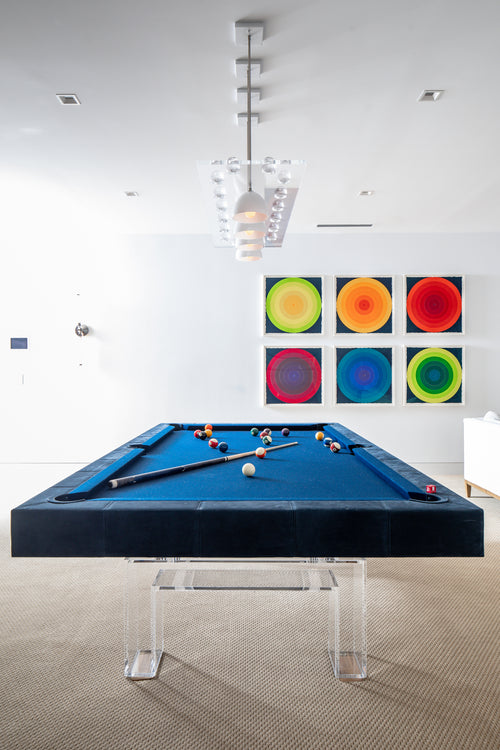
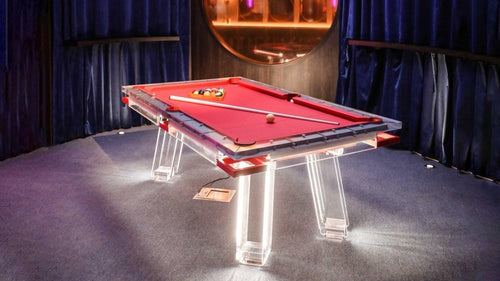
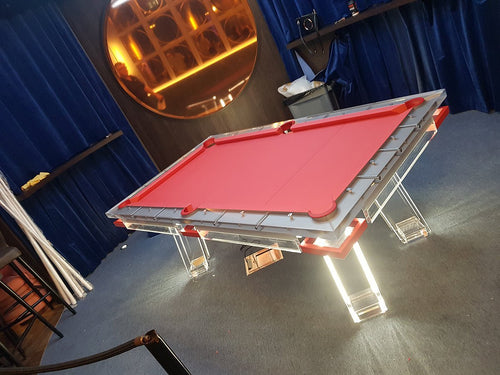
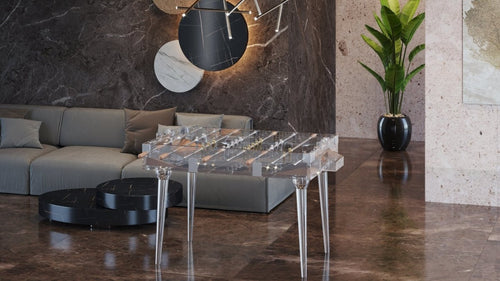
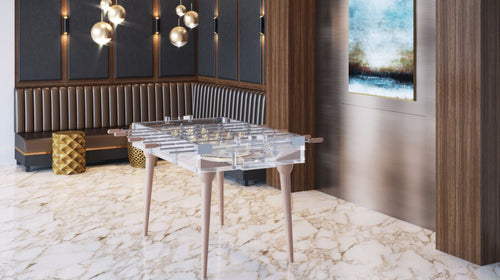
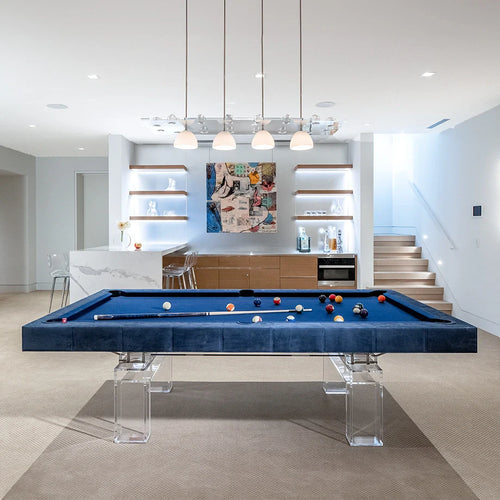
Glass and acrylic create a different effect. A transparent Lucite or glass-heavy table can preserve the visual volume of the room because light passes through it. The object occupies space physically, but less aggressively visually.
That can be beautiful, but it has to be executed carefully. Cheap acrylic looks like plastic. Poorly detailed glass can feel cold or fragile. Minimalism is unforgiving because there is nowhere for bad details to hide.
Form Discipline
The Base Decides
How Heavy the Table Feels
The undercarriage of a ping pong table has enormous visual impact. Standard folding tables usually fail here. Casters, hinges, braces, crossbars, release mechanisms, and angled metal supports create visual clutter below the playing surface.
That hardware is useful in a community center. It looks wrong in a minimalist home.
A minimalist table should be grounded by solid, stationary legs or a clearly designed architectural base. Wheels may be practical, but they instantly make the object feel temporary. A luxury table should feel placed, not parked.
A minimalist ping pong table should feel grounded, calm, and deliberate — not like gym equipment waiting to be folded away.— On silhouette and visual weight
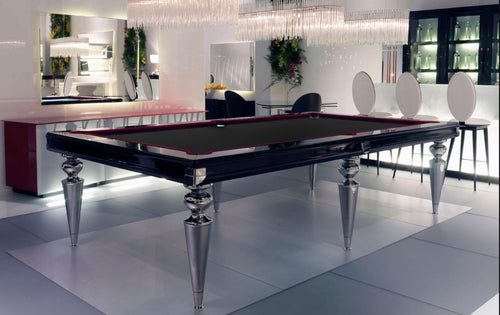
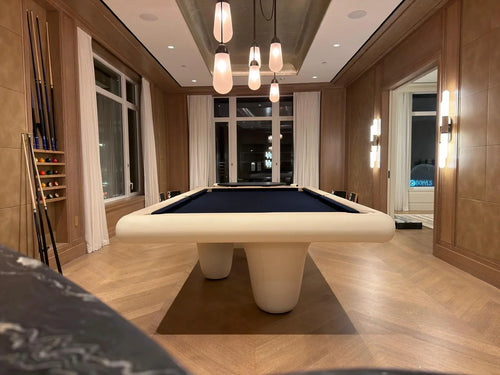
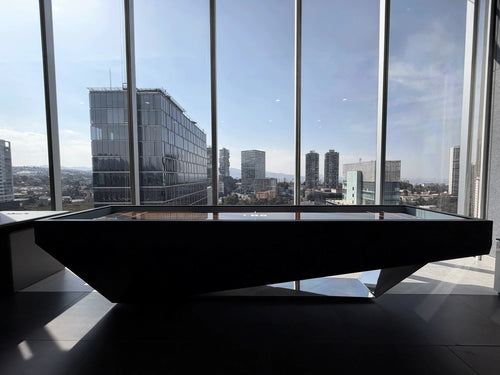
Simple angled legs, a singular pedestal base, a sculptural slab base, or a geometric steel frame can all work. The goal is not always to make the base invisible. The goal is to make it legible.
Light should be able to pass under and around the table. The eye should understand the form quickly. The table should not create a knot of visual noise below the surface.
This is where a custom table separates itself from a standard one. The base is not just support. It is the table’s architectural posture.
Room Planning
Respect the Negative Space
Around the Table
In minimalist interior design, the empty space around an object is just as important as the object itself.
This becomes especially important with table tennis because the table is not only a visual object. It is an activity zone. Players need room to move, step back, swing, recover, and play without feeling trapped by furniture.
For comfortable casual play, a ping pong table should have generous clearance around it. At minimum, plan for roughly 5 feet of space at the ends and 3 feet along the sides. More space is better when the players are serious or the room allows it.
Room Rule 01
Clear the Ends
Minimum5 ft.
PurposeMovement
Players need enough depth to step back, serve, receive, and handle faster rallies.
Room Rule 02
Open the Sides
Minimum3 ft.
PurposeComfort
Side clearance keeps the room from feeling cramped and protects nearby furniture.
Room Rule 03
Avoid Clutter
SkipBar Carts
GoalBreathing Room
Do not crowd the table with accessories that make the minimalist room feel staged or busy.
Room Rule 04
Control the Lighting
Best FitLinear Pendant
GoalClean Focus
A structured pendant or recessed lighting gives the table presence without adding decorative clutter.
The mistake is trying to decorate the table zone too much. In a minimalist home, resist the urge to add bar carts, spectator chairs, oversized wall art, storage baskets, or novelty accessories around the table.
Let the table command the floor.
Lighting should also be restrained. Recessed ceiling lights or a single structured linear pendant usually work better than multiple decorative fixtures. The airspace above the table should feel clean, not busy.
Design Mindset
Think of the Table as
Functional Sculpture
The cleanest way to integrate a ping pong table into a minimalist home is to stop thinking of it as sporting equipment.
Think of it as a functional object with sculptural presence.
That shift changes the design decisions. The table is no longer something to hide in a corner or apologize for. It becomes the central object in the room, but only because its proportions, materials, and details are disciplined enough to deserve that role.
This is why custom work matters. A mass-market table is usually designed for portability, storage, and broad appeal. A minimalist luxury table is designed for permanence, proportion, and atmosphere.
Design Connection
For a minimalist home, the table should be planned with the same seriousness as a dining table, conference table, or central architectural feature. That is where a full game room set or a fully custom design becomes useful: the table, lighting, seating, storage, and room layout can be resolved together instead of patched together afterward.
Minimalism does not reject play. It rejects visual laziness. A ping pong table can belong in a minimalist home when it is precise, restrained, useful, and integrated.
The materials should support the palette. The net should disappear cleanly. The hardware should be controlled. The base should be legible. The room around the table should be allowed to breathe.
When those decisions are handled correctly, the table stops feeling like recreation forced into a refined room. It becomes a modern object with a purpose.
Function as Art
A minimalist ping pong table is not about hiding the game. It is about making the game precise enough to belong. When the surface, base, net, palette, and negative space are resolved together, the table becomes a clean extension of the home rather than an interruption.