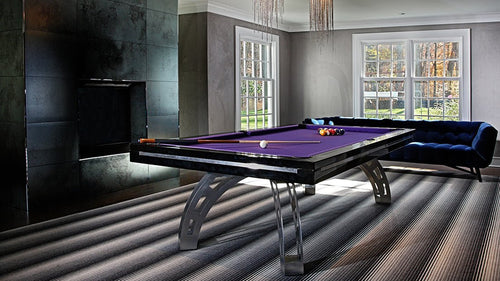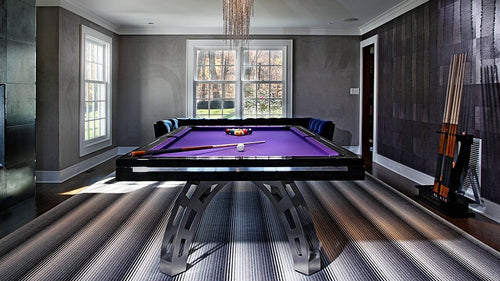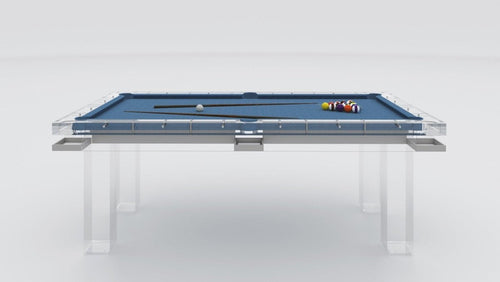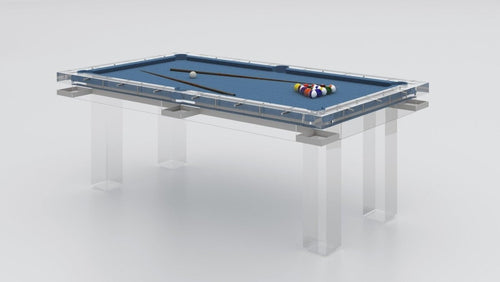


Enjoy our modern designs
A pool table’s resale value is determined by more than its original price. Brand recognition, construction, condition, documentation, location, and moving costs all affect what a buyer is willing to pay.
A high original price does not guarantee a strong resale result. The used market rewards tables that buyers can identify, inspect, move, service, and fit into another property without unusual risk.
In this guide
1. What Gives a Table Lasting Demand
Tables tend to retain more value when buyers can identify the maker, verify the model, and find qualified service. Established brands, recognized historic models, and documented work by respected custom builders may attract stronger interest.
Timeless proportions and adaptable finishes usually appeal to more buyers than highly specific colors or themes. Rarity can add value, but only when the market understands the table and wants the feature that makes it rare.
Demand also varies by type. Tournament-oriented players may value standardized playing dimensions and predictable cushion response. Design-focused buyers may prioritize furniture quality, materials, and dining conversion.
2. How Construction Affects Resale
Buyers commonly look for genuine slate, a rigid frame, reliable rail attachment, sound cushions, stable legs, and serviceable pockets. A table that can be disassembled, transported, leveled, reclothed, and repaired using known methods is easier to resell.
Material quality must be evaluated as a complete system. Heavy stone or metal may look substantial while creating difficult transport requirements. Ornate woodwork does not compensate for a weak frame, unsupported slate, or unavailable hardware.
Features that can support resale include:
- Standard or well-documented playing geometry
- Replaceable cushion and pocket components
- Accessible leveling points
- A base designed for professional disassembly
- Dining panels that can be handled safely
- Complete storage and conversion hardware
Design note: A convertible dining feature adds value only when the top is complete, manageable, well supported, and free from significant edge, seam, or finish damage.
3. When Customization Helps or Hurts
Useful customization can support value. Examples include a well-engineered dining top, discreet accessory storage, a neutral finish, or dimensions appropriate for common game-room layouts.
Personalized logos, highly unusual pocket geometry, room-specific built-ins, and extreme dimensions narrow the buyer pool. A custom table may have cost more to build yet sell for less if it fits only one interior.
Reversibility matters. A removable monogrammed panel is less limiting than a logo permanently inlaid into every rail. Replaceable upholstery is easier for a buyer to change than a highly specific structural finish.
4. Condition, Records, and Completeness
Assess the playing system and furniture finish separately. Worn cloth is routine maintenance. Cracked slate, failed cushions, loose joinery, missing top panels, water damage, or widespread veneer failure are more consequential.
A strong resale package includes:
- Original invoice and model information
- Dimensions, assembled weight, and slate configuration
- Installation, moving, and service records
- Clear photographs of the top, underside, frame, and accessories
- All dining panels, storage equipment, hardware, and tools
- Care instructions and finish specifications
Design note: Do not conceal damage beneath new cloth or a dining top. Documented condition helps buyers price repairs accurately and reduces disputes.
5. Moving Costs and Local-Market Limits
A buyer must usually pay for professional disassembly, packing, transportation, reassembly, leveling, and possibly new cloth. Stairs, narrow doors, long carrying distances, specialty lifting, and destination access can increase the total cost substantially.
Because transport is expensive, resale is often local. Obtain a moving estimate before setting the asking price and state clearly who is responsible for disassembly and removal.
6. How to Price and Present a Used Table
Compare actual completed sales where possible, not only unsold asking prices. Adjust for size, condition, location, completeness, access, and included accessories.
A useful listing should provide the manufacturer, model, exact dimensions, slate configuration, known service needs, dining-top details, removal conditions, and everything included in the sale.
Use clear, well-lit photographs. Show the full table, rails, pockets, cloth, base, dining top, storage equipment, and any defects.
7. How to Protect Value While You Own It
- Control humidity and avoid prolonged direct sunlight.
- Use qualified technicians for moves and structural repairs.
- Retain documentation and proprietary components.
- Store dining panels correctly.
- Correct leaks, loose joints, and finish damage promptly.
- Avoid irreversible cosmetic changes with narrow appeal.
The Bottom Line
Pool tables hold value when they combine recognized quality, sound construction, broad visual appeal, complete documentation, and practical serviceability. The most marketable table is one a buyer can evaluate, move, install, maintain, and enjoy without unusual uncertainty.