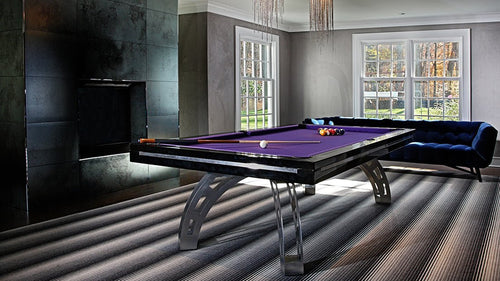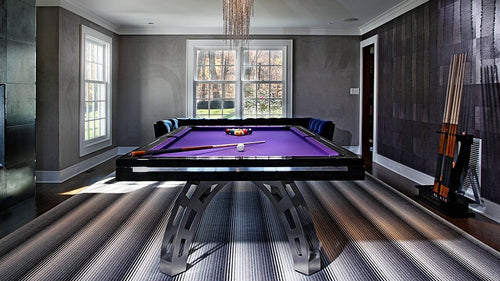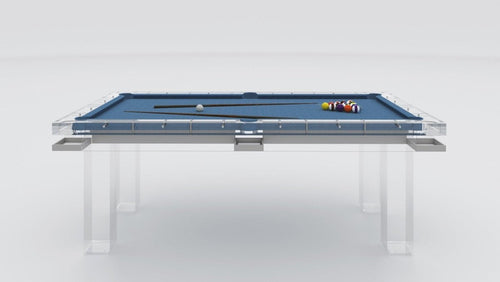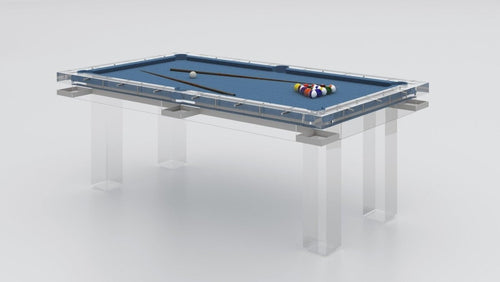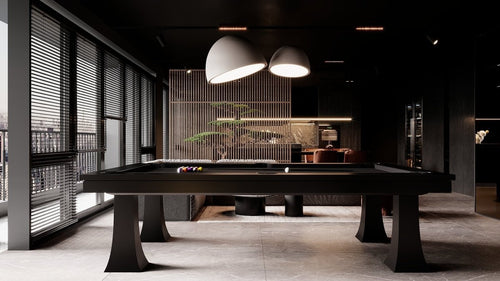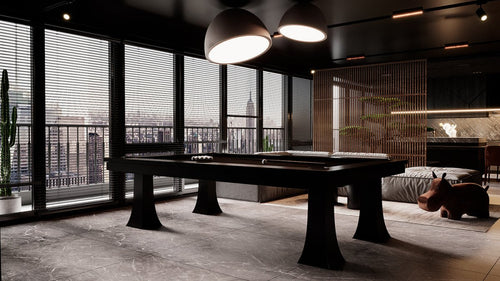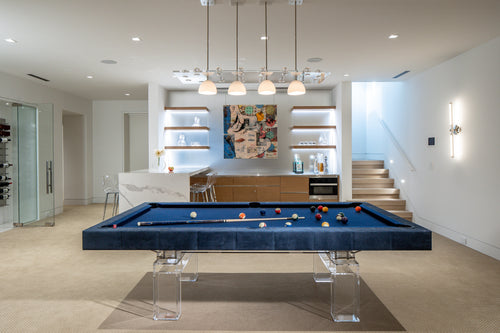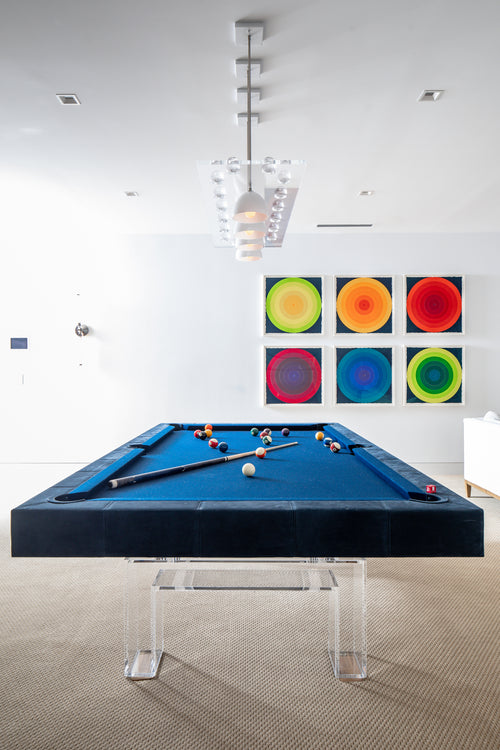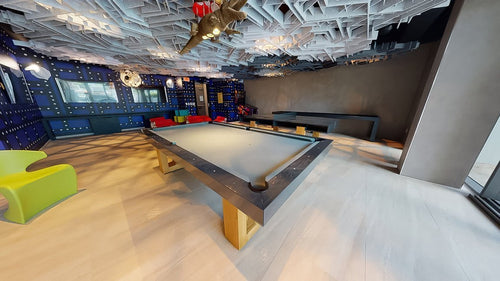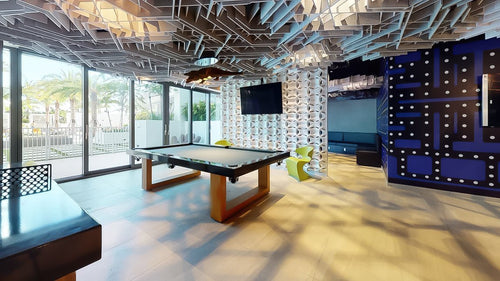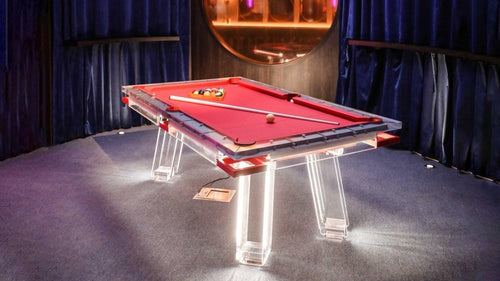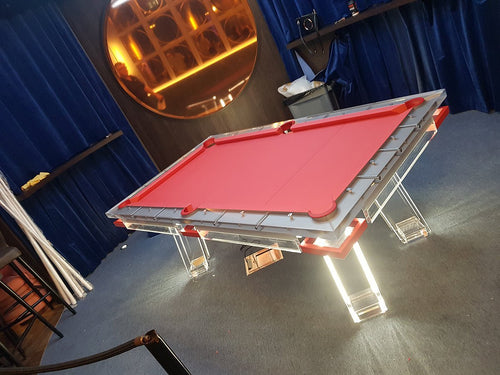


Enjoy our modern designs
Estimated Read Time: 5 mins |
Introduction
Bottle Pool blends pocketing and carom play around a pool bottle. This overview describes the historical version in R. F. Foster’s Complete Hoyle, “Bottle Pool”. It is a specific published ruleset, rather than a claim that all modern clubs use identical rules. Agree on your version before starting.
Equipment & Setup
- A pocket billiard table, a white cue ball, and only the 1-ball and 2-ball.
- A purpose-made pool bottle, initially balanced neck-down on the centre spot.
- No triangle rack: place the 1 and 2 near the foot end at the left and right diamond positions specified in Foster’s setup.
How to Play
The opening player shoots from behind the head string at either object ball. There is no lowest-number-first requirement in this account. A scoring bottle carom begins by contacting an object ball; do not aim directly at the bottle. After a fall, stand the bottle neck-down where it rests if possible. Consult the complete historical rules and agree on any additional house procedures.
Scoring Highlights
- Pocket the 1-ball for one point or the 2-ball for two.
- A cue-ball carom on both object balls scores one point.
- Carom from an object ball and topple the bottle for five points. A legal carom that seats the bottle on its base wins immediately.
The target is exactly 31 points. Overshooting resets the player’s score to the excess above 31 and ends the turn; it does not produce a win.
Fouls & Penalties
- Toppling the bottle by a legal carom is a scoring play, not automatically a foul.
- If an object ball touches the bottle during the same stroke in which the cue ball upsets or seats it, that stroke does not count.
- Sending the bottle off the table or into a pocket costs one point and ends the turn; replace it on the centre spot.
- Agree on scratch, spotting and other house procedures before play; do not import a three-foul loss or ball-in-hand on every turn from an unrelated game.
Why Bottle Pool Appeals
The appeal is the relationship between ball position and the unusual bottle target. A good pot may offer less than a well-judged carom, while the exact-score target makes the closing shots matter. Use a purpose-made bottle suited to table play, and keep the chosen ruleset at hand.
Conclusion
Bottle Pool offers a distinctive way to explore cue-ball control and carom judgement. Start with the published setup, track the score carefully, and agree on any local variations before the first stroke.