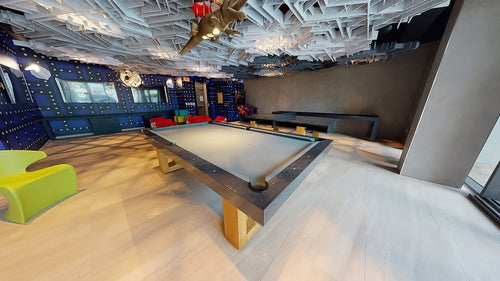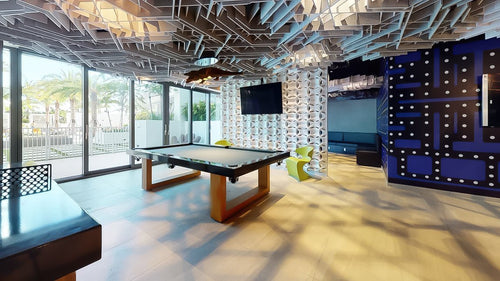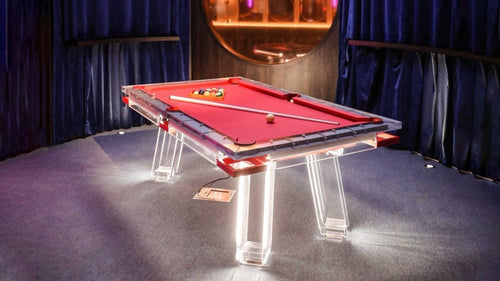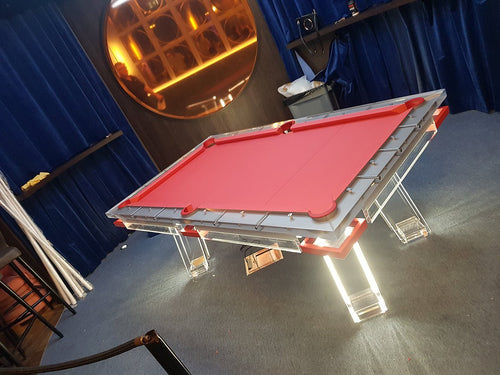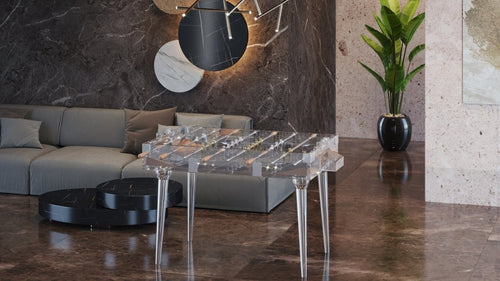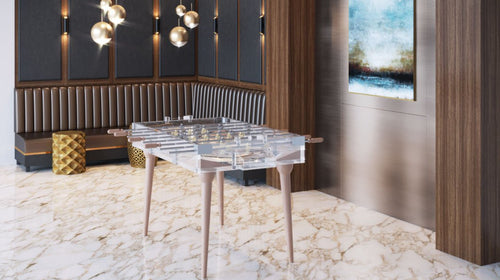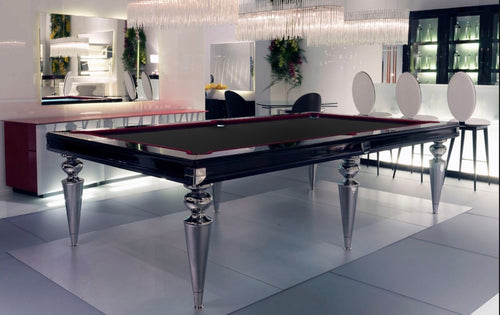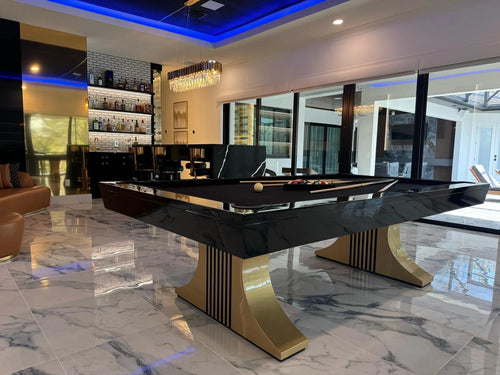


Enjoy our modern designs
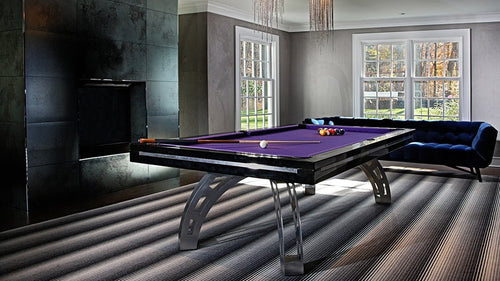
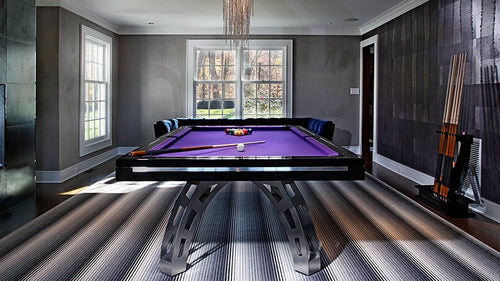
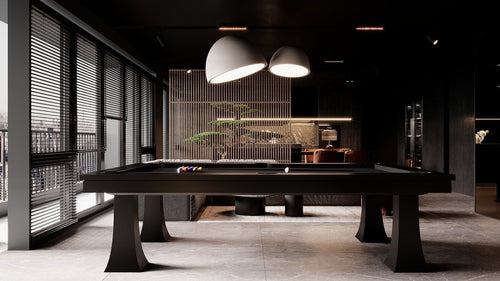
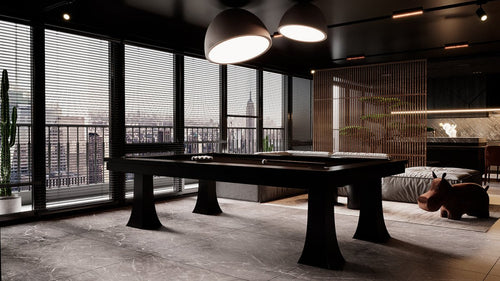
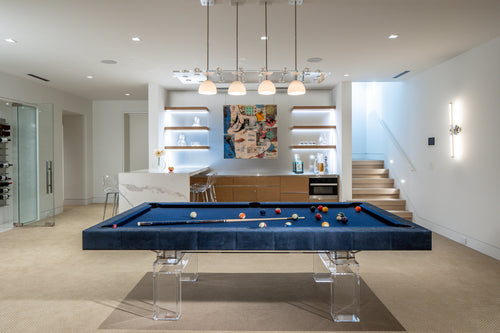
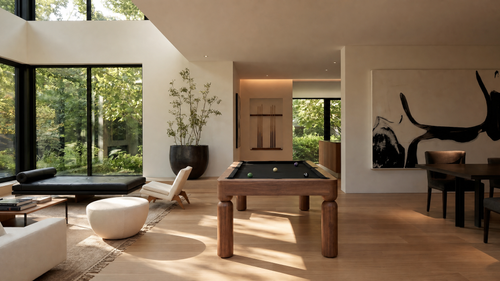
Negative space is one of the most misunderstood parts of designing a pool room. Many people treat the empty area around a pool table as leftover space. In reality, it is one of the main reasons the room either feels elegant or crowded.
A pool table needs room to breathe. Not only for play, but for proportion, movement, sightlines, and atmosphere. In a luxury home, the space around the table matters almost as much as the table itself. Too little space makes the room feel forced. Too much unmanaged space can make it feel unfinished.
The goal is not to fill every corner. The goal is to make the room feel intentional even when nothing is happening.
Table of Contents
1. Negative Space Is Not Empty Space
Negative space is the visual pause around the main object. Around a pool table, that pause is essential. It allows the table to feel important without being surrounded by clutter.
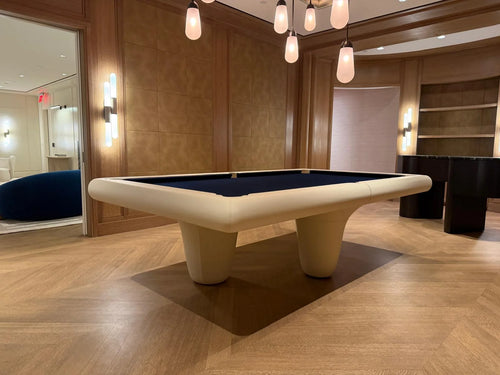
This is especially true in high-end interiors. A luxury pool table is often sculptural. It may have a strong base, refined materials, custom cloth, or architectural details. If the area around it is overloaded with furniture, signs, bar stools, wall racks, and decorative objects, the table loses its presence.
The best rooms give the pool table enough quiet space to be seen clearly. The eye understands where the room begins, where the table sits, and how people are meant to move through it.
Designer insight: Negative space is not the absence of design. It is the part of the design that gives everything else authority.
2. Give the Table Breathing Room
The most obvious reason a pool table needs space is cue clearance. Players need room to stand, aim, and move around the table comfortably. But beyond function, the table also needs visual breathing room.
A table pushed too close to walls, sofas, consoles, or built-ins looks like it was squeezed into the room. Even if the table technically fits, the room may still feel wrong. Luxury interiors are not judged only by whether objects fit. They are judged by whether objects feel properly placed.
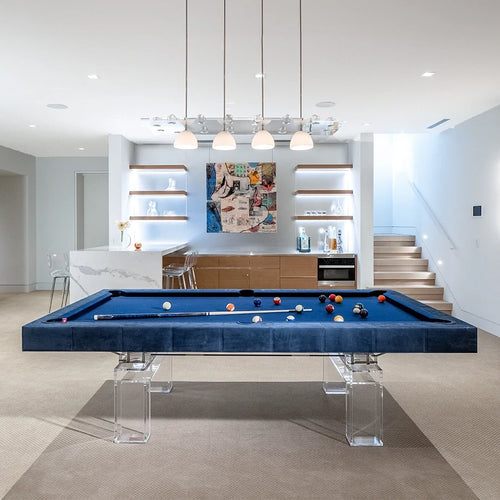
The negative space around the pool table should make the table feel centered, grounded, and deliberate. It should not feel like the largest object that barely survived the floor plan.
This is why the right table size matters. A smaller table with better surrounding space will usually feel more expensive than a larger table that dominates the room awkwardly.
3. Use the Walls Carefully
The walls around a pool table are tempting. They invite artwork, cue racks, shelves, scoreboards, mirrors, sconces, televisions, and decorative objects. But too many wall elements can make the room feel like a themed basement instead of a composed interior.
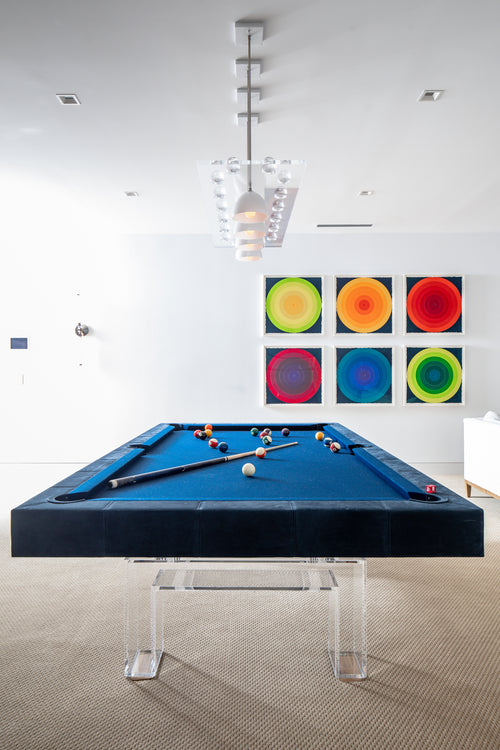
Negative space on the walls is just as important as space on the floor. A blank wall can create calm. A simple architectural panel can frame the table. A single artwork can do more than a busy gallery wall if the goal is sophistication.
Cue storage should also be handled with care. A standard exposed rack may be practical, but it can easily make the room feel recreational. In a luxury home, cue storage should either disappear into the architecture or become a designed feature that matches the table and surrounding materials.
The wall does not need to announce that this is a game room. The table already does that.
4. Keep Furniture from Crowding the Table
Seating is important in a pool room, but it should not compete with the playing zone. Sofas, lounge chairs, drink tables, benches, and bar furniture need to support the room without invading the table’s space.
A common mistake is placing seating too close to the table because the room feels empty. This creates a subtle tension. Players feel boxed in. Guests feel like they are sitting in the action instead of around it. The room becomes visually busy even if the furniture is expensive.
The better approach is to create a secondary zone. Let the pool table occupy the center. Let the seating sit slightly outside the playing envelope. The result feels more relaxed, more social, and more intentional.
Pro tip: Do not use furniture to solve every empty area. Some open space should stay open so the table can function and the room can breathe.
5. Let Lighting Define the Center
Lighting is one of the cleanest ways to use negative space around a pool table. A well-placed fixture creates a visual center without needing extra decoration.
The right light tells the room where the focus is. It frames the table, lowers the atmosphere, and gives the surrounding emptiness a reason. Without strong lighting, negative space can look accidental. With strong lighting, it feels composed.
This does not mean every pool table needs a traditional billiard light. In modern luxury interiors, the fixture may be linear, architectural, minimal, sculptural, or integrated into the ceiling design. What matters is that the lighting respects the table’s proportions and does not fight the rest of the room.
Good lighting makes the pool table feel placed. Bad lighting makes it feel dropped in.
6. Protect the Sightlines
A pool table often sits in a room that is visible from other areas of the home. It may be seen from a hallway, living room, bar, lounge, stairwell, or open-plan entertaining space. That means the negative space around it affects more than the room itself.
When sightlines are protected, the table can become a beautiful visual anchor. When they are blocked by chairs, racks, lamps, or accessories, the table starts to disappear into the noise.
This is where restraint becomes practical. A clean view of the table from the entrance may be more valuable than another piece of furniture. A quiet wall behind the table may be stronger than a decorative feature. A little emptiness can make the whole room feel more confident.
7. Restraint Is What Makes the Room Feel Expensive
Luxury rooms are not usually defined by how much they contain. They are defined by how well each choice is controlled. Negative space is part of that control.
A pool table surrounded by too many objects feels like a hobby room. A pool table surrounded by carefully managed space feels architectural. The difference is not always the cost of the table. It is the discipline of the room around it.
This is especially important with statement tables. If the table has a dramatic base, bold finish, or unusual material, the surrounding space should often become quieter. The more expressive the table is, the more important negative space becomes.
The room should not compete with the table for attention. It should give the table enough silence to speak clearly.
The Bottom Line
Negative space around a pool table is not wasted space. It is what makes the table feel intentional, playable, and visually important.
The best luxury pool rooms do not rush to fill every wall or corner. They use space as part of the composition. They allow the table to breathe, protect the sightlines, control the furniture, and let lighting define the center.
When negative space is handled well, the room feels calm, expensive, and complete. Not because it has more in it, but because it finally knows what to leave alone.