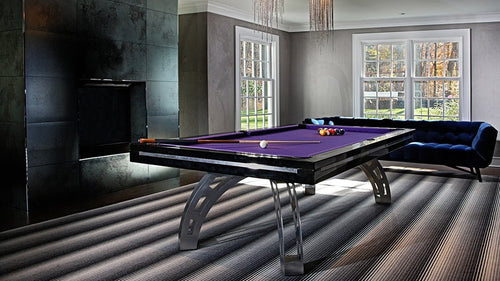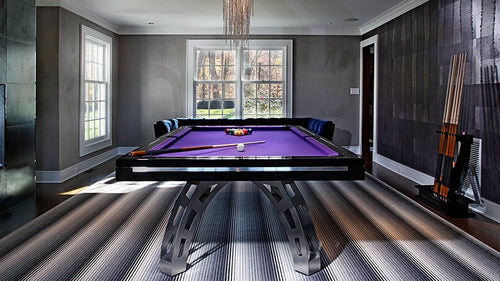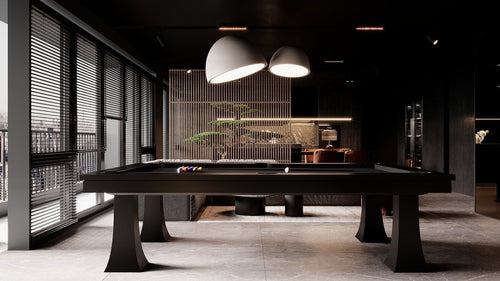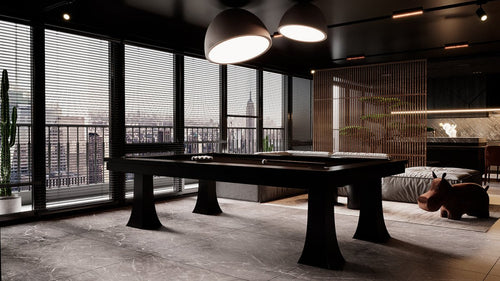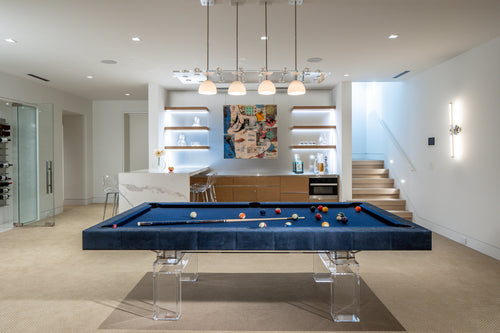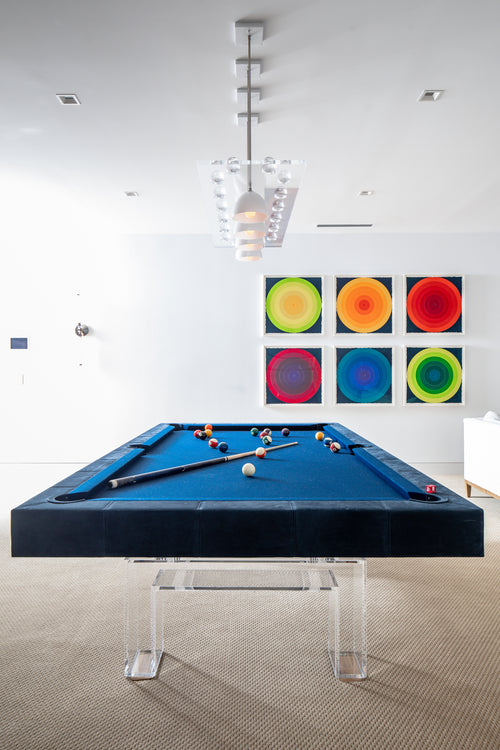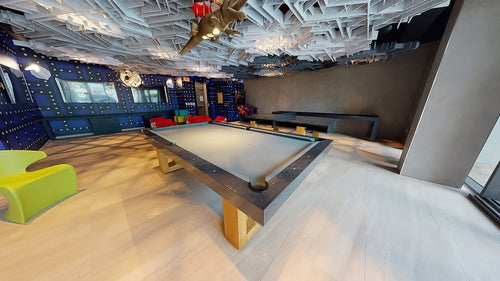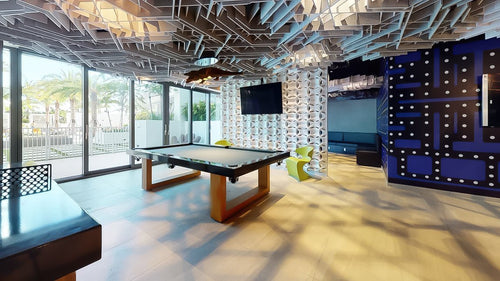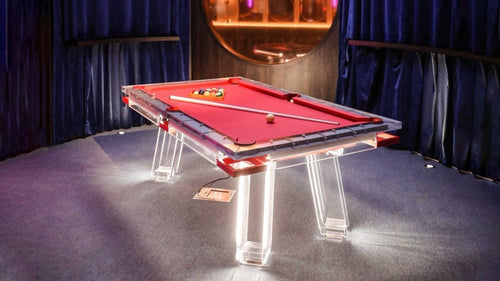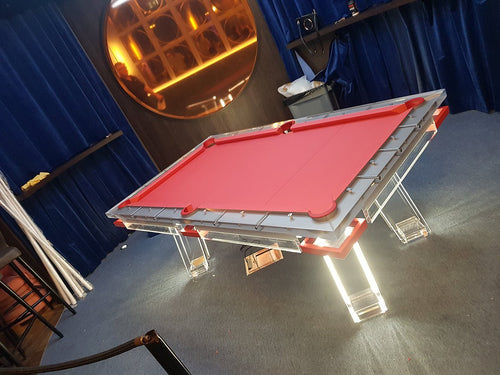


Enjoy our modern designs
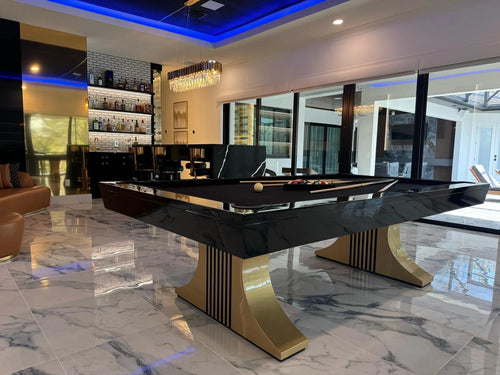
When you look at your new custom pool table, you see a finished masterpiece. The mahogany is stained, sealed, and polished to a mirror shine. It looks solid. It looks static.
But to a woodworker, that table is still "alive."
Wood is an organic, hygroscopic material. This means it constantly interacts with the moisture in the air. It breathes. When the air is damp, wood drinks it in. When the air is dry, wood releases moisture.
For a dining table, a little movement is fine. But for a precision game table—where accuracy is measured in millimeters—this invisible movement can cause visible problems.
Here is the science behind humidity and your game room, and how to prevent the air from ruining your aim.
Table of Contents
The Sponge Effect
Think of the hardwood in your table (the rails, the apron, the frame) like a very dense, hard sponge.
- High Humidity (Summer): The wood cells absorb moisture and expand. The wood swells.
- Low Humidity (Winter/AC): The air sucks moisture out of the wood. The cells collapse and shrink.
In a perfect world, this happens evenly. But if the humidity swings wildly—for example, going from a humid rainy season to dry central heating in the winter—the wood undergoes stress.
What Happens to the Table?
If your environment is unstable, you might notice three specific issues:
1. The "Warped" Rail
The top rails (cushions) are long pieces of timber. If they absorb too much moisture on one side (perhaps the side facing a window), they can bow slightly. Even a fraction of an inch of warping changes the angle of the rubber cushion. Suddenly, the ball doesn't bounce true. It banks short or long, and you can’t figure out why.
2. The "Pop" in the Finish
In extremely dry conditions (common in winter when the heater is blasting), wood shrinks. If it shrinks too fast, it pulls away from itself. You might see hairline cracks appear in the joints where the legs meet the frame, or "checking" (tiny splits) in the grain of the wood. This doesn't usually affect the structural integrity, but it ruins the aesthetic perfection of a high-gloss finish.
3. The Rattling Slate
On rare occasions, severe expansion and contraction of the wooden frame can actually shift the position of the slate screws. This can knock a table slightly out of level, requiring a service call to re-shim the slate.
The Danger Zones
You don't need a laboratory-controlled room, but you should avoid these specific "Table Killers":
- Direct HVAC Vents: Never position a table directly under or over a heating/AC vent. The blast of hot or cold air causes rapid temperature changes that shock the wood.
- Direct Sunlight: UV rays bleach the wood, but the heat from the sun also dries out the rail facing the window, causing uneven warping.
- Damp Basements: If your game room is below ground, you must run a dehumidifier. Concrete walls wick moisture, creating a swampy environment that warps wood and can even cause mold to grow under the felt.
The Magic Number: 35% to 50%
Your pool table is happiest in the same environment that you are happy in. We recommend keeping your game room between 35% and 50% relative humidity.
- In the Winter: You may need a whole-home humidifier or a portable unit in the game room.
- In the Summer: Your Air Conditioning usually does a good job of pulling moisture out, but a basement might need extra help.
The Verdict
We build our tables with kiln-dried lumber and seal them with high-grade finishes to resist these changes. We build them to be tough.
But we cannot fight physics.
Treat your table like a fine acoustic guitar or a grand piano. Keep the temperature stable, keep the humidity moderate, and the wood will settle into its new home and stay true for generations.