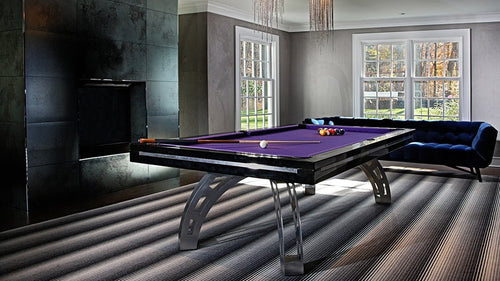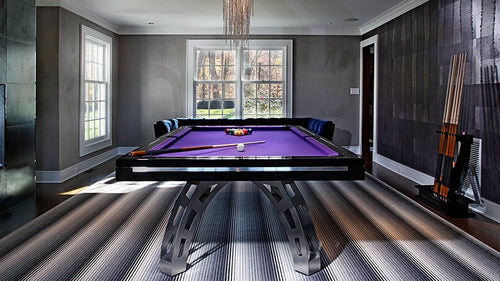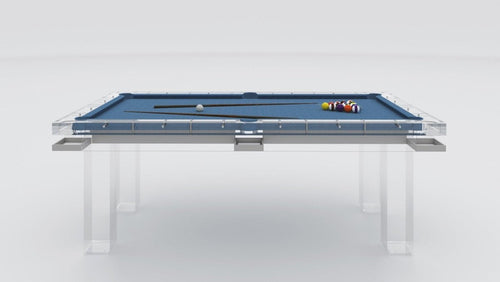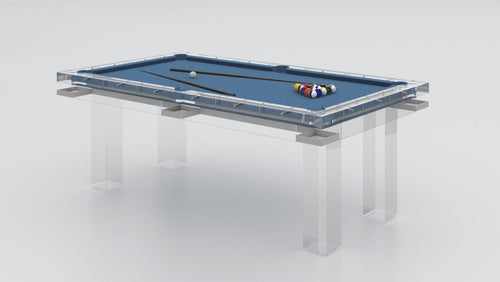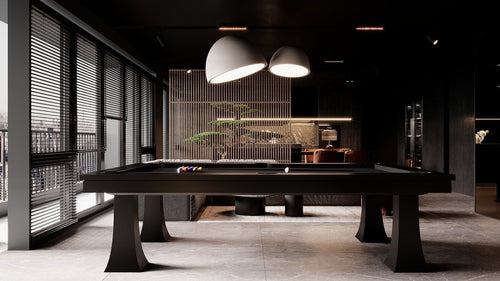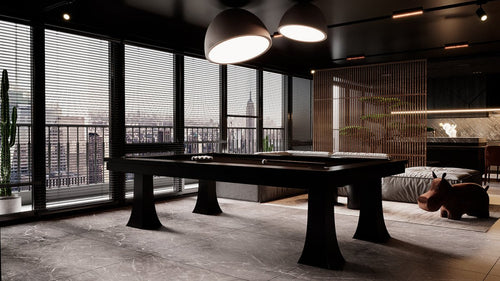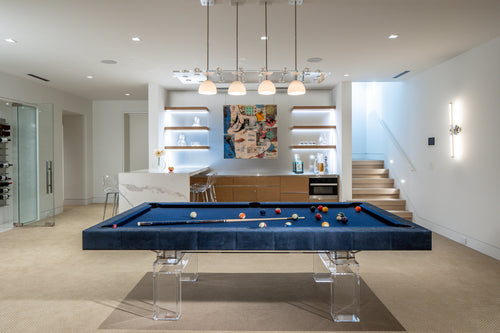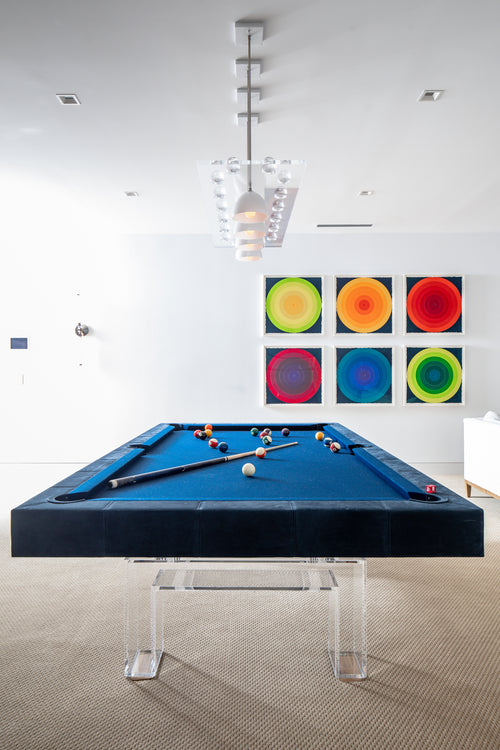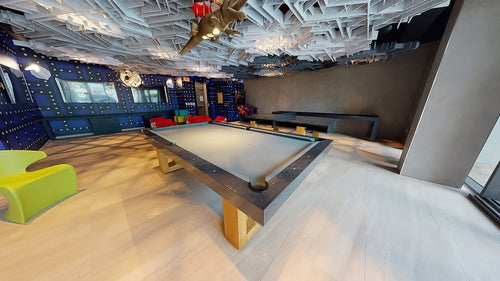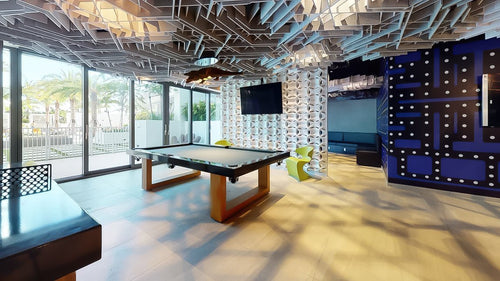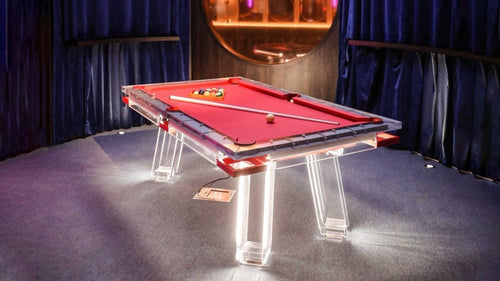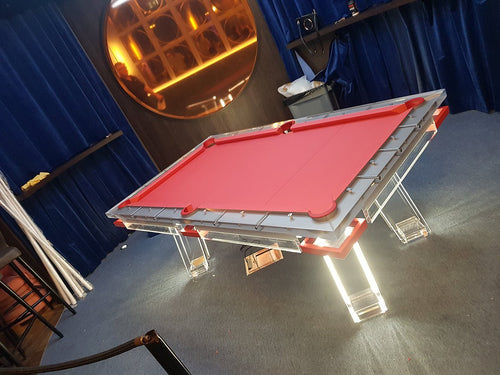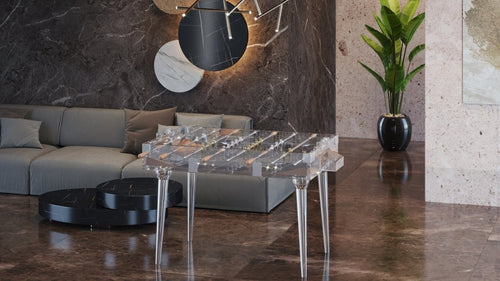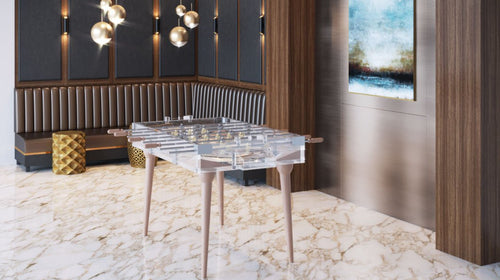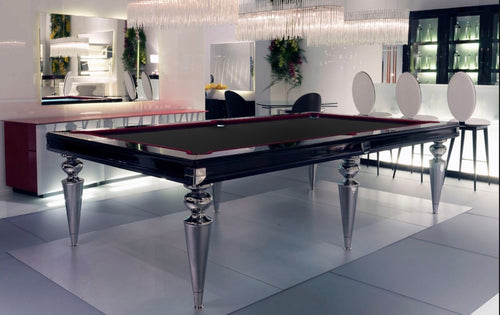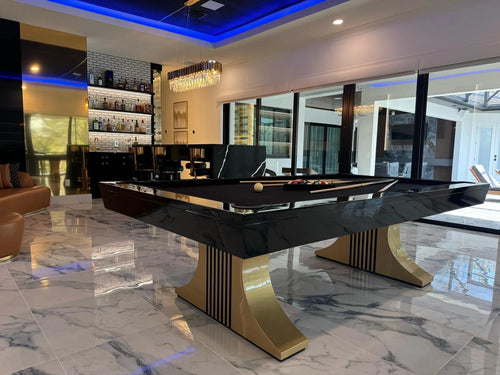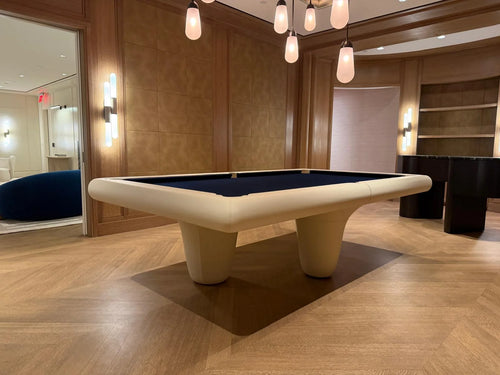


Enjoy our modern designs
A pool table can be expensive for a lot of reasons. It may use premium hardwood, polished metal, hand-selected stone, custom felt, leather pockets, or a recognizable luxury brand name. It may be beautifully built, carefully finished, and priced far above anything found in a standard recreation room.
But expensive does not automatically mean bespoke.
That distinction matters, especially in high-end homes where the pool table is not just a game surface. It is furniture, architecture, entertainment, and visual weight all in one object. A table can cost a lot of money and still feel wrong for the room. It can be impressive in a showroom, yet awkward once placed inside a finished interior.
A bespoke pool table works differently. It is designed with a specific space in mind. The room, architecture, furniture, finishes, lighting, and client’s taste all influence the final result. The goal is not just to create a beautiful table. The goal is to create the right table for that particular home.
Table of Contents
- 1. Expensive Can Still Feel Generic
- 2. Bespoke Starts With the Room
- 3. Premium Materials Are Not Enough
- 4. Proportion Is Where Many Expensive Tables Fail
- 5. Felt Is a Design Decision
- 6. Details Should Be Edited, Not Added
- 7. Custom Does Not Have to Mean Loud
- 8. Bespoke Solves Practical Problems Too
- 9. Performance Still Has to Be Serious
- The Bottom Line
1. Expensive Can Still Feel Generic
One of the easiest mistakes in luxury interiors is assuming that a high price solves the design problem. In reality, a high-end pool table can still feel generic if it was designed to appeal to many homes rather than belong to one.
This often happens when the table is treated as a separate purchase instead of part of the room’s design language. The interior may already have a clear identity: warm modern, coastal, traditional, industrial, minimalist, Art Deco, or something more layered and personal. Then the pool table arrives with its own unrelated personality.
The result is not always obviously bad. Sometimes it is more subtle than that. The room simply feels less resolved. The table looks expensive, but it does not look integrated.
2. Bespoke Starts With the Room
A bespoke pool table begins with context. Before the material, finish, or pocket style is chosen, the more important question is what the room actually needs.
A glass-walled penthouse may need a table with a lighter visual footprint. A mountain home may call for warmer wood, more texture, and a stronger sense of weight. A formal lounge may need deeper tones, leather details, and a more tailored silhouette. A coastal property may need something relaxed and refined without drifting into beach-house cliché.
The same design will not work equally well in all of those spaces. Bespoke design allows the table to be shaped around the interior instead of forcing the interior to accommodate the table.
The Pro Insight: Bespoke does not mean “more options.” It means the table has been designed in response to the room.
3. Premium Materials Are Not Enough
Luxury buyers often focus on materials first, which makes sense. Walnut, oak, marble, brass, leather, stainless steel, Lucite, acrylic, and stone all have their own appeal. They suggest craftsmanship, permanence, and expense.
The problem is that premium materials can still be used badly. Marble can look elegant, but it can also make a table feel heavy and overdesigned. Brass can add warmth, but too much of it can look flashy. Acrylic can create visual lightness, but in the wrong context it can feel like a gimmick.
Bespoke design is not about adding the most luxurious materials possible. It is about choosing the materials that make sense for the home.
4. Proportion Is Where Many Expensive Tables Fail
Proportion is one of the most overlooked differences between expensive and bespoke design. A table may use excellent materials and still feel awkward because its shape, weight, or scale is wrong for the room.
Some tables have legs that feel too thick. Others have rails that look too bulky, bases that feel too decorative, or profiles that do not match the architecture around them. A table designed to impress in a large showroom may feel oversized in an open-plan living room.
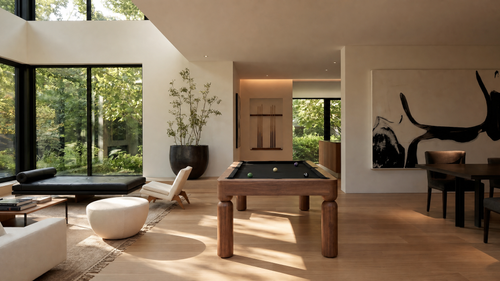
A bespoke table can be tuned to the space. In a large room, more mass may be appropriate. In a smaller or more open room, a lighter base, slimmer profile, or cleaner geometry may make the table feel more elegant.
5. Felt Is a Design Decision
Felt color is often treated like the final step in the process, but it has a major impact on the personality of the table. The playing surface is one of the largest visible color fields in the room, so it should be considered with the same seriousness as upholstery, rugs, wall color, or drapery.
Traditional green felt has its place. In a classic billiard room, club-inspired lounge, or heritage-style interior, it can look completely appropriate. But in many contemporary homes, green felt creates an immediate visual disconnect.
| Felt Color | Design Effect |
|---|---|
| Charcoal | Architectural, restrained, and easy to integrate. |
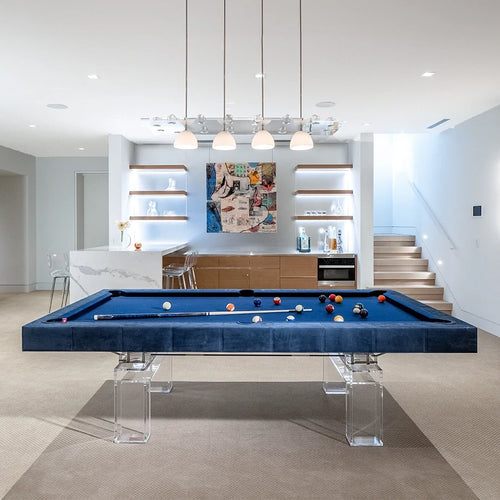
| Navy | Refined, rich, and less severe than black. |
| Taupe | Soft, neutral, and residential. |
| Olive | Warm, earthy, and custom-feeling. |
6. Details Should Be Edited, Not Added
A lot of expensive design tries to justify itself by adding more: more contrast, more ornament, more shine, more visible features, more moments that announce the object as luxury. Sometimes that works, but often it creates a table that feels busy instead of refined.
Bespoke design is usually more disciplined. It is less about adding every possible upgrade and more about deciding which details actually support the room.
Pocket style is a good example. Traditional leather pockets bring warmth and heritage. Hidden pockets create a cleaner contemporary look. Shield pockets add structure and decorative presence. None of these choices is automatically superior. The right answer depends on the table’s overall language and the room around it.
7. Custom Does Not Have to Mean Loud
There is a bad version of bespoke design where the table becomes unusual simply for the sake of being unusual. The materials get louder, the shape gets stranger, and the result starts to feel more like a novelty piece than a luxury object.
True bespoke work does not need to announce itself that way. Some of the best custom pool tables are quiet. They may use a specific wood tone that matches the millwork, a felt color that ties into the rug, a base shape that echoes the architecture, or pocket details that keep the silhouette clean.
That kind of restraint is often more luxurious than obvious customization. It shows confidence.
8. Bespoke Solves Practical Problems Too
The value of bespoke design is not only visual. It also solves practical problems that standard luxury tables often ignore.
A room may have difficult access. The table may need to align with existing millwork, lighting, or architectural axes. The homeowner may want the table to convert for dining. A vacation home may need materials that can handle guests, children, humidity, or more casual use.
A standard expensive table may offer beauty, but it may not solve those issues. A bespoke table can be designed around them from the beginning.
9. Performance Still Has to Be Serious
A pool table is furniture, but it is not only furniture. It still has to play correctly.
A sculptural base, rare veneer, or beautiful finish means very little if the table does not have proper slate support, accurate leveling, reliable cushion response, and professional installation. A beautiful table that plays poorly is not luxury. It is decoration with pockets.
The best custom tables respect both sides of the object. They work as serious game surfaces while also serving as major pieces of furniture.
The Bottom Line
The difference between expensive and bespoke becomes clearest in the room.
An expensive pool table may look impressive on its own, but a bespoke pool table makes the entire space feel more complete. It relates to the architecture, respects the palette, solves the practical constraints, and reflects the way the owner wants to live.
That is the real luxury: fit. Not just physical fit, but visual and emotional fit. The table feels like it belongs to the home, not like it was selected after the room was already finished.
A pool table should not just sit in a luxury home. It should make the home feel more complete.