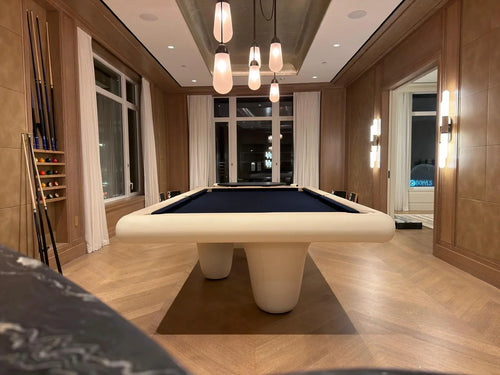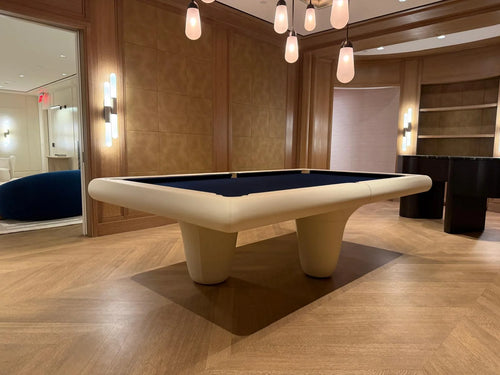


Enjoy our modern designs
Dining pool tables need seating that can adapt to meals and play. Benches offer flexible capacity and may include storage, while chairs provide clearer personal space and easier access.
The better choice depends on the table base, room layout, dining habits, accessibility needs, and where the seating will go during a game.
In this guide
Where Benches Work Well
A bench can seat a flexible number of people and create a visually simple arrangement along a long side. Without chair arms or gaps, it may use the available edge efficiently.
Some benches contain storage for dining panels, accessories, or linens. This can be valuable when each item has a padded and ventilated compartment.
Where Chairs Work Well
Chairs provide defined seating positions and let diners enter or leave independently. Each person can adjust their distance from the table.
Chairs with backs are usually more comfortable during long meals. Armless designs often work best with deep pool-table rails.
Design note: Measure a chair at its broadest point, including its back and splayed legs. Chairs may collide even when their seats fit.
Compare Comfort and Access
A bench requires diners in the center to slide sideways, and everyone shares the same distance from the table. Backless benches provide limited support.
Chairs offer easier access but require more clearance behind each seat. A crowded row can also leave insufficient elbow space.
- Check seat height relative to the top.
- Measure thigh and knee clearance.
- Confirm foot space around stretchers and pedestals.
- Test movement while all seats are occupied.
Consider Storage and Pool-Table Use
When the table is open for play, seating must move outside the cueing area. Chairs can be distributed around the room, while a long bench may be harder to relocate.
A bench containing dining panels may need to remain nearby. Check whether its lid and panel-removal path interfere with shots or circulation.
Design note: Furniture pads should suit the flooring. A bench that moves easily when empty may slide unexpectedly when occupied.
Account for Safety and Accessibility
Individual chairs are generally easier for diners who need arms, backs, or a stable surface when sitting and standing. A backless bench may not suit someone with limited mobility.
Storage-bench lids should have controlled supports. Compartments should not expose sharp edges or require awkward lifting.
Use a Mixed Seating Plan
A mixed arrangement often provides the best balance: a bench along one side with chairs opposite and at the ends. This preserves flexible capacity while providing independent seating and back support.
The pieces do not need identical construction, but their seat heights should be compatible with the dining surface.
Benches work well for flexible seating, visual simplicity, and integrated storage. Chairs offer better individual comfort, access, and rearrangement. Many rooms benefit from combining both.