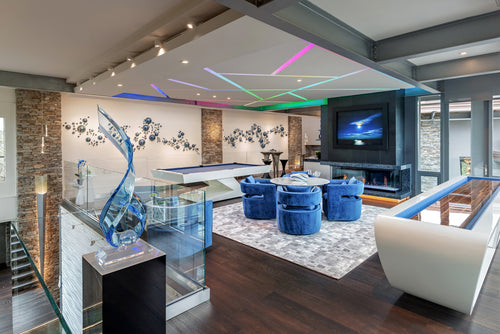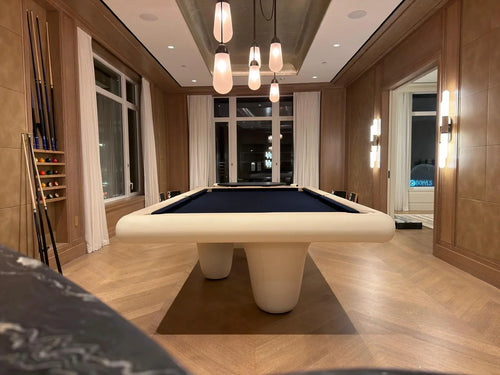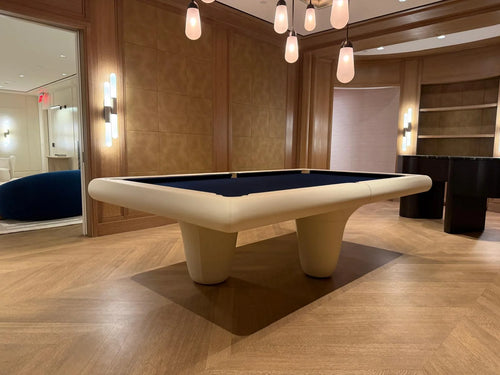


Enjoy our modern designs
Consistent shuffleboard maintenance protects the playing finish and makes puck speed easier to predict. The essential tasks are simple: remove contaminated powder, clean with compatible products, apply silicone only when needed, monitor the room, and inspect the board before a small issue becomes a playing problem.
The correct frequency depends on use. A busy shared table may need service several times a week, while a covered home table may need only light attention between occasional games.
1. Understand Powder, Silicone, and Cleaner
Shuffleboard “wax” is the granular speed powder spread over the board. It acts like a field of tiny rolling particles beneath the pucks. It is not the same as paste wax used on furniture or floors.
Silicone spray is applied beneath the powder to reduce friction and support consistent travel. It should be a product approved for the table’s playing finish. More silicone does not automatically improve play; excessive application can create an oily surface and attract contamination.
Board cleaner removes film, crushed powder, fingerprints, and other residue. Household glass cleaners, furniture polishes, solvents, and abrasive products should not be substituted unless the table manufacturer specifically approves them.
2. Follow an At-a-Glance Maintenance Schedule
| Interval | Primary tasks |
|---|---|
| After play | Inspect pucks, remove spills, redistribute or remove heavily used powder, and cover the table. |
| Weekly during frequent use | Remove dirty powder, clean the board as needed, vacuum gutters, and apply fresh powder. |
| Monthly | Inspect levelers, cabinet hardware, pucks, cover, and playing behavior; apply silicone when required. |
| Seasonally | Review room conditions, overall level, crosswise board shape, and climatic-adjuster settings. |
| Annually | Perform a complete finish, structure, hardware, and supply inspection. |
These intervals are starting points. Increase the frequency when the table is used commercially, exposed to dust, or played with for several hours each day.
3. Care for the Table After Play
Remove the pucks and check their bottoms for embedded grit, chips, or rough edges. A damaged puck can scratch the polymer finish repeatedly before the problem becomes obvious.
Brush heavily crushed or dirty powder into the gutters with a soft shuffleboard sweep. Powder may be redistributed for another short session if it remains clean and dry, but do not continually pour fresh material over a contaminated base.
Clean spills immediately using the approved method. Blot rather than spreading the liquid across a larger area. If moisture reaches a seam, board edge, or unsealed area, contact the manufacturer or a technician for guidance.
Once the surface is clean and dry, install a fitted cover. The cover should not contain grit on its underside or place sharp hardware against the board.
Design note: Store the cover on a clean hook or shelf while the table is in use. Dropping it on the floor can transfer abrasive debris directly to the playing surface.
4. Clean the Board and Replace Powder
Remove all speed powder with a soft sweep. Work carefully near scoring lines and board edges. If using a vacuum around the gutters, fit a soft brush attachment and keep hard plastic or metal parts away from the playing finish.
Apply an approved cleaner to a clean microfiber cloth unless the product directions specify otherwise. Avoid saturating the board. Wipe in smooth overlapping passes, then use a separate dry cloth to remove residue.
After the surface dries, distribute fresh speed powder lightly and evenly. Concentrate on the playing lanes rather than building deep piles along the edges. An uneven layer can imitate a board-level problem by slowing one side more than the other.
Choose a powder grade suited to the table length and desired game speed. Faster powder is not inherently better. It reduces the force needed to reach the scoring zone and may make a short table difficult for casual players.
5. Apply Silicone Correctly
Silicone is normally applied after old powder has been removed and the board has been cleaned. Follow the table and product instructions because formulas, finish compatibility, drying time, and recommended frequency vary.
- Confirm that the board is clean and completely dry.
- Ventilate the room as directed by the product label.
- Apply a light, even coating rather than soaking the surface.
- Allow the silicone to dry or cure for the stated period.
- Inspect for wet spots or heavy accumulation.
- Add a fresh, restrained layer of speed powder.
If the table suddenly becomes excessively fast or develops oily patches, stop adding product. Remove the powder and follow the approved cleaning procedure before trying again.
Design note: Label separate cloths for board cleaner, silicone-related wiping, and cabinet care. Cross-contamination from furniture polish is a common and avoidable problem.
6. Control Climate and Sunlight
A stable room helps the wooden board maintain a predictable shape. Avoid placing the table beside a fireplace, portable heater, radiator, strong HVAC outlet, damp exterior wall, or frequently opened exterior door.
Monitor humidity rather than judging the room by comfort alone. A long board may respond to gradual seasonal changes that occupants barely notice. Sudden swings are more concerning than modest, stable conditions.
Direct sunlight can fade wood finishes, affect scoring graphics, warm one section of the board, and age the table cover. Use blinds, shades, or other window treatments when strong sun reaches the table.
At the beginning of a new heating or cooling season:
- Confirm that every leg and leveler bears weight.
- Test puck paths down the center and both sides.
- Look for a new tendency toward the center or gutters.
- Inspect joints, edges, and the underside of the board.
- Document any climatic-adjuster correction.
7. Inspect Hardware and Board Condition
Once a month, look beneath the table with good lighting. Check leg bolts, stretchers, levelers, board supports, and climatic adjusters. Tighten only what is clearly loose and use hand tools appropriate for the hardware.
At least annually, inspect the playing finish under angled light. Watch for:
- Deep scratches that penetrate the protective layer.
- Cloudy or dull areas that do not clean normally.
- Cracking or lifting near board edges.
- Movement along laminated wood joints.
- New gaps between the board and its supports.
- Corroded or distorted adjustment hardware.
Finish damage that exposes wood should be evaluated promptly. Moisture and cleaning products can enter an unprotected area and enlarge the problem.
8. Avoid Damaging Products and Habits
Do not use abrasive pads, powdered household cleaners, furniture wax, glass cleaner, multipurpose degreaser, or solvent-based products without specific approval. Never scrape stubborn residue with a blade.
Good ownership rules include:
- No drinks, food, tools, or hot objects on the playing board.
- No sitting, leaning heavily, or climbing on the cabinet.
- No dragging pucks with damaged bottoms.
- No power-tool adjustment of climatic hardware.
- No uncovered storage during painting, sanding, or renovation.
- No relocation by pushing or pulling the assembled table.
Keep approved cleaner, silicone, powder, microfiber cloths, and the board sweep together in a closed container. This prevents an uninformed substitute from being used when the correct product cannot be found.
The Bottom Line
Effective shuffleboard maintenance is regular, restrained, and compatible with the playing finish. Remove contaminated powder, clean gently, apply silicone sparingly, protect the table from sunlight and climate swings, and document seasonal adjustments. These habits preserve both the surface and the consistency of the game.