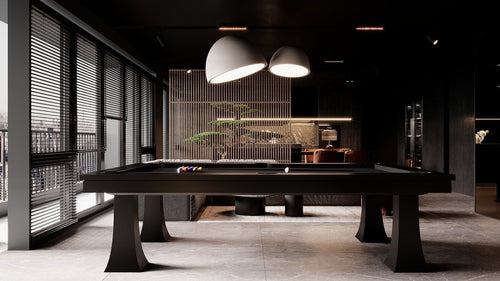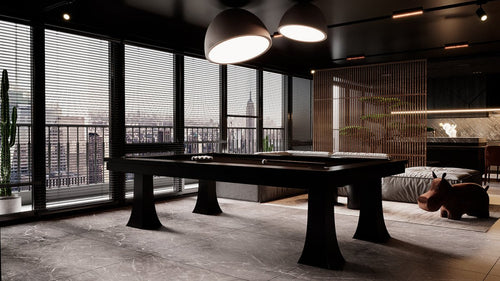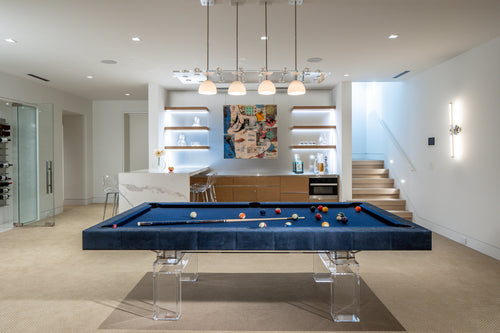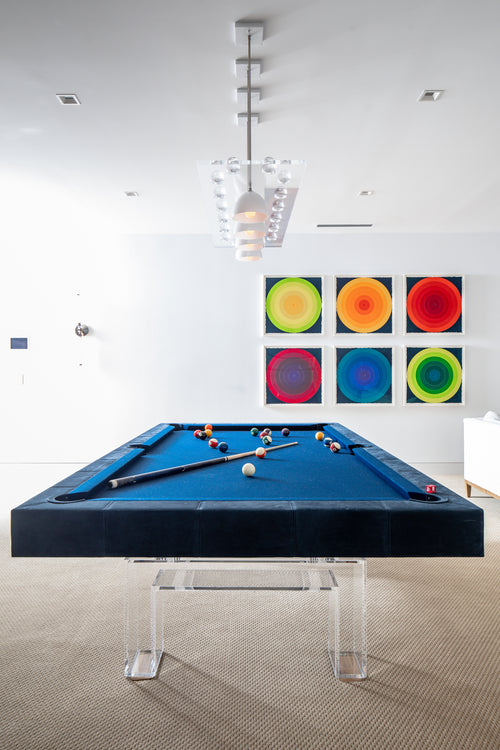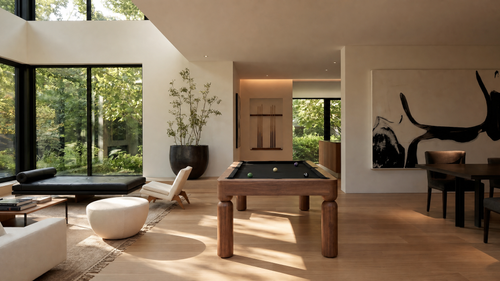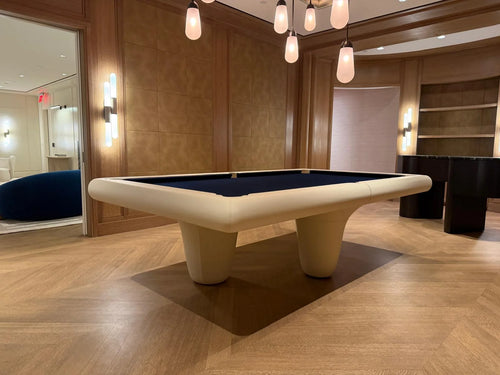


Enjoy our modern designs
One of the main reasons our clients buy a pool table is "Family Time." They picture game nights, bonding with teenagers, and getting the kids off their iPads.
But the reality of introducing a 7-year-old to pool can be… chaotic.
A regulation pool table is big. The cues are heavy. The rules of 8-Ball are complex. Often, a child will try to play, miss the ball completely, rip the felt with the cue tip, and storm off in frustration.
However, if you strip away the complex rules, a pool table is actually one of the best tools in the world for teaching hand-eye coordination, geometry, and patience.
You just have to change the game.
Here are three simple, confidence-building games designed to teach kids the mechanics of pool without the frustration of "scratching" or losing.
Table of Contents
The Prerequisites (Set Them Up for Success)
Before you start, you need to level the playing field.
- Get a Short Cue: A standard 58-inch cue is unwieldy for a child. We highly recommend picking up a 48-inch or 42-inch "Trouble Shooter" cue. If the balance is right, their aim will improve instantly.
- The Bridge Hand is Hard: Making a bridge with small fingers is difficult. Don't force it. Let them shoot off the rail, or buy a "Moosehead" slip-on mechanical bridge.
- Safety First: Teach them one rule: The cue tip stays on the floor until it’s time to shoot. (This saves your neighbor’s eye and your expensive chandelier).
Game 1: "Pocket Golf" (Teaching Aim)
The hardest part of pool for kids is the distance. Shooting a ball across 8 feet of slate is intimidating. Shrink the game.
- The Setup: Place an object ball just 3 inches away from a corner pocket. Place the cue ball just 6 inches behind it.
- The Goal: Pot the ball. It’s a guaranteed win.
- The Progression: Every time they sink it, move the cue ball back 2 inches.
- Why it Works: It gives them immediate dopamine hits. They get used to the sound of the ball dropping, which builds confidence. It teaches them that the cue must move in a straight line to work.
Game 2: "The Cushion Challenge" (Teaching Speed Control)
Kids usually have two speeds: "Whiff" and "Hulk Smash." Teaching them "touch" is the hardest lesson.
- The Setup: Stand at the head of the table. The goal is to roll the ball down the table, hit the far cushion (rail), and have it come back as close to you as possible without touching the rail you are standing at.
- The Game: You go, then they go. Whoever gets closer to the rail wins.
- Why it Works: It removes the pressure of aiming at a pocket. It focuses entirely on muscle memory and force. They learn that hitting it harder isn't always better.
Game 3: "Colors" (The No-Rules Game)
Standard 8-ball rules (stripes vs. solids) are too restrictive for beginners.
- The Setup: Rack all 15 balls and break (or let them throw the balls onto the table to scatter them).
- The Rules: There are no turns. There are no stripes. There are no fouls. They can shoot at any ball.
- The Goal: Just sink balls. Count how many they get.
- Why it Works: It keeps the game moving fast. It teaches them to look for the "easy shot" rather than forcing a hard one. It develops their ability to scan the table and plan.
The Secret Benefit: Geometry in Action
As they get older, you can start sneaking in the math lessons. Show them how hitting a ball at an angle makes it go sideways. Show them how the diamond markers on the rails divide the table into equal segments.
You aren't just teaching them a bar game; you are teaching them physics.
So, cut them some slack on the rules. Let them move the cue ball with their hand. Let them stand on a stool. The goal isn't to make them professionals by age 10; the goal is to make them love the table so that when they are teenagers, they still want to hang out with you.