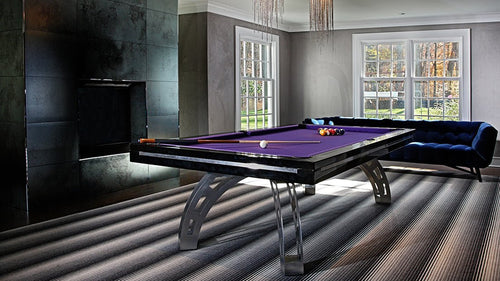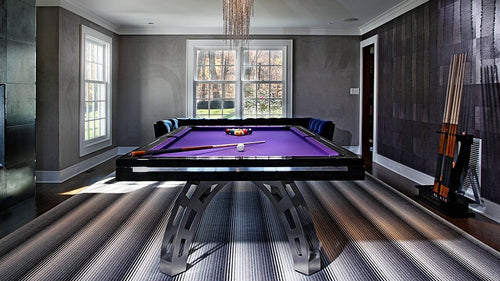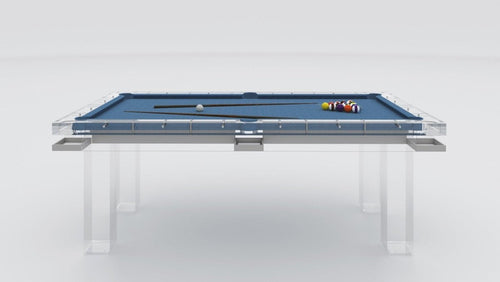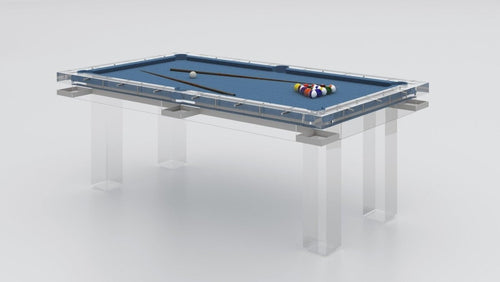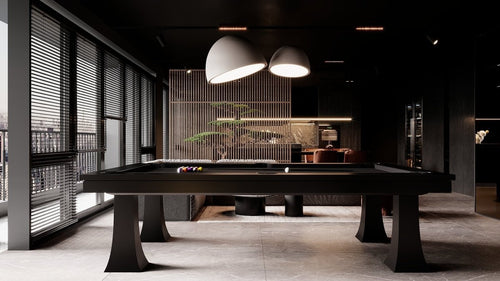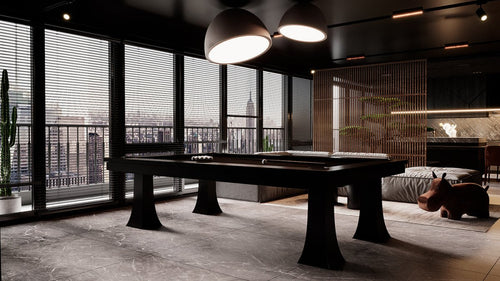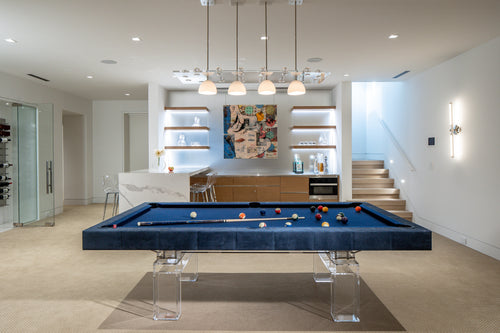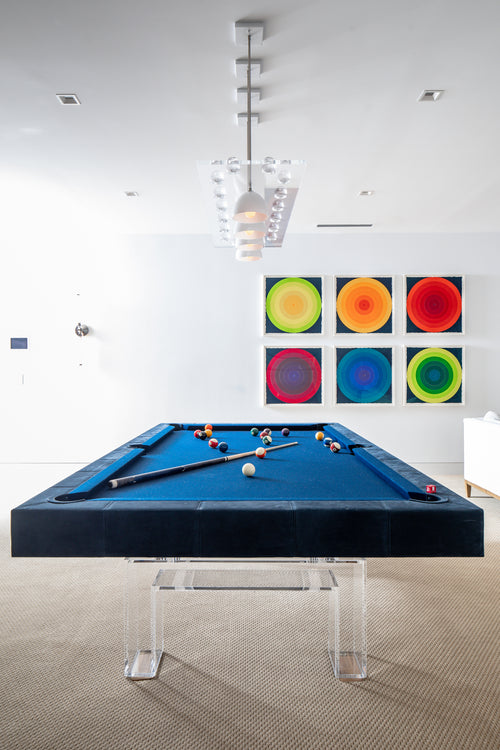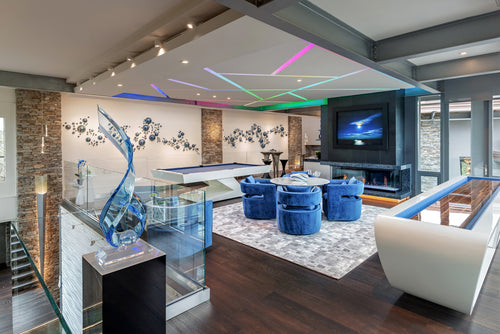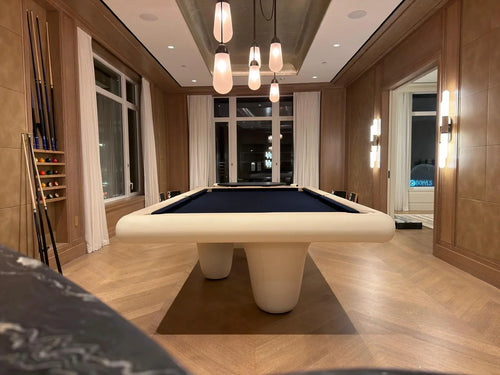


Enjoy our modern designs
A great game room is not only about the pool table. It is about the relationships between people in the room. Who is playing? Who is watching? Where do people sit? Where do they stand? Where do drinks go? How do guests move without interrupting the game?
This is the social geometry of a game room. It is the invisible layout logic that determines whether the room feels natural or awkward.
A room can have expensive furniture and still fail if the social geometry is wrong. A pool table needs space to play, but a game room also needs space for everyone who is not currently taking a shot.
Table of Contents
1. What Social Geometry Means
Social geometry is the arrangement of people, furniture, and movement in a room. In a game room, it matters because people are not all doing the same thing at the same time.
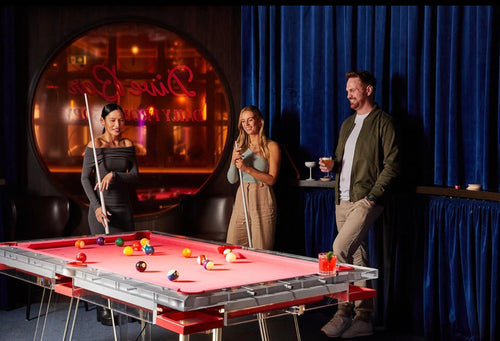
Some people are playing. Some are watching. Some are talking. Some are waiting for their turn. Some are standing near the bar. Some are seated. Some are passing through. The room has to support all of those behaviors without feeling crowded or scattered.
A weak game room only thinks about the table. A strong game room thinks about the entire social pattern around the table.
Designer insight: The pool table may be the anchor, but the people around it are the real layout problem.
2. The Playing Zone Comes First
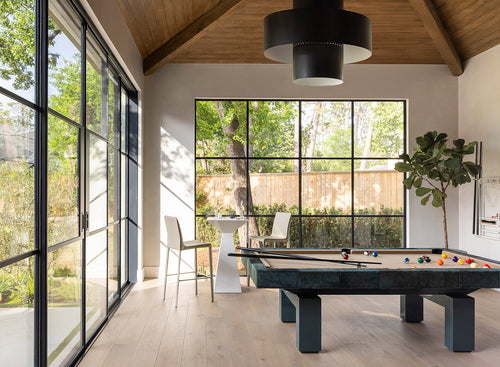
The playing zone is the space around the pool table needed for cue movement, stance, and comfortable play. This zone should be protected before seating, bars, storage, or decorative furniture are added.
If the playing zone is compromised, the room will never feel right. Players will bump into chairs, walls, columns, fireplaces, consoles, or guests. Even if the room looks beautiful, the experience will feel awkward.
This does not mean the pool table should dominate the entire room. It means the table’s functional envelope has to be respected. Furniture should sit outside the cue path. Storage should be reachable without blocking play. Decorative objects should not interfere with movement.
A good game room begins by giving the game enough room to happen naturally.
3. Standing Space Matters More Than Expected
Not everyone in a game room wants to sit. In fact, pool is a naturally standing activity. People stand while waiting, watching, talking, holding drinks, choosing shots, and moving between turns.
If the room has no comfortable standing zones, guests will drift into the playing area. They will stand in cue paths, block sightlines, lean on the table, or gather in service routes.
Good standing space often happens near a wall, bar, console, fireplace, or lounge edge. It gives people somewhere to be without making them feel like they are in the way.
This is one reason negative space matters. Empty space around a pool table is not wasted. It is part of the room’s social function.
4. Seating Should Support the Game Without Crowding It
Seating in a game room should make the room feel social, but it should not invade the game. This is where many layouts fail. Chairs and sofas are placed too close to the table because the room feels empty, but then players feel boxed in.
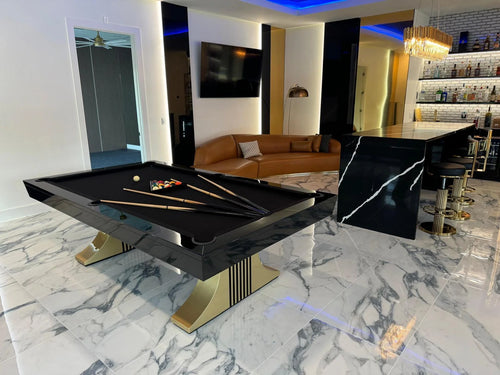
The best seating sits just outside the playing zone. It should allow guests to watch, talk, and relax without becoming obstacles. A sofa, lounge chairs, banquette, bench, or bar seating can all work if the placement is controlled.
Seating should also support more than watching. Guests may want to have a drink, talk privately, check their phone, or wait between games. The room should not punish people for not actively playing.
A great game room gives non-players a real place in the room.
Pro tip: Do not design the game room only for the two people playing. Design it for the six people around them.
5. Watching Needs Clear Sightlines
Watching a game should feel easy. Guests should be able to see the table without standing in the way or craning around furniture. Sightlines matter from seating, standing zones, bar areas, and room entrances.
A pool table can create social energy even for people who are not playing, but only if the table is visible. If the seating faces away from the table, the room becomes disconnected. If a bar or sofa blocks the view, people stop engaging with the game.
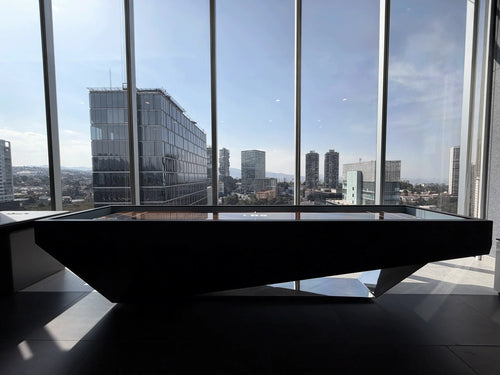
Strong sightlines also make the room feel more active. From the doorway, a visible table with proper lighting can immediately communicate the room’s purpose.
The table should not only be playable. It should be watchable.
6. Drinks and Small Surfaces Need a Plan
Game rooms usually involve drinks, and drinks need surfaces. If there are no proper surfaces, drinks end up on the pool table rail, the floor, the bar edge, or random furniture.
That creates both practical and visual problems. Drinks near the cloth are risky. Drinks on the floor make the room feel casual. Guests holding drinks the entire time become less comfortable.
Small tables, drink ledges, sideboards, bar-height surfaces, or built-in shelves can solve this without crowding the table. The key is to place surfaces where people naturally stand or sit.
A luxury game room should anticipate what guests actually do. They will not behave like a floor plan. They will look for somewhere to put the glass.
7. Movement Should Not Interrupt Play
Movement patterns decide whether a game room feels effortless or annoying. Guests should be able to enter, sit, stand, reach the bar, access storage, and leave without cutting through active shots.
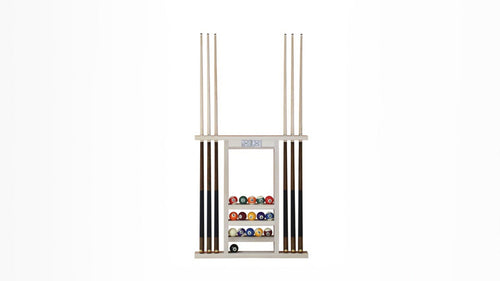
If the main circulation path runs directly through the playing zone, the room will constantly feel interrupted. If cue storage is behind seated guests, players will have to awkwardly reach around them. If the bar is too close to the table, service and play will compete.
A strong layout creates clear lanes. Players move around the table. Guests move around the room. Seated people are close enough to participate but not in the way. Staff or hosts can reset accessories without disrupting the social flow.
When movement is planned well, the room feels larger, calmer, and more natural.
The Bottom Line
The social geometry of a game room is the relationship between seating, standing, playing, watching, and moving. It is what makes the room feel natural instead of awkward.
A successful pool room protects the playing zone, gives watchers clear sightlines, gives non-players somewhere to sit or stand, provides surfaces for drinks, and keeps circulation out of the cue path.
The best game rooms are not designed only around the table. They are designed around the people orbiting it.