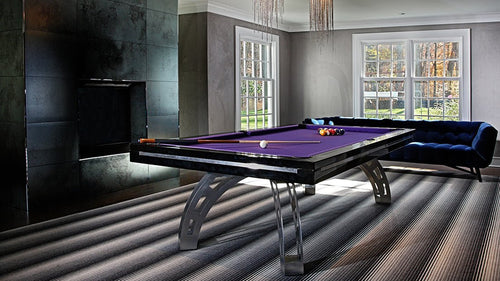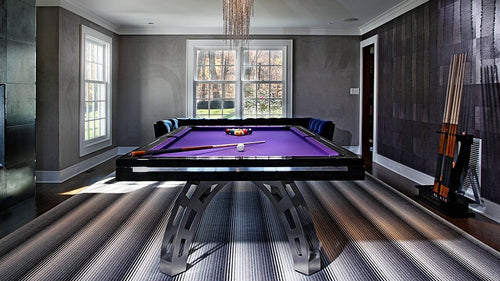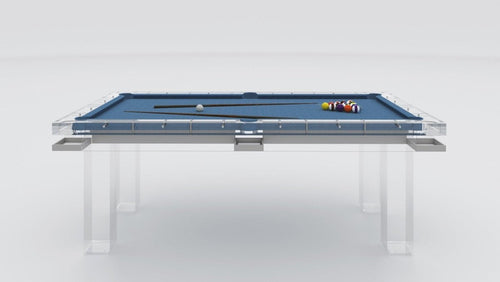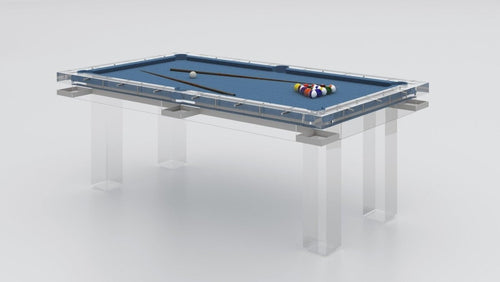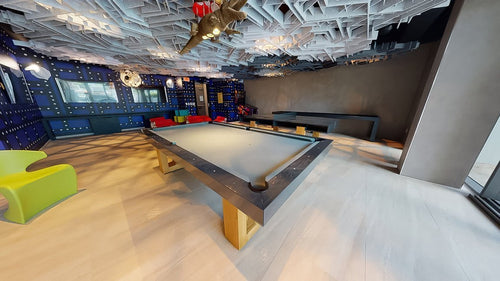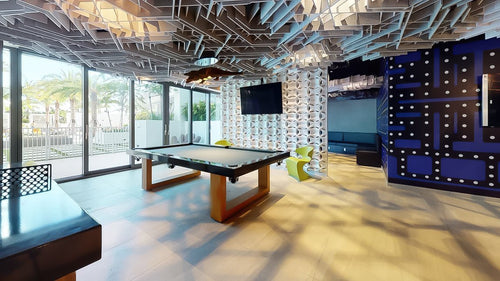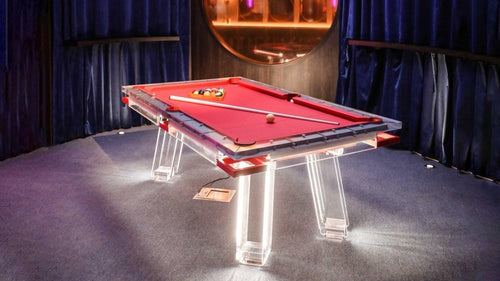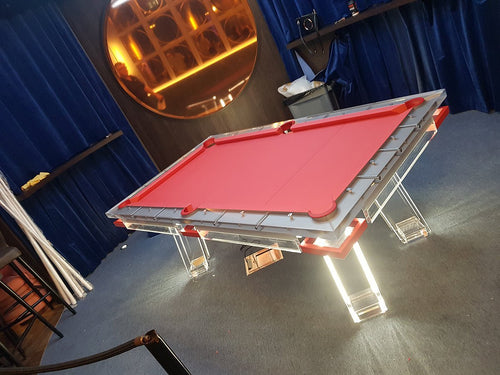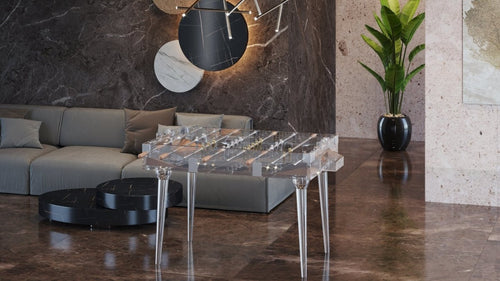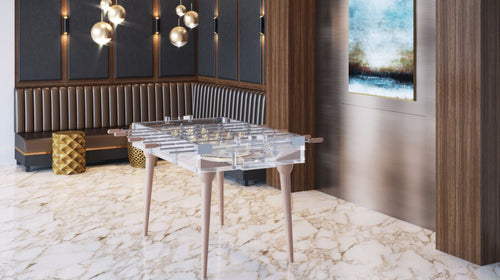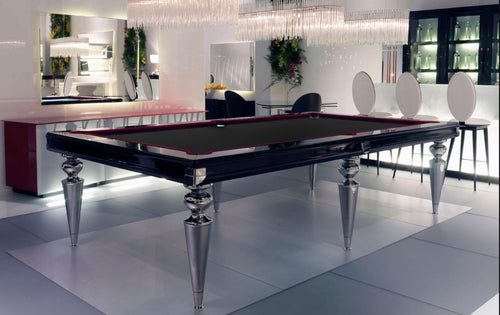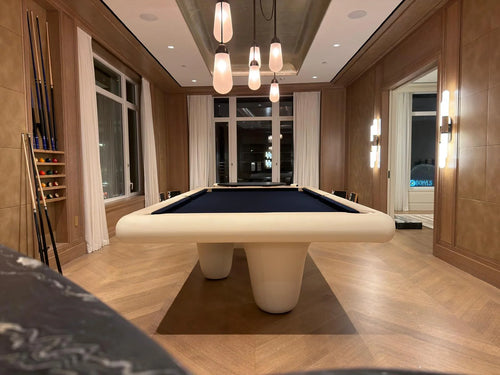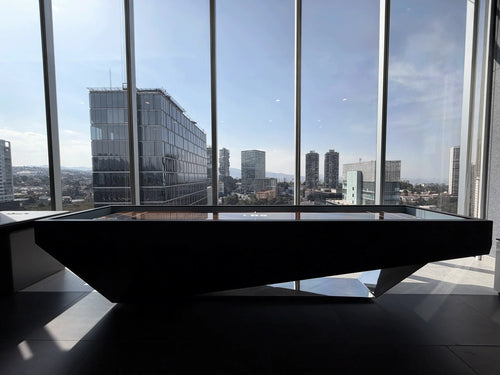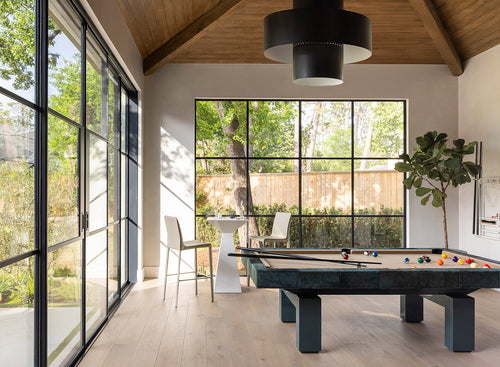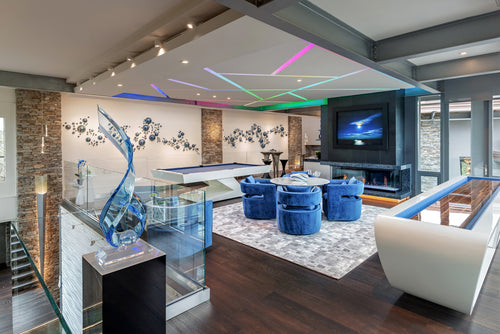


Enjoy our modern designs
A pool table in a luxury hotel is not just a game feature. It is part of the guest experience, part of the interior design, and often part of the hotel’s visual identity. It may sit in a lounge, lobby-adjacent bar, private club, rooftop space, games room, branded residence, or resort entertainment area.
That means the table has to do more than play well. It has to belong to the property. It has to photograph well, survive hospitality use, support social behavior, and feel considered even when nobody is playing.
Designing a hotel pool table is not about choosing the fanciest model. It is about specifying the right table for the brand, room, guests, and operating reality of the hotel.
Table of Contents
- Start with the Hotel’s Brand Story
- Define the Role of the Table in the Space
- Choose Materials That Match the Property
- Design for Hospitality-Level Durability
- Respect Guest Flow and Service Paths
- Make the Lighting Feel Hotel-Level
- Hide the Operational Clutter
- Design for Photography Without Making It Feel Staged
- The Bottom Line
1. Start with the Hotel’s Brand Story
Every luxury hotel has a design story, whether it is formal or relaxed, coastal or urban, heritage or contemporary, quiet or theatrical. The pool table should support that story.
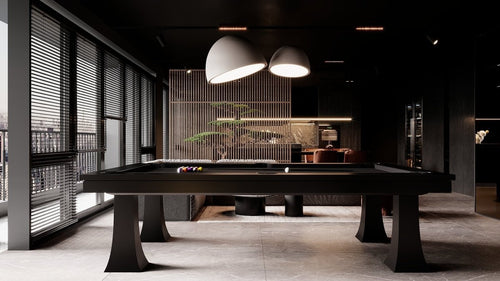
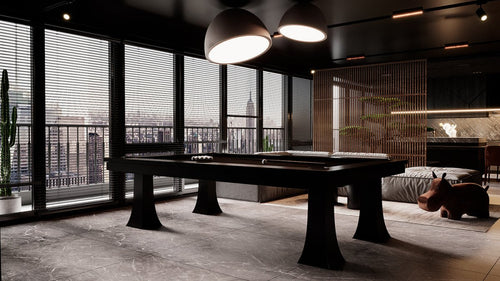
A table for a mountain resort may need warmth, texture, and weight. A table for a beach resort may need lighter finishes, relaxed materials, and a more breathable presence. A table for a city hotel may need sharper lines, darker finishes, and a stronger architectural attitude. A table for a boutique property may benefit from a more memorable custom detail that guests associate with the hotel.
The mistake is treating pool tables as a separate design category. A hotel does not suddenly stop having a brand because the room includes games. The table should feel like it was designed for that property, not imported from a generic game-room catalog.
Hospitality insight: In a luxury hotel, a pool table is never neutral. It either strengthens the brand story or weakens it.
2. Define the Role of the Table in the Space
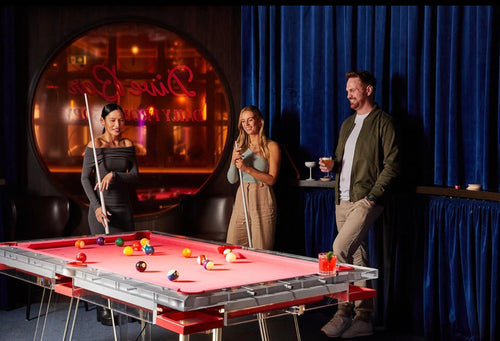
The same pool table can behave very differently depending on where it is placed. In a bar lounge, it may create social energy. In a private club room, it may feel more refined and intimate. In a resort game area, it may support casual guest activity. In a lobby-adjacent space, it may need to look beautiful even when unused.
Before choosing the table, the design team should define the role it plays. Is it a centerpiece? A quiet amenity? A visual anchor? A guest activity? A design object? A social tool near the bar?
This decision affects everything: table style, finish, cloth color, lighting, seating, accessory storage, and placement.
A pool table designed as a centerpiece can be more sculptural. A table designed as a casual amenity may need more durability and simplicity. A table in a formal lounge may need to look more like furniture than sports equipment.
3. Choose Materials That Match the Property
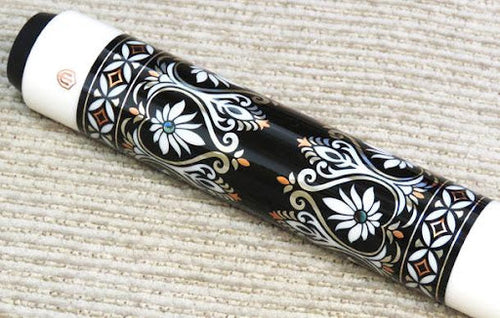
Material selection is where the pool table begins to feel hotel-specific. Wood, metal, stone, leather, lacquer, acrylic, glass, and cloth all communicate a different mood.
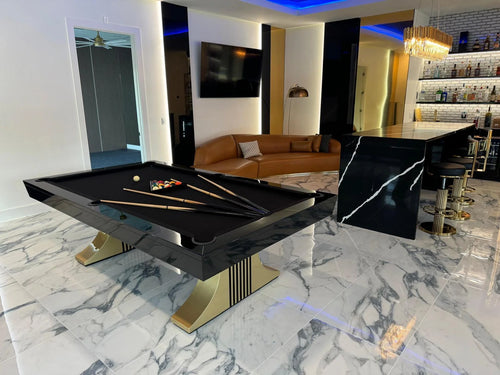
A luxury hotel table should connect to the materials already present in the room. It may echo the bar millwork, relate to the metal finish of the lighting, soften a stone-heavy space, or add contrast to a neutral lounge. The connection should be clear but not overly literal.
Over-matching can make the room feel like a showroom. A better approach is to use one or two meaningful material links. For example, the table may share a bronze detail with the lighting, a wood tone with the wall paneling, or a cloth color that supports the upholstery palette.
The goal is for guests to feel that the table belongs, even if they never consciously analyze why.
4. Design for Hospitality-Level Durability
Luxury hotel furniture has to survive more use than residential furniture. Guests may place drinks nearby, lean on rails, handle cues roughly, overuse chalk, or treat the table more casually than an owner would at home.
This does not mean the table should look commercial. It means the design should be honest about use. Finishes should be selected for durability. Cloth should be appropriate for repeated play. Pockets, rails, and exposed edges should be able to handle contact. Maintenance should be realistic for staff.
Some finishes that look beautiful in a private residence are risky in hospitality. Very delicate lacquers, overly pale surfaces, or highly reflective finishes can become maintenance issues if the table is placed in a busy environment.
The best hotel pool tables feel refined, but not precious. Guests should want to use them, and staff should be able to keep them looking good.
Pro tip: A hotel pool table should be specified for how it will look after six months of real guest use, not just how it looks on installation day.
5. Respect Guest Flow and Service Paths
Pool tables require space around them, but hotels also require circulation. Guests need to move through the room. Servers may need clear paths. Bar traffic, lounge seating, doors, columns, and sightlines all affect where the table should go.
A table placed too close to a service path can become frustrating. Players may feel interrupted. Staff may feel blocked. Guests passing through the room may feel like they are walking through the game.
At the same time, the table should not be hidden so far away that it loses energy. A hotel pool table works best when it is visible enough to invite use but positioned carefully enough to avoid disrupting the room.
The design should think about players, spectators, servers, and guests passing by. A good layout respects all of them.
6. Make the Lighting Feel Hotel-Level
Lighting is one of the easiest ways to separate a luxury hotel pool table from a generic game room. The table needs proper illumination for play, but the fixture should still belong to the interior.
A standard billiard lamp may feel too expected in a refined hotel lounge. A linear pendant, architectural fixture, custom light, or integrated ceiling detail can make the pool table feel more designed. The light should define the table without making it feel like a sports-bar prop.
Dimming is also important. The room may need to shift between daytime lounge use, evening cocktails, private events, and active play. A hotel table should not be locked into one harsh lighting mood.
The best lighting makes the table usable, atmospheric, and photogenic at the same time.
7. Hide the Operational Clutter
Hotel pool tables come with equipment: cues, balls, chalk, racks, brushes, covers, and maintenance tools. If these items are not planned, they can quickly make the space look messy.
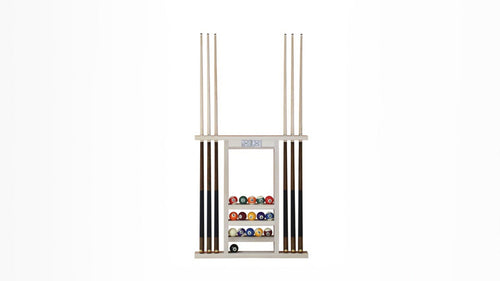
In a luxury hotel, accessory storage should be either concealed or intentionally designed. Built-in cabinets, custom cue panels, drawers, sideboards, or integrated storage walls can keep the room clean while allowing staff and guests to access what they need.
Visible clutter is especially damaging in hospitality because the room may be photographed by guests at any time. Chalk left out, balls scattered, cheap cue racks, or damaged accessories can make the entire amenity feel neglected.
The table is only part of the design. The reset system around it matters just as much.
8. Design for Photography Without Making It Feel Staged
Luxury hotels live through images. Guests photograph spaces. Designers photograph projects. Marketing teams need strong visuals. A pool table can become a powerful visual asset if it is designed well.
But there is a difference between photogenic and staged. A showroom-style pool table may look polished but feel stiff. A better hotel table looks beautiful while still feeling usable. The room should invite guests to play, sit, drink, and gather, not simply admire the composition.
Cloth color, lighting, surrounding furniture, wall treatment, and sightlines all affect photography. A pool table with a strong but controlled presence can make the room more memorable in photos without overwhelming the guest experience.
The strongest hospitality design looks good on camera because it works in real life.
The Bottom Line
Designing pool tables for luxury hotels requires more than choosing an attractive model. The table has to support the brand, fit the room, handle guest use, work with service flow, store accessories cleanly, and look good at rest.
The best hotel pool tables feel like part of the property’s design language. They create social energy without looking casual, add visual value without feeling staged, and survive real use without becoming a maintenance burden.
In luxury hospitality, a pool table should never feel like a recreational afterthought. It should feel like a designed experience.