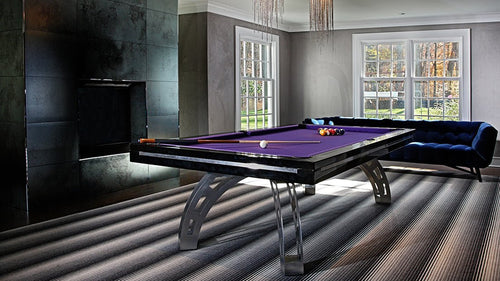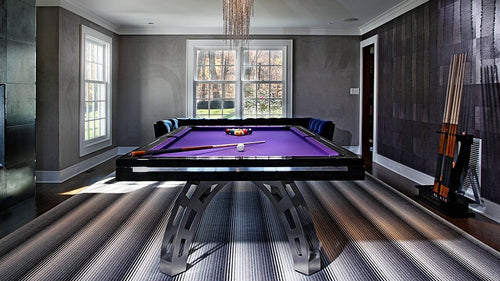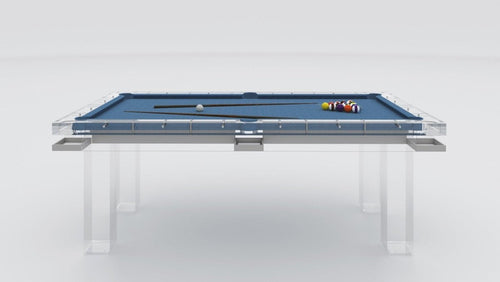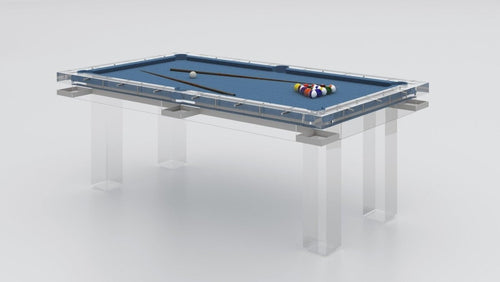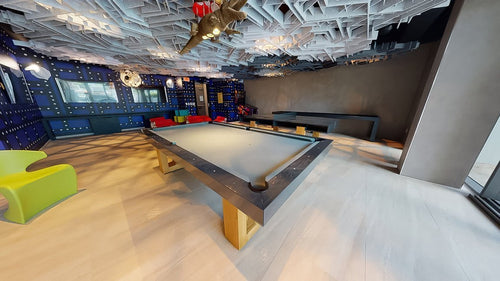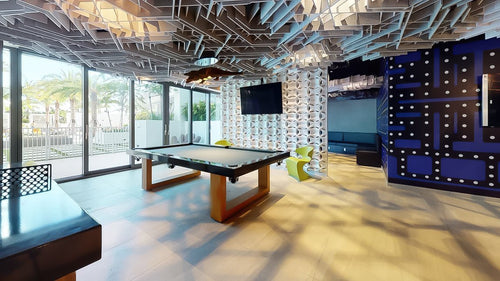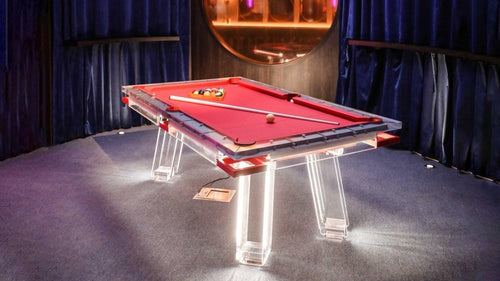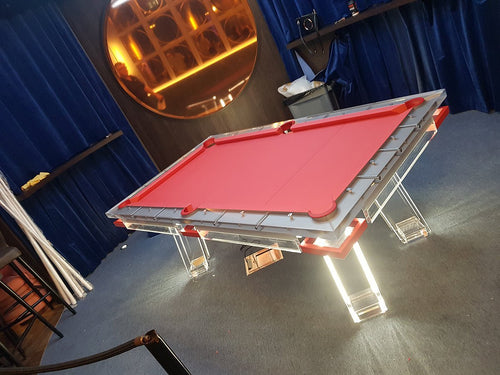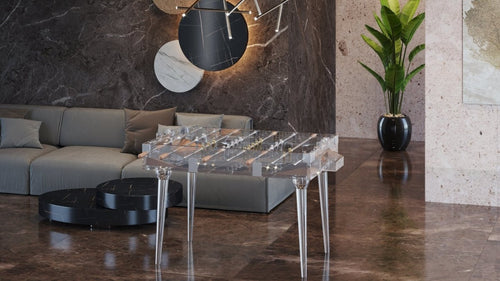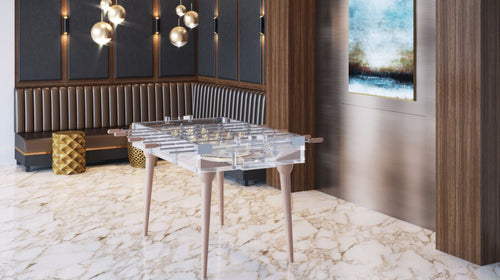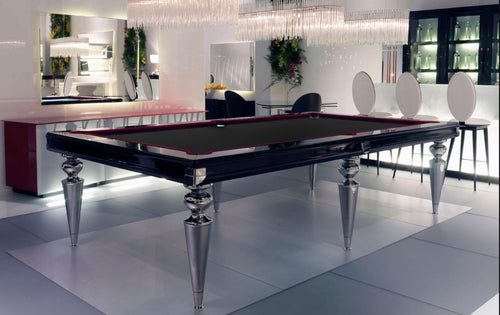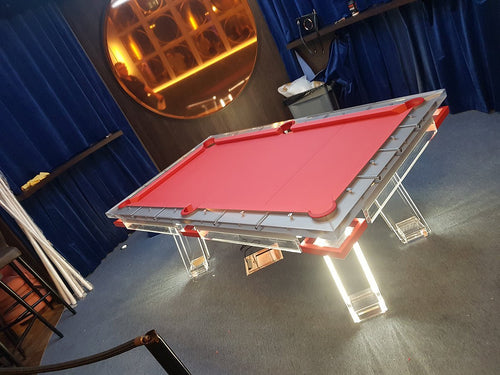


Enjoy our modern designs
A billiard room is not really about billiards.
At least, not entirely.
The table matters. Its proportions, finish, construction, cloth, and playability all matter. But the room succeeds or fails based on what happens around the table. A beautiful pool table in a dead room still feels incomplete. A well-designed social room, on the other hand, can make the table feel more important, more useful, and more naturally connected to the home.
This is the mistake many homeowners make when designing a game room. They choose the table first, place it in the middle, add a light above it, and assume the room is finished. Technically, it may function. But socially, it can feel flat.
The best billiard rooms are not just places to play. They are places to gather.
Table of Contents
The Pool Table Creates a Social Rhythm
Pool has a built-in rhythm that makes it different from many other home activities. Not everyone plays at once. People rotate in and out. Someone takes a shot, someone watches, someone comments, someone waits with a drink, someone leans on the wall, someone sits nearby and joins the conversation without joining the game.
That rhythm is what makes a pool table valuable in a home. It creates motion without requiring everyone to perform. It gives people something to do while still leaving room for conversation. It works for small groups, late-night drinks, family gatherings, parties, and casual weekends.
But for that rhythm to work, the room needs to support more than the players.
A room designed only around shot clearance can feel empty around the edges. A room designed for the full social experience gives people places to sit, stand, watch, set down a glass, talk, and move naturally between zones.
The table may be the center, but the room needs a perimeter with purpose.
Spectators Need a Place Too
One of the most overlooked parts of a billiard room is spectator comfort.
In many homes, the table is surrounded by empty space because cue clearance is important. That part is correct. But beyond that clearance zone, the room often has no clear plan. A sofa is too far away. Bar stools are placed awkwardly. Chairs are decorative but not useful. People end up standing in doorways or hovering near the walls.
That makes the room feel unfinished.
A better approach is to think in layers. The first layer is the playing zone around the table. The second is the viewing zone: seating, ledges, counters, or bar-height chairs positioned where people can watch without interfering. The third is the social spillover zone, where people can drift into conversation without disconnecting completely from the game.
This does not require a huge room. It requires intention. Even a small lounge chair, a narrow drink ledge, or a pair of bar stools can change how the space feels. The goal is to make waiting feel natural, not awkward.
Lighting Should Do More Than Illuminate the Table
Pool table lighting has a practical job: the playing surface needs to be evenly lit. Shadows, glare, and poor fixture placement can make the game frustrating. But in a luxury space, lighting also shapes atmosphere.
A billiard room with only one bright fixture over the table can feel harsh. The table is visible, but the room around it disappears. That may work in a commercial pool hall, but it rarely works in a home.
A better lighting plan combines task lighting with ambient and accent lighting. The table light should define the playing area. Wall sconces, floor lamps, cove lighting, shelf lighting, or bar lighting can soften the rest of the room. This makes the space feel layered rather than clinical.
The goal is not just visibility. It is mood.
A social room needs people to look good, drinks to feel inviting, materials to have depth, and the space to feel comfortable after the game ends. If the lighting only serves the table, the room becomes one-dimensional.
The Bar, Lounge, or Kitchen Connection Matters
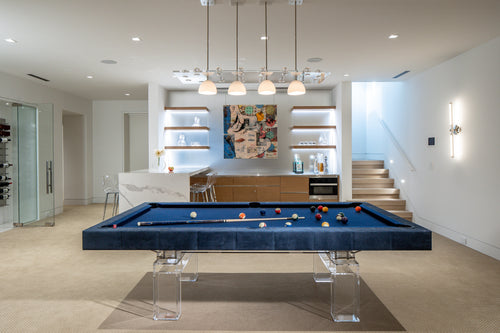
A pool table works best when it belongs to a larger entertaining flow. That might mean a direct connection to a home bar, lounge, wine room, terrace, kitchen, or media area. The table becomes part of the evening instead of a separate activity room people have to deliberately visit.
This is especially important in luxury homes, where square footage alone does not guarantee use. A remote game room can look impressive and still be underused if it feels disconnected from the way people actually live.
The best spaces reduce friction. Someone can grab a drink, watch a shot, sit down, talk, return to the game, or drift toward another area without breaking the social flow. When the table is integrated into the home’s entertaining pattern, it gets used more often.
That is the real test of a game room: not whether it photographs well, but whether people naturally end up there.
The Table Should Match the Social Tone
Not every billiard room should feel the same.
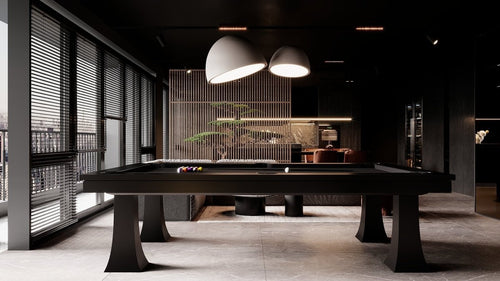
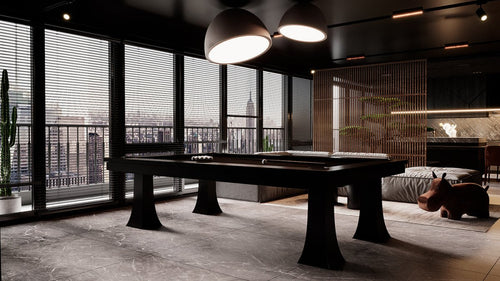
Some homes need a club-like room with dark wood, leather, low lighting, and a strong evening atmosphere. Others need a brighter, more relaxed space that connects to a family room or outdoor area. Some rooms should feel formal and architectural. Others should feel casual, warm, and lived-in.
The pool table should match that social tone.
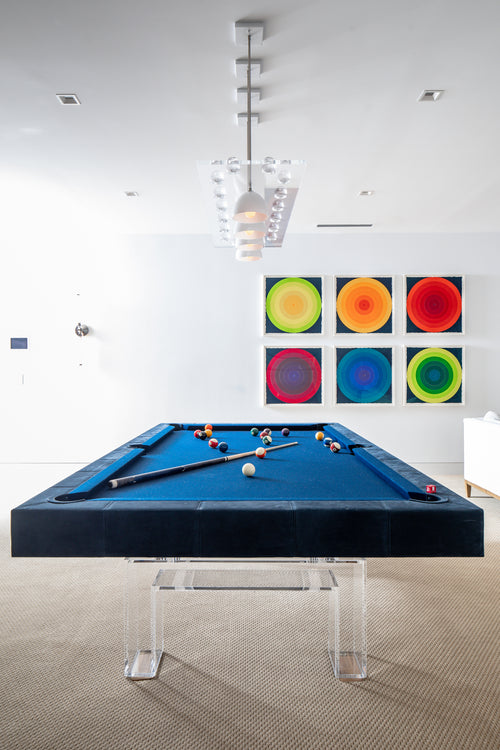
A highly polished, sculptural table may suit a dramatic entertaining space, but it can feel too precious in a relaxed family lounge. A traditional table may feel grounded in a paneled room, but too heavy in a coastal home. A minimalist table can look excellent in a clean modern space, but cold if the surrounding room lacks warmth.
The question is not only “What table looks best?” It is “What kind of room are people supposed to have around this table?”
That question leads to better decisions.
A Great Billiard Room Feels Alive Before the Game Starts
The strongest billiard rooms do not depend entirely on active play. They feel complete even when nobody is taking a shot.
There is a place to sit. The lighting feels good. The materials feel considered. The room has a view, a bar, a lounge area, a music system, artwork, or some kind of social invitation. The table is important, but it is not isolated.
That is when a billiard room becomes a social room.
The pool table gives the room its reason. The surrounding design gives it life. Without that second layer, even an expensive table can feel lonely. With it, the room becomes one of the most magnetic spaces in the home.
The table is only half the experience.
The people around it are the other half.