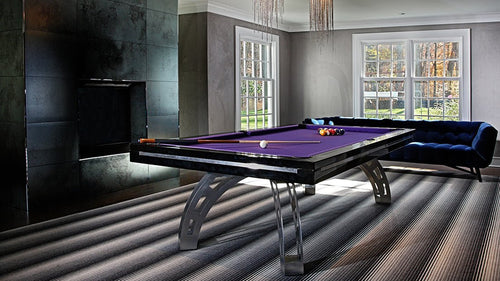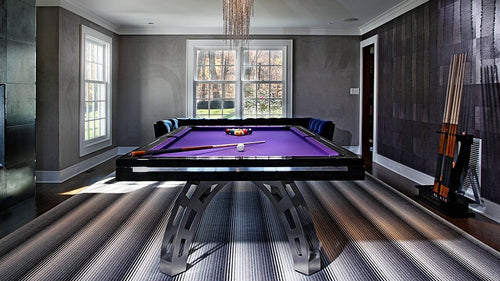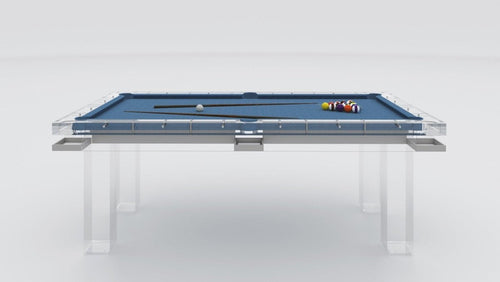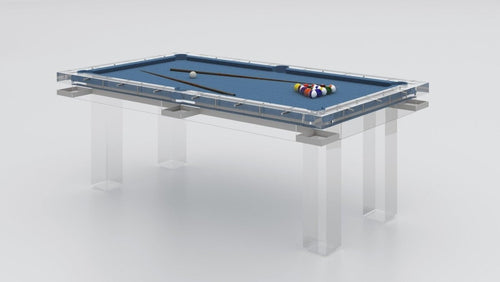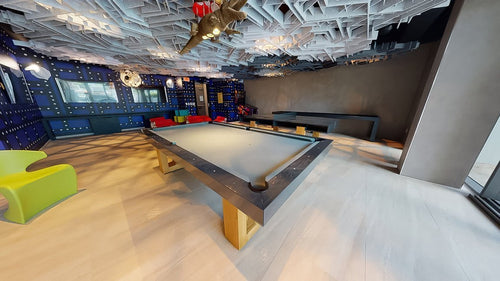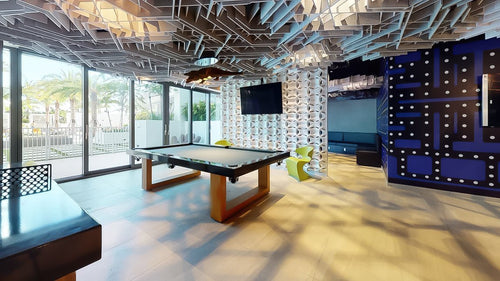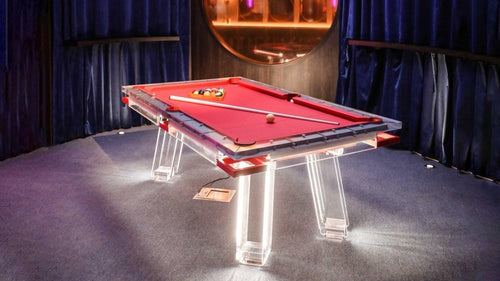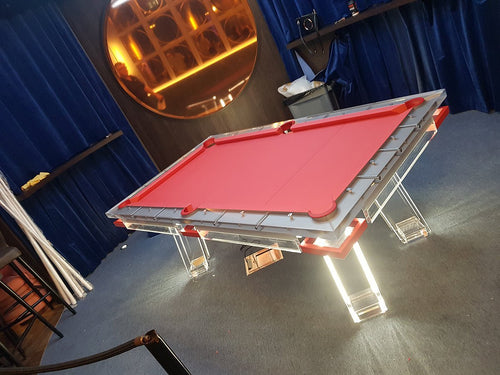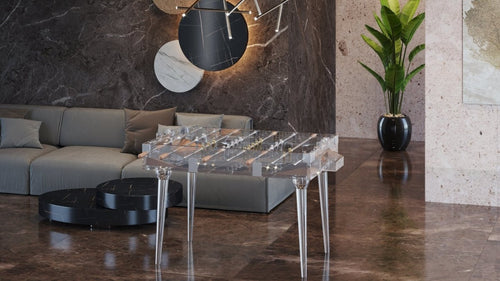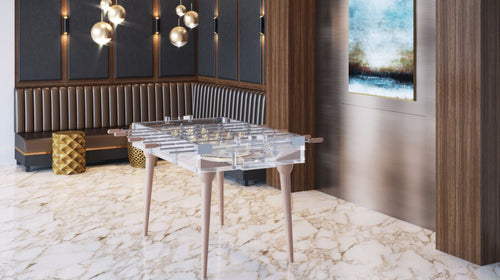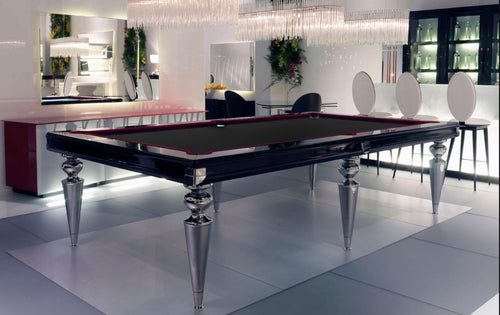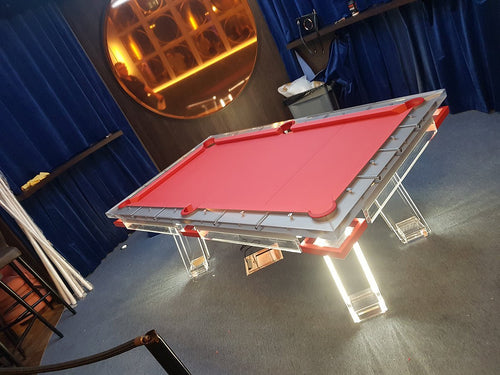


Enjoy our modern designs
Wood and glass dining tops create different experiences on a convertible pool table. The choice affects weight, handling, sound, cleaning, heat exposure, storage, repair options, and visual character.
Construction matters as much as material. A lightweight veneered panel behaves differently from a solid slab, just as a segmented glass system differs from a large one-piece sheet.
In this guide
Weight and Handling
Glass is dense and can be difficult to handle at dining-table dimensions. Thickness, tempering, laminating, edge treatment, and panel count affect total weight.
Wood varies considerably. A veneered lightweight core may be manageable, while engineered panels, solid hardwood, and hidden metal reinforcement can add substantial weight.
Ask for the actual weight of every section. Do not assume wood is light or that glass is always heavier.
Design note: Glass may require approved lifting handles or suction equipment. Never lift a panel solely by decorative hardware.
Cleaning and Maintenance
Glass is nonporous and easy to wipe, but it shows fingerprints, streaks, dust, and condensation. Cleaners must be compatible with coatings, films, printed layers, and edge treatments.
Wood conceals light fingerprints but requires prompt spill cleanup. Standing liquid can stain the finish, enter seams, affect adhesive, or swell the core.
Apply cleaner to a soft cloth rather than spraying it over the pool table. Dry seams and edges promptly.
Dining Comfort and Sound
Glass can amplify contact from dishes and cutlery. Placemats and felt-backed accessories reduce sound and help protect the surface. Glass may also feel cool and create noticeable reflections.
Wood provides a warmer tactile surface and softer dining sound. High-gloss wood finishes can still show scratches and reflections.
Design note: Transparent glass does not make the playing surface practically available during dining. Pads, hardware, reflections, crumbs, and condensation remain visible.
Durability, Repair, and Safety
Wood can scratch, dent, warp, or discolor. Localized refinishing may be possible, although thin veneer offers less repair tolerance than solid wood.
Glass resists ordinary staining but can scratch, chip at exposed edges, or fail if supported incorrectly. Confirm its type, thickness, edge treatment, support layout, load limit, and replacement process.
Support and Storage Requirements
Both materials require soft, clean, non-staining pads between the top and rails. Pads should distribute weight and prevent sliding without trapping moisture.
Wood needs storage that limits bending and humidity swings. Glass requires stable support and strong edge protection. Do not stack finished panels directly against one another.
Choosing for the Room
Wood may be preferable when warmth, low reflectivity, quieter dining, and repairability are priorities. Glass may suit a contemporary room where a nonporous surface and visually lighter appearance matter.
Compare exact weights, required handlers, noise, cleaning, repair options, storage capacity, support requirements, and room lighting.
To Conclude
Wood offers warmth, quieter dining, and potentially easier cosmetic repair. Glass provides a nonporous surface and contemporary appearance. Either can be heavy, and both require engineered support and safe storage.