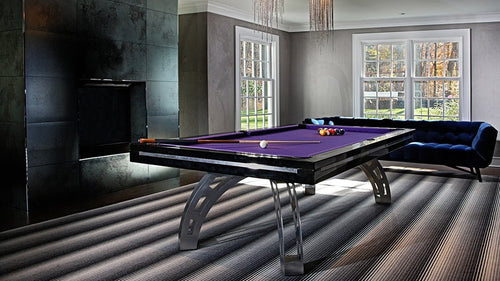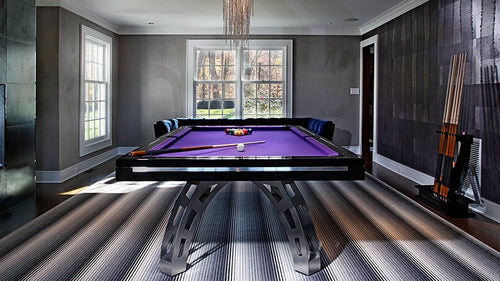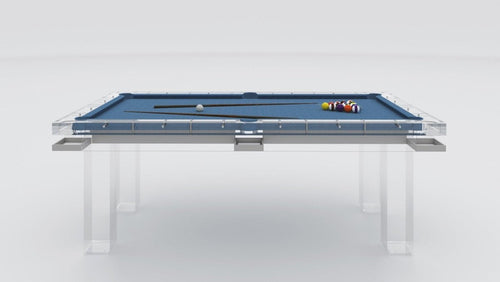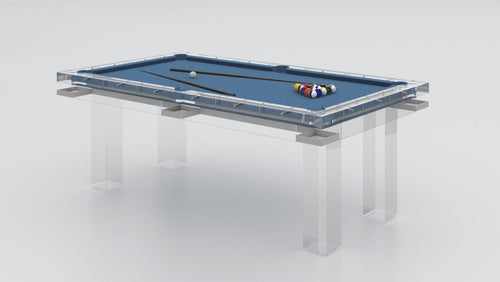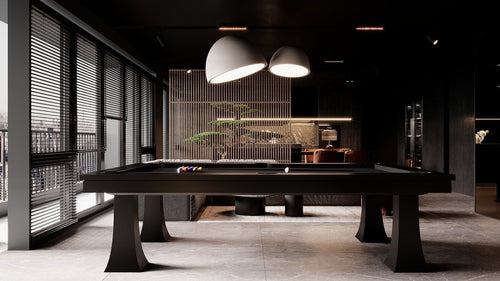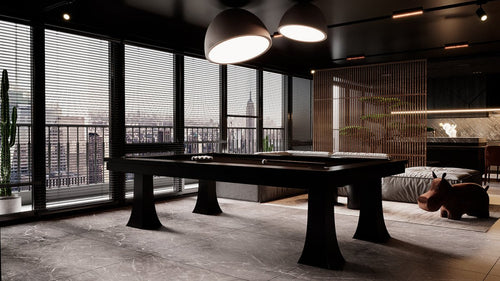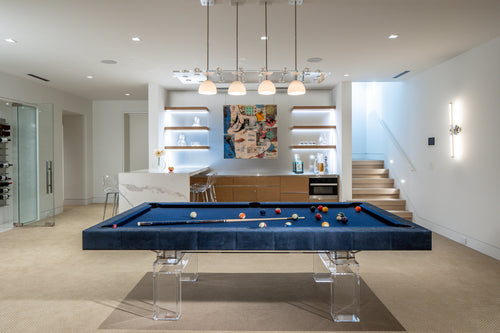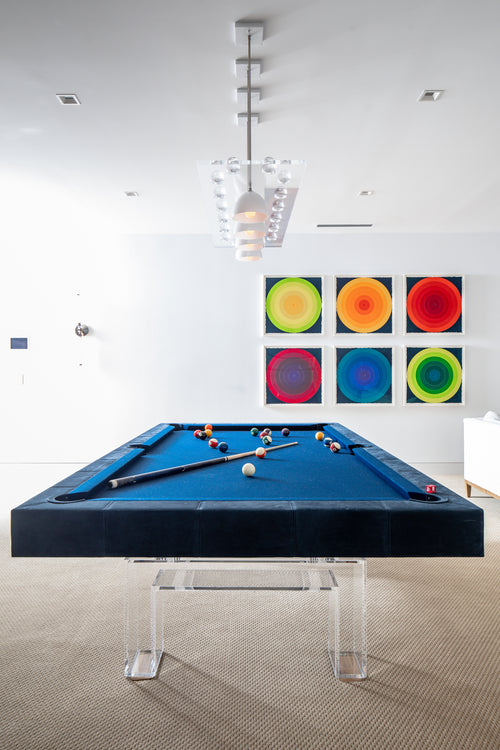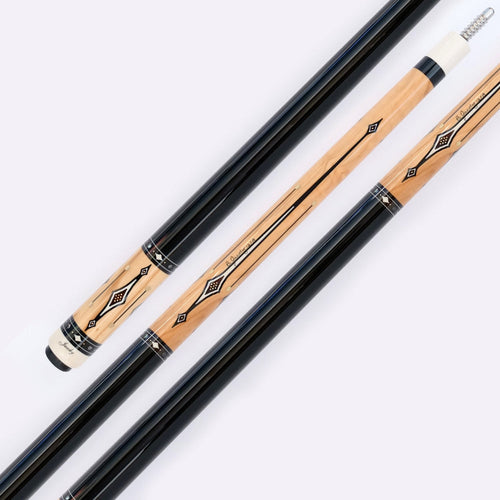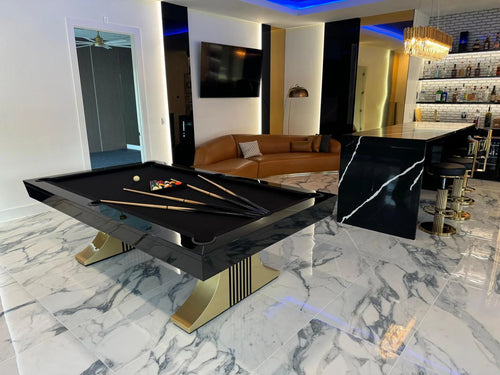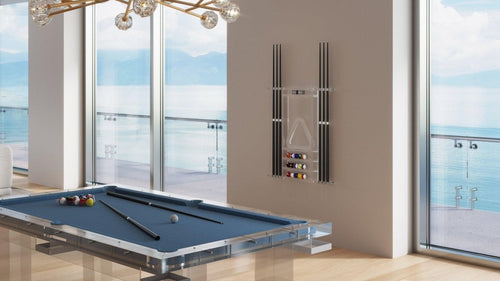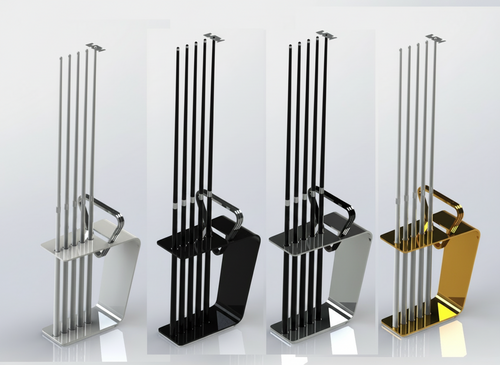


Enjoy our modern designs
PoolTablePortfolio • Material Pairings
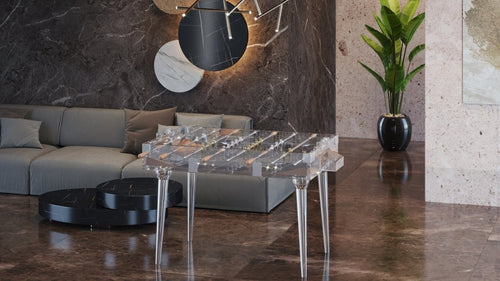
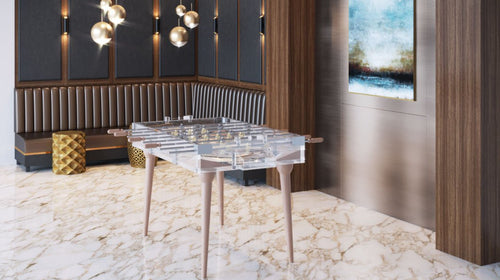
Lucite brings clarity and lift; warm woods bring depth and grounding. Get the balance right and the whole piece reads lighter, richer, and more intentional.
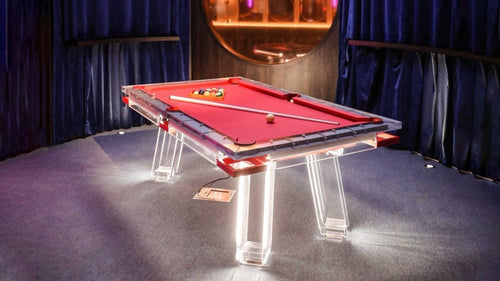
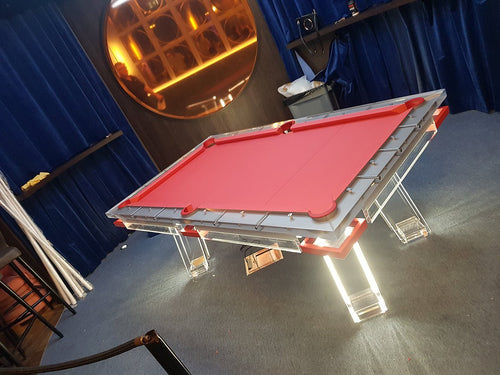
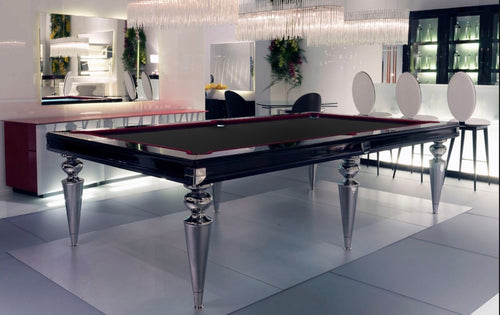
Acrylic (Lucite) brings clarity, light and a floating effect. Warm woods bring depth, richness and grounding. Together—and done right—they create tension between modern transparency and timeless texture. In luxury pool tables, shuffleboards and game-room furniture, this pairing has become a signature. Here are seven proven schemes that work.
1) Clear Acrylic Legs with Walnut Tops
Transparent legs visually lift a dense walnut body, making the table appear to float. The walnut’s warmth counters Lucite’s optical purity—mass vs lightness in clean balance.
2) Smoked Acrylic with Teak Accents
Smoked/tinted acrylic adds subtle depth against golden teak. The combo reads mid-century yacht: coastal, modern and relaxed without losing polish.
3) Lucite Frames with Oak Rails
Invert the formula—Lucite for structure, warm oak where hands live. The support disappears while the tactile surface ties into oak floors/cabinetry.
4) Frosted Acrylic with Mahogany Inserts
Frosted Lucite softens edges for an architectural haze. Rich mahogany inlays/drawers add drama. Great when you need warmth without heavy texture.
5) Acrylic Bridges with Leather-Wrapped Walnut
An acrylic stretcher lightens the midsection; walnut rails wrapped in nubuck or full-grain leather add touch and temperature. Reads bespoke and tailored.
6) Sculpted Acrylic Bases with Reclaimed Woods
Chunky sculpted acrylic can feel sterile alone. Pair with reclaimed oak/chestnut tops for patina and story—“heritage meets future” without kitsch.
7) Minimalist Lucite with Subtle Wood Reveals
Full Lucite frame with a narrow walnut reveal at rail/apron. A whisper of warmth that keeps the purity of acrylic intact—amplifies minimalism, not noise.
Design Tips for Success
- Balance proportion: Too much acrylic feels cold; too much wood feels heavy. Set an intentional ratio.
- Match finishes: Satin woods pair with frosted/smoked acrylic; high-gloss lacquered woods with clear, polished Lucite.
- Mind the joints: Conceal fasteners—use hidden dowels, pins or adhesive bonding so transitions read seamless.
- Light it right: Acrylic catches/refracts light. Place warm wood where it catches daylight or underglow for depth.
Conclusion
Mixing acrylic with warm woods isn’t a gimmick—it’s a strategy. Float a walnut body on clear legs, set smoked Lucite against teak, or keep a pure Lucite frame with a thin walnut reveal. Done right, you get transparency and warmth in one piece—modern and timeless at the same time.