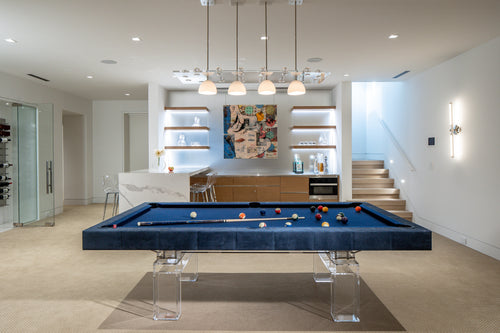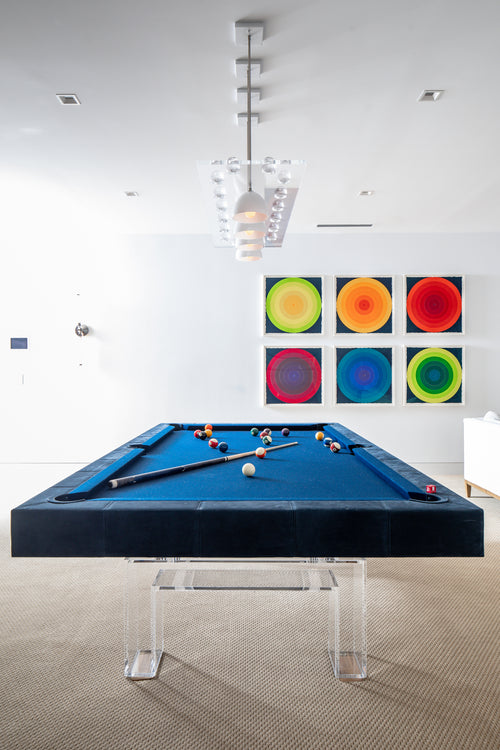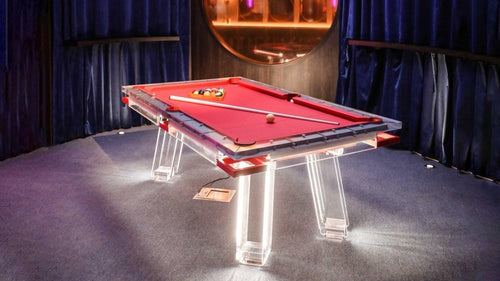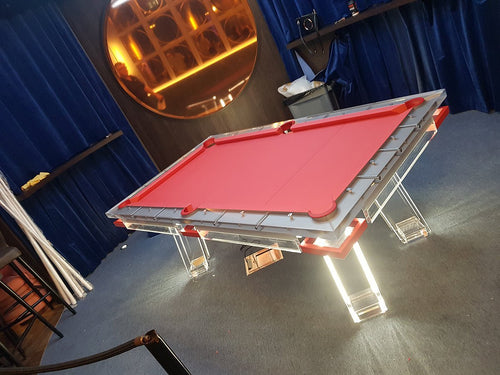


Enjoy our modern designs
Spin looks like magic until you know where to hit and what the cloth does. Here are the simple rules that make shots predictable.
Spin is just physics in disguise. Where you strike the cue ball, how fast you hit, and how grabby the cloth is will decide everything after contact. Learn the small set of rules below and you’ll stop guessing and start calling the path.
Spin basics: where you hit
The cue tip hits at a point, not a “general area.” Move that point and you change the shot:
- Center — ball slides first, then rolls.
- Above center — rolls sooner (topspin).
- Below center — creates backspin initially; draw after contact requires enough backspin to remain when the cue ball reaches the object ball.
- Left/right — sideways rotation (English).
Limits that matter: an offset around half the ball’s radius is a useful approximate miscue limit, not a guarantee. Tip condition, chalk and delivery matter. Choose a modest contact offset you can reproduce, then test the cue ball’s actual roll at the object ball.
From sliding to rolling
After a center hit, the cue ball slides on the felt before it grabs and starts rolling. Slick/new cloth = longer slide. Sticky or humid cloth = shorter slide. That’s why the same stun shot behaves differently on different tables.
Throw: why object balls drift
Sometimes the object ball (OB) doesn’t go exactly where you aimed. That sideways nudge is throw—friction between the balls during the brief contact.
- Cut throw: a slow stun shot near a half-ball cut can produce roughly an inch per foot of object-ball travel (~5°) at the high end. Roll, draw and faster speed usually reduce throw.
- Spin throw: on a straight shot, the maximum is associated with slow speed, stun and about half the available sidespin. Other spin and speed combinations can still throw the object ball, but by different amounts.
The appropriate amount of gearing outside English can cancel throw by making the ball surfaces roll against one another at impact. Inside English is not that cancellation condition. Too much or too little outside spin changes the result, so learn the adjustment on a repeatable shot.
Squirt, swerve, and “squerve”
- Squirt: the cue ball’s initial sideways deflection opposite the applied sidespin; it does not mean the ball must jump off the cloth.
- Swerve: while sliding, spin plus friction curves it back.
- Squerve: the combined aiming effect of initial squirt and subsequent swerve over the shot distance.
Harder strokes curve less. A higher cue butt (more elevation) curves more. Every shaft/tip combo has its own “fingerprint,” so build feel on your table, not someone else’s YouTube clip.
Rails and English
- Running English (spin helping the rebound) = wider angle off the cushion.
- Check English (spin fighting the rebound) = shorter angle.
- Inside/outside describe spin relative to the cut; running/reverse describe spin at a particular cushion. Do not assume inside English is always reverse spin at every rail.
Quick rules of thumb
- Max practical offset without miscues ≈ ½ radius.
- Natural roll at contact depends on tip height, speed, distance and cloth; test the actual result rather than relying on an undefined percentage.
- Speed control comes from a repeatable delivery and calibration to the table, not one universally best tip height.
- A slow stun shot near a half-ball cut can produce throw of about 1″ per foot of OB travel at the high end.
- Slick cloth = longer slide; sticky/humid cloth = shorter slide.
- Harder hit = less visible curve; more cue elevation = more curve.
Sources: Dr. Dave: gearing outside spin; Dr. Dave: bank and kick spin effects.